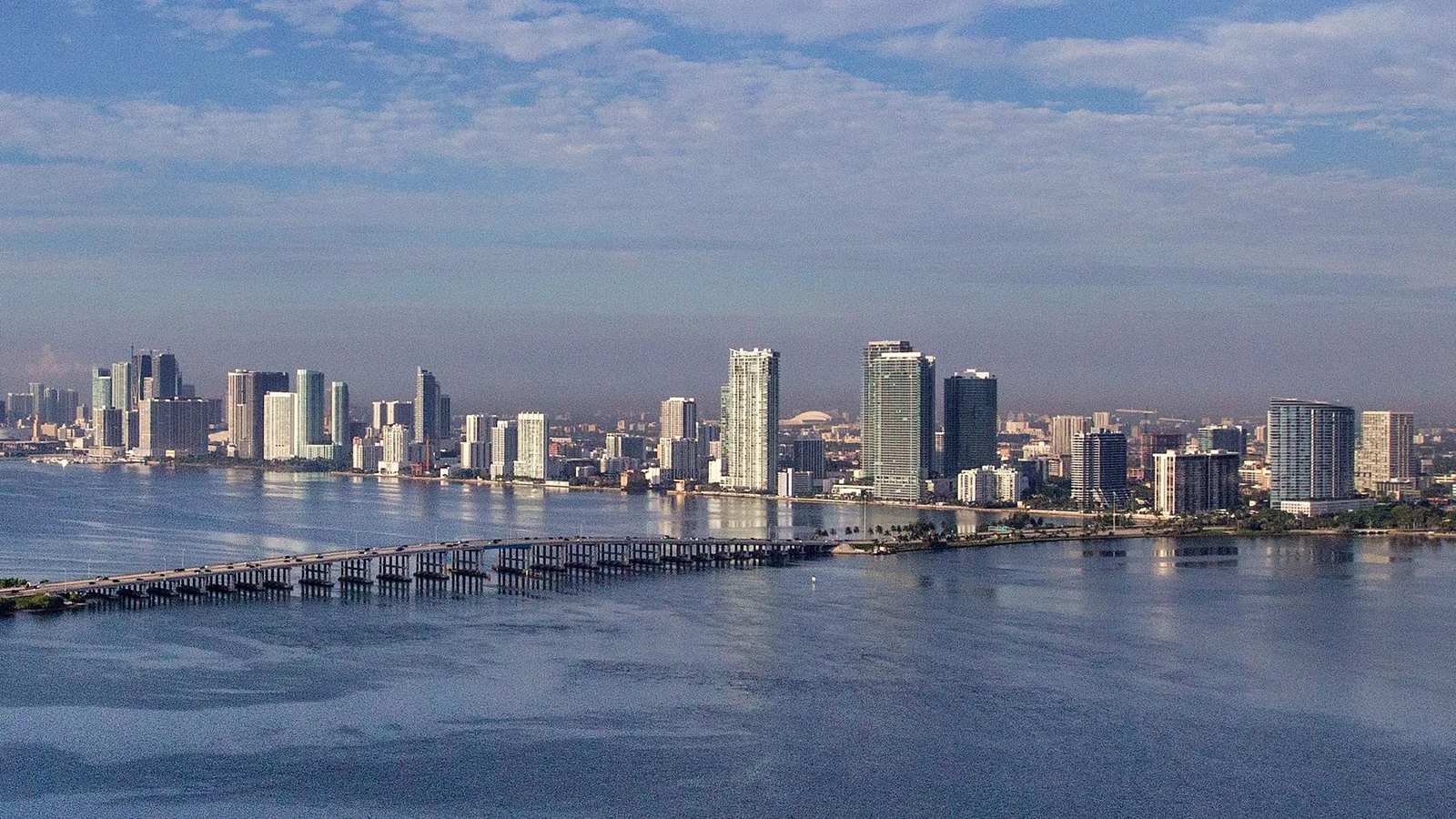
Quick answer: The first five floors of this building are retail, and the residences start at floor six. That is not a design detail; the share of a project given to non-residential use is one of the named tests a lender applies to a condominium project. Add a 2032 milestone inspection, dues that bundle cable, internet and security, and a strict two lettings a year at six months, and the diligence here is documentary rather than cosmetic.
Five floors that are not yours
| Floors | Use |
|---|---|
| 1 to 5 | retail and commercial |
| 6 to 40 | residences |
A mixed-use condominium is common in Miami and entirely normal. What is not normal is how rarely a buyer asks the two questions it raises.
What share of the project is non-residential? Lender project eligibility rules test this directly. A project whose commercial share exceeds the threshold can be declared non-warrantable, and the effect is building-wide: the conventional thirty-year loan disappears for every owner, not for one applicant. Ask for the schedule of non-residential space and a written project eligibility determination before contract.
How are shared costs apportioned? Structure, plant, lifts, entrances and insurance serve both components. The document dividing those costs between residential and commercial is what decides whether your dues subsidise the retail or the reverse. Ask for the allocation in writing.
Neither question has a default answer, and neither is visible from a listing. Compare with Hyde Midtown, where a hotel rather than retail occupies the non-residential share, and with Fortune House, where a rental programme raises the same class of question.
The dues bundle three services
Cable television, internet and security are included in the dues here, with reported monthly figures spanning a wide range across residence sizes.
That bundling is the reason a headline comparison misleads. Before setting this building against any other, add the comparison building’s cable, internet and security back to its own figure, then compare totals. A building that appears cheaper on the headline frequently is not once the same services are on both sides.
Then ask the manager to split 3 years of increases into reserve contribution, master insurance premium and shared-component charges. On a mixed-use building that third line exists and is worth seeing separately. Coastal Miami master policies have repriced every year since 2022, so a rising total can mean prudent funding, insurance, or the commercial share moving. See the Florida property insurance guide.
2032, and what that means at this vintage
A 2007 completion places the first milestone inspection around 2032 under the 25-year coastal trigger, repeating every 10 years. A buyer holding for a decade owns this building through it.
| Document | What it decides |
|---|---|
| Structural integrity reserve study | expected scope and cost |
| Reserve funding percentage | how much is already collected |
| 3 years of dues split by line | funding or deferring |
| Assessments in the last 24 months | what is already in motion, with minutes |
On a mixed-use building add a fifth question: how is any assessment apportioned between the residential and commercial components? A remedy to shared structure paid entirely by residential owners is a materially different outcome from one shared with the retail, and the documents say which.
Ask what has been replaced and when, with permits: roof and waterproofing, lifts, cooling plant and risers, glazing and sealants. Nineteen years in, several of these reach the end of their first cycle at once.
Two lettings a year, six-month floor
Owners may let twice per year with no lease shorter than six months, the same strict tier as 50 Biscayne, Paramount Bay and Quantum on the Bay.
One annual tenant, with a second permitted only if the first ends early. No seasonal pricing, no monthly letting, no covering a summer gap.
With residences from about 822 square feet upward, the tenant here is a household rather than a single occupant, which makes the pool shallower and steadier than a studio tower’s. Underwrite from achieved rents by unit size inside the building over a full year, not from Edgewater averages built on much smaller stock. Confirm the clause in the recorded declaration with amendments.
Four hundred and sixty-nine residences
| Effect | Consequence |
|---|---|
| Fixed costs divide widely | dues per foot sit below a boutique building’s |
| Any assessment divides 469 ways | the per-owner figure is materially smaller |
| Standing supply for sale and to let | no individual owner sets the price |
| Deep comparable set | a residence can be priced from real trades |
Ask for every trade in the building over 24 months by unit type rather than the closest three. In a building of this depth that data is genuinely predictive, and it is the only honest way to price a resale where hundreds of similar residences compete.
Edgewater and the bayfront corridor
The building sits on North Bayshore Drive in the Edgewater corridor, a strip that has densified heavily since this tower opened in 2007. Newer neighbours arrived with newer amenity programmes and newer prices.
That has two effects on an owner. Competition for tenants is broader than it was, because a renter choosing this corridor now has more buildings to compare. And the entry price here is lower than the newest stock, which is the compensation.
One consequence is worth pricing rather than assuming. A 2007 building competing with 2020s stock wins on space per dollar and loses on amenity fashion, so the residences that hold value best here are the larger ones, where the space advantage is real, rather than the smallest, where a newer tower’s studio competes directly on price.
For the surrounding market see Ocho Edgewater, Paramount Bay, Aria on the Bay and the Edgewater area page.
Financing
Three project-level tests apply here rather than the usual two: reserve funding, investor concentration, and the non-residential share created by five floors of retail.
Obtain a written project eligibility determination before offering, and make sure it addresses the commercial component explicitly rather than the building generally. Where a project is non-warrantable the conventional thirty-year loan is unavailable building-wide, leaving cash, portfolio lending or a DSCR loan underwritten on rent at a larger deposit. Overseas buyers work through foreign national mortgage programmes. See also the Florida condos hub.
Verification checklist before you wire
- Get the schedule of non-residential space and the commercial share of the project.
- Get the cost allocation between residential and commercial components in writing.
- Obtain a written lender project eligibility determination addressing the retail.
- Get the structural integrity reserve study and the current funding percentage.
- Ask how any assessment is apportioned between the two components.
- Request 3 years of dues split into reserves, insurance and shared components.
- Ask what has been replaced and when, with permits, on a 2007 building.
- Confirm the two-lettings and six-month minimum in the recorded declaration.
- Ask for every trade over 24 months and achieved rents, both by unit type.
Which buyer this building suits
It suits a long-hold owner or owner-occupier who wants a bayfront Edgewater address at a lower entry price than the newest towers, will let annually if at all, and is willing to read a mixed-use structure properly. The retail below is convenient to live above and it is a document to check, not a feature to ignore.
It suits a buyer who wants a simple, purely residential project poorly, and one who needs certainty about conventional financing least of all until the determination is in hand. Get the non-residential schedule and the funding percentage first. Both are available before contract, and together they answer most of what is distinctive about this address.
Frequently Asked Questions
Owners may let a maximum of two times per year with no lease shorter than six months. That is the strict tier: an annual tenancy with a second letting permitted only if the first ends early. Confirm the clause in the recorded declaration with amendments.
Forty floors at 1800 North Bayshore Drive, about 423 feet, with retail on floors 1 to 5 and residences from 6 to 40. Roughly 469 residences in one, two and three bedroom layouts of about 822 to 2,189 interior square feet. Completed 2007, designed by Bermello Ajamil and Partners.
It can. The share of a project given over to non-residential use is one of the specific tests lenders apply when assessing a condominium project, alongside reserve funding and owner-occupancy. Ask for the schedule of non-residential space and obtain a written project eligibility determination before contract.
Cable television, internet and security are included, with monthly figures reported across a wide range depending on residence size. Because those services are bundled, the headline figure is not comparable with a building that bills them separately until you add them back.
A 2007 completion places the first milestone inspection around 2032 under the 25-year trigger that applies within 3 miles of a coastline, repeating every 10 years. That falls inside a normal hold, so the reserve study and funding percentage matter to a buyer today.
That is set by the documents, not by assumption. Ask how costs for shared structure, plant, lifts and entrances are apportioned between the residential and commercial components, and what the residential association is responsible for. In a mixed-use building that allocation is a material part of your dues.
Get the non-residential schedule and reserve position at 1800 Club
Tell us which unit type you are considering. We will come back with the schedule of non-residential space and the cost allocation between components, a written lender project eligibility determination, the reserve study and funding percentage, three years of dues split by line, and achieved rents by unit type.