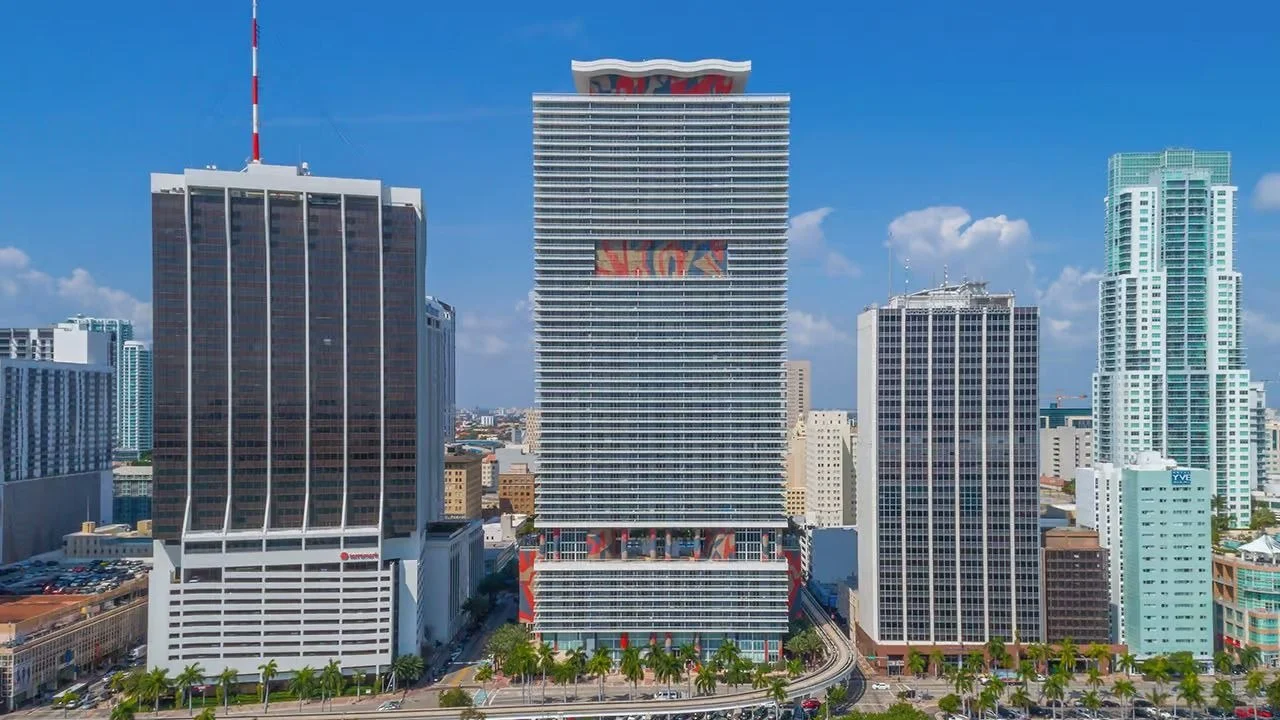
Quick answer: Most buildings in this series reach their first milestone inspection long after any normal hold. 50 Biscayne does not. A 2007 completion puts it at roughly 2032, about six years out, which moves the reserve study from background reading to the centre of the purchase. Everything else here is a competent, well-located 2007 tower: 523 residences, two lettings a year at a six-month floor, and one of the lower entry prices in Downtown Miami.
Six years, not twenty-five
| Building | Completed | First milestone inspection |
|---|---|---|
| 50 Biscayne | 2007 | around 2032 |
| Vizcayne | 2008 | around 2033 |
| 900 Biscayne Bay | 2008 | around 2033 |
| 1010 Brickell | 2017 | around 2042 |
| Hyde Midtown | 2018 | around 2043 |
The trigger is 25 years within 3 miles of a coastline, or 30 years elsewhere, and it repeats every 10 years. A buyer holding for a decade from today will own this building through its first inspection and probably through the works that follow.
That is not a reason to avoid it. Buildings pass inspections, and a well-funded association absorbs the result without drama. It is a reason to buy the documents rather than the finish:
| Document | What it decides |
|---|---|
| Structural integrity reserve study | the expected scope and cost |
| Reserve funding percentage | how much of that is already collected |
| 3 years of dues split by line | whether the board is funding or deferring |
| Assessments in the last 24 months | what is already in motion |
| Board minutes on those discussions | how this board handles money |
Ask for all five. A building with high dues and a well-funded reserve is a better purchase at this vintage than a cheap one with low dues, because in the second case the money has not stopped being owed, only stopped being collected.
What a low entry price can mean here
50 Biscayne sits among the lower entry points in Downtown Miami, and on a 2007 building close to its inspection that deserves one question rather than enthusiasm: is the price low because the units are small, or because the reserve is thin?
Both are legitimate answers. Studios from about 567 square feet are genuinely small, and small units price low everywhere. But a discount that turns out to be an unfunded reserve is a bill you have agreed to pay, not a saving.
The funding percentage separates the two in a single number. Get it before you offer.
Five hundred residences cuts both ways
| Effect | Consequence |
|---|---|
| Fixed costs divide across 523 owners | dues per foot sit below a boutique building’s |
| Any assessment divides 523 ways | the per-owner figure is materially smaller |
| Standing supply for sale and to let | no individual owner sets the price |
| Deep comparable set | a unit can be priced properly from real trades |
The third row is the one to respect when modelling rent or resale. In a building of hundreds of similar residences, the market clears at whatever the most motivated listing accepts this month. Ask for every trade in the building over 24 months by unit type, and for achieved rents by unit type over a full year, rather than the closest three listings.
The second row is the genuine comfort at this vintage. Whatever 2032 produces, it divides widely.
What a 2007 build is, physically
Vintage is not only a legal trigger. A tower completed in 2007 has systems roughly two decades old, and at this point in a building’s life several of them reach the end of their first cycle at once.
Ask what has been replaced and when, with permits:
- Roof and waterproofing, the largest single insurance variable after location.
- Lifts, five of them here, and a modernisation is a seven-figure line on a tower this size.
- Cooling plant and risers, which set both comfort and utility cost.
- Glazing and sealants, which on a bayfront tower drive water intrusion claims.
- Common-area refurbishment, which the reserve study prices whether or not the board has scheduled it.
A building that has already replaced its roof and modernised its lifts is a different proposition from one that has deferred both, at the same asking price and the same address. The permit history and the reserve study together answer it, and the seller usually cannot.
50 Biscayne was built by The Related Group with design by the Rockwell Group, which is a stronger construction pedigree than much of the 2005 to 2008 Miami cohort. That is worth something at inspection time, and it is not a substitute for the documents.
Two lettings a year, six-month floor
Owners may let twice per year with no lease shorter than six months, the strict tier alongside Vizcayne, Quantum on the Bay and Echo Brickell.
The model is one annual tenant, with a second permitted only if the first ends early. No monthly letting, no seasonal pricing, no covering a gap with a short stay.
On stock this size that is a coherent long-hold position rather than a yield play. A 567 square foot studio let annually in Downtown Miami competes against a deep and price-sensitive pool, and the rent is set by the block rather than by the finish. Confirm the clause in the recorded declaration with amendments.
Reading the dues before comparing anything
Ask what the dues include. Downtown Miami buildings of this era vary in whether cable, internet, water, sewer and trash sit inside the association budget or are billed separately, and the difference distorts every comparison of headline figures.
Then ask the manager to split 3 years of increases into reserve contribution and master insurance premium. Coastal Miami master policies have repriced every year since 2022 and sit inside the dues, so a rising line can mean prudent reserve funding, insurance, or both. At this building, with an inspection approaching, the reserve half of that split is the more informative number. See the Florida property insurance guide.
For a let residence add Miami-Dade property tax on the actual assessed value without homestead, an owner’s HO-6 policy, management and a vacancy allowance.
Financing a 2007 tower
Two project-level tests apply, and both are sharper on an older building. Reserve funding, which sits on every questionnaire since 2021 and which at this vintage is under real pressure. And investor concentration, which in a building heavy with studios and one-bedrooms tends to run high.
Obtain a written project eligibility determination before offering. Where a project is non-warrantable the conventional thirty-year loan is unavailable building-wide, leaving cash, portfolio lending or a DSCR loan underwritten on rent at a larger deposit. Overseas buyers work through foreign national mortgage programmes. For the wider market see the Miami area page and the Florida condos hub.
Verification checklist before you wire
- Get the structural integrity reserve study and the current funding percentage.
- Ask about assessments levied, pending or discussed in the last 24 months, with minutes.
- Request 3 years of dues history split into reserve contribution and insurance premium.
- Ask what the dues include, and rebuild the figure before comparing buildings.
- Confirm the two-lettings and six-month minimum in the recorded declaration.
- Ask for every trade in the building over 24 months, by unit type.
- Ask for achieved rents by unit type over a full year, not asking rates.
- Obtain a written lender project eligibility determination.
- Establish whether a low asking price reflects unit size or reserve position.
Which buyer this building suits
It suits a long-hold owner who wants a central Downtown Miami address at a low entry price, will let annually if at all, and is willing to underwrite a milestone inspection as a known event with documents rather than hope. The scale that removes pricing power also spreads whatever 2032 costs across more than 500 owners, and that trade is real.
It suits a buyer looking for flexibility or scarcity poorly. Two lettings a year at a six-month floor permits only an annual tenant, and 523 residences is the opposite of scarce. Start with the funding percentage. Everything else about this building is ordinary diligence on a well-built tower of its era.
Frequently Asked Questions
A 2007 completion places the first milestone inspection around 2032 under the 25-year trigger that applies within 3 miles of a coastline, repeating every 10 years thereafter. That falls inside a normal ten-year hold, which is why the reserve study and the funding percentage are live documents for a buyer today rather than a future owner's problem.
Owners may let a maximum of two times per year with no lease shorter than six months. That is the strict tier: an annual-tenancy asset with no monthly or seasonal model available, which matters because a large share of the stock is small.
Fifty-five floors at 50 Biscayne Boulevard with about 523 to 527 residences, from studios to three bedrooms, roughly 567 to 1,789 interior square feet. Completed in 2007, developed by The Related Group, with architecture by Sieger Suarez and design by the Rockwell Group.
The structural integrity reserve study, the current reserve funding percentage, three years of dues split into reserve contribution and master insurance premium, and any assessment levied, pending or discussed in the last 24 months with the relevant minutes. On a building six years from its inspection, those four documents are the purchase.
Both. Fixed costs and any future assessment divide across more than 500 owners, which lowers the per-owner share. The same depth means standing supply for sale and to let, so no individual owner holds pricing power. Underwrite from achieved figures inside the building rather than asking rates.
It is among the lower entry points in the area, and on a 2007 building close to its first inspection a low price can reflect the reserve position rather than a bargain. Establish the funding percentage before treating the discount as one.
Get the reserve position at 50 Biscayne before you offer
Tell us which unit type you are considering. We will come back with the structural integrity reserve study and funding percentage, assessment history and board minutes, three years of dues split into reserves and insurance, every trade in the building over 24 months by unit type, and achieved rents rather than asking rates.