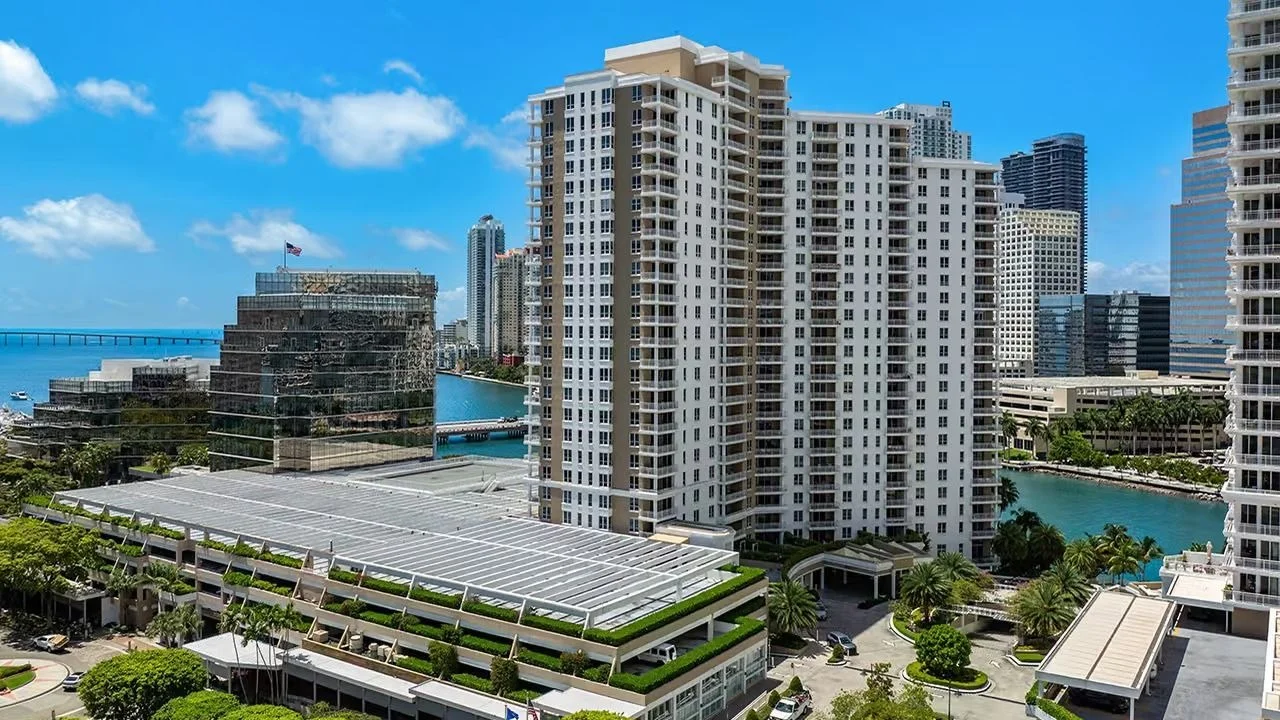
Quick answer: Two facts decide this purchase and neither is on a listing. The building was completed in 1997, so its milestone inspection deadline has passed and a report exists to be read. And the reported pet rule permits pets for owners and not for tenants, which quietly removes a large share of the rental market. Add a six-month minimum and an island location, and this is an owner-occupier’s building that reads better than it lets.
The report already exists
A 1997 completion puts this building in the same position as Tower 41 and Fortune House: past the 25-year coastal trigger long ago, with an initial inspection deadline of 31 December 2024 that has come and gone, and a 10-year repeat interval running from there.
So the question is not a date. Ask for:
| Document | What it tells you |
|---|---|
| Completed phase one milestone inspection report | what the engineer found |
| Phase two findings, if one was required | how serious it was |
| Board resolution on those findings | the plan, the timing and the cost |
| Structural integrity reserve study | the wider component schedule |
| Reserve funding percentage | whether the remedy is paid for |
| Assessments levied, pending or discussed in 24 months | what is already in motion, with minutes |
An engineer’s finding in writing is better information than a forecast. A buyer who reads it knows more about this building than a buyer of a 2020 tower knows about theirs.
The pet rule is a rent rule
Reported rules here allow pets for owners, subject to number and weight limits, and not for tenants.
This site has now documented the same clause at Neo Vertika, and the effect is identical in both places. A pet-owning household does not negotiate on this; it filters the building out of the search and never appears as an enquiry.
| Consequence | What it looks like |
|---|---|
| Fewer enquiries per listing | longer marketing between tenancies |
| Longer voids | costly under a six-month floor |
| Pressure on achieved rent | the remaining pool knows it has options |
| Narrower investor demand at resale | landlords price the constraint in |
Two responses. Confirm the current rule in the recorded declaration and the association rules, because pet policies are amended more often than letting clauses. And underwrite from achieved rents inside this building, by unit type, over a full year, rather than from Brickell averages that include pet-friendly stock. See the HOA and association restrictions checklist.
For an owner-occupier the rule cuts the other way entirely: you may keep a pet, and the building stays quieter than a pet-friendly one. That asymmetry is the honest summary of this address.
Six months, and confirm the frequency
The minimum lease is six months, the strict tier. The annual frequency should be read from the recorded declaration with amendments rather than taken from a listing, because listings routinely report one and omit the other.
Whatever the frequency, a six-month floor means an annual tenancy in practice. Combined with the pet rule, plan for a longer gap between tenancies than a comparable Brickell building would need, and model a full void rather than a partial one.
An island, not a neighbourhood
Brickell Key is a master-planned island reached by a single causeway, largely developed by Swire Properties. That produces something genuinely different from mainland Brickell:
What it gives you. Very low through-traffic, a contained and quiet setting, waterfront on more than one side, and a walkable loop that mainland Brickell does not have.
What it costs you. Everything arrives and leaves by one causeway. Deliveries, guests, contractors and your own commute all use it, and at peak times that is felt. Access and guest parking work differently from a mainland building.
How to test it. Visit at rush hour rather than midday, and drive off the island as well as onto it. This is the single feature of Brickell Key that people either value highly or find wearing, and it is not something a floor plan communicates.
For mainland comparisons see Santa Maria, 1428 Brickell, Skyline on Brickell and the Brickell area page.
Two hundred and seventy-two owners
| Effect | Consequence |
|---|---|
| Fixed costs divide across 272 owners | dues per foot sit above a 500-unit tower’s |
| Any assessment divides 272 ways | the per-owner figure is larger than at a big tower |
| Limited standing supply | a little more pricing discipline |
| Thin comparable set | price from all recent trades, not the closest three |
That second row matters on a 1997 building whose inspection has already produced a finding. Whatever the remedy costs, it divides across 272 owners rather than 500, so the per-owner exposure is proportionally higher than at the large Downtown towers covered elsewhere on this site.
The residences also span an unusually wide range, from about 806 to 3,751 square feet including two-storey penthouses. Those are not one market. Draw comparables from the same size band, and price the penthouses from all of them rather than from the nearest sale.
What a 1997 building has used up
Twenty-nine years in, ask what has been replaced and when, with permits:
- Roof and waterproofing, the largest insurance variable after location.
- Plumbing risers, which on stock of this era drive both claims and assessments.
- Electrical distribution, for the same reason.
- Lift modernisation, a substantial line on 28 storeys.
- Glazing and sealants, which govern water intrusion on an exposed island elevation.
A building that has completed its inspection, funded the finding and replaced its risers is a sound purchase at this vintage. One that has done the inspection and deferred everything is a different asset at the same asking price, and the permit history and funding percentage say which.
Coastal master policies have repriced every year since 2022 and sit inside the dues: ask for the premium as a separate figure for each of the last three years. See the Florida property insurance guide.
Financing
Reserve funding is the test under pressure on a 1997 building with a completed inspection, and a lender will want to see both the finding and how it is funded. Investor concentration is the second.
Obtain a written project eligibility determination before offering. Where a project is non-warrantable the conventional thirty-year loan is unavailable building-wide, leaving cash, portfolio lending or a DSCR loan underwritten on rent. Overseas buyers work through foreign national mortgage programmes. See also the Florida condos hub.
Verification checklist before you wire
- Get the completed milestone inspection report and any phase two findings.
- Get the board resolution, with dates and amounts.
- Get the structural integrity reserve study and the current funding percentage.
- Ask about assessments levied, pending or discussed in 24 months, with minutes.
- Confirm the pet rule for tenants in the declaration and the association rules.
- Confirm both the minimum lease term and the annual frequency from the declaration.
- Get the permit history for roof, risers, electrical, lifts and glazing.
- Get achieved rents by unit type inside the building over a full year.
- Draw comparables from the same size band, and price penthouses from all of them.
- Obtain a written lender project eligibility determination.
Which buyer this building suits
It suits an owner-occupier very well. The island is quiet, the building is moderate in scale, the pet rule works in your favour rather than against it, and a 1997 building with a completed inspection and a funded reserve is a known quantity rather than a guess.
It suits a landlord less well than the entry price suggests, and the reason is the pet clause rather than the building. Verify the current rule, get achieved rents from inside the building, and model a longer void. If the numbers hold with a smaller tenant pool, the purchase is sound. If they only work on Brickell averages, they do not.
Frequently Asked Questions
Reported rules permit pets for owners, subject to number and weight limits, and not for tenants. That is a material constraint on the letting market, because a large share of renters keep one and will filter the building out of a search. Confirm the current rule in the recorded declaration and the association's rules before underwriting rent.
Six months, with the annual frequency to be confirmed from the recorded declaration with amendments. That is the strict tier, so the model is an annual tenancy, and the pet rule narrows the pool of tenants available for it.
It has passed. A 1997 completion means the building crossed the 25-year coastal trigger before the statute took effect, and buildings already past the threshold had until 31 December 2024 to complete the initial inspection, repeating every 10 years. Ask for the completed report rather than a date.
Twenty-eight storeys at 701 Brickell Key Boulevard with about 272 residences, in one to three bedroom layouts plus two-storey penthouses, roughly 806 to 3,751 square feet. Completed 1997, developed by Swire Properties with architecture by J. Scott.
It is an island, reached by a single causeway, master-planned and largely developed by Swire Properties. That produces a quiet, contained, low-traffic environment with its own character, and it means access, parking and guest arrangements work differently from mainland Brickell. Visit at rush hour before deciding how you feel about the causeway.
By Miami standards, moderately small. Fixed costs and any assessment divide across fewer owners than at a 500-unit tower, so both dues per foot and per-owner assessment exposure sit higher. Against that, the comparable set is thinner and the building is quieter.
Get the inspection report and the pet rule at Courvoisier Courts
Tell us which residence size you are considering. We will come back with the completed milestone report and board resolution, the reserve study and funding percentage, the recorded pet and letting clauses, the permit history for roof, risers and lifts, and achieved rents by unit type from inside the building.