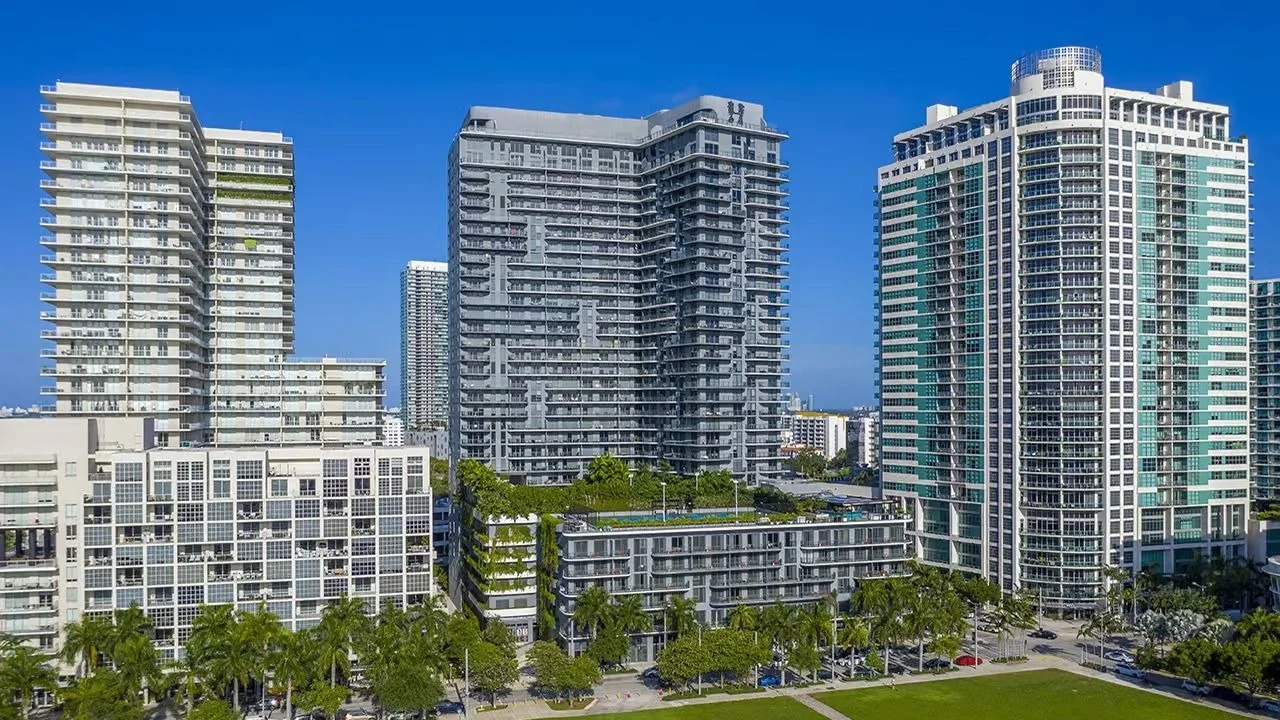
Quick answer: Two different products share this address. 410 condominium residences may be let 12 times a year with a 30-day minimum. Sixty furnished designer suites in the same building may be let daily under hotel management. Before price, before view, before floor: establish which one you are buying, because the rules, the buyer pool and the lender’s view of the project differ completely between them.
One address, two assets
| Condominium residence | Designer suite | |
|---|---|---|
| Count | about 410 | about 60 |
| Letting | 12 per year, 30-day minimum | daily, under hotel management |
| Furnished on delivery | no | yes |
| Operated by | you or your manager | the hotel operator |
| Buyer pool on resale | owner-occupiers and landlords | operators and yield buyers |
The two are not interchangeable and they should never be compared on price per square foot alone. A suite is a small furnished operating unit inside a hotel programme. A residence is a home with a letting option that stops well short of nightly.
Ask the seller and the association, in writing, which of the two the folio refers to. Then draw comparables only from the same product. This is the single most common way to overpay or underprice at this address.
The hotel in the building is the financing question
Lender project eligibility rules test the project, not the borrower, and the items they test read like a description of a mixed-use building:
| Test | Why it applies here |
|---|---|
| Is a hotel operating in the building | yes, by design |
| Are there hotel-type services | yes |
| Is rental income pooled | ask, in writing |
| What share of the building is non-residential | ask for the schedule |
| Reserve funding on the residential association | ask for the study |
None of that automatically makes the project non-warrantable. Plenty of mixed-use buildings finance normally because the residential condominium is legally and financially separated from the hotel component. But the question cannot be answered by looking at the building, only by reading how it is structured.
So: obtain a written project eligibility determination before you sign a contract, not after. Where a project is non-warrantable the conventional thirty-year loan disappears building-wide, leaving cash, portfolio lending or a DSCR loan underwritten on rent at a larger deposit. Overseas buyers work through foreign national mortgage programmes.
Compare with SLS Lux Brickell, where the same operator model appears, and with buildings that deliberately have no hotel component at all.
Twelve lettings a year is genuinely permissive
For a residence, 12 lettings a year at a 30-day floor is one of the more flexible rules in Miami. Set against the buildings covered on this site:
| Building | Lettings a year | Minimum |
|---|---|---|
| Hyde Midtown residences | 12 | 30 days |
| Paraiso Bayviews | 12 | 60 days |
| SLS Brickell | 3 | 30 days |
| Quantum on the Bay | 2 | six months |
Twelve monthly lettings is, arithmetically, a full year of monthly tenancies. That supports a real medium-stay business: corporate placements, relocation, medical and project staff, and seasonal residents.
Two cautions. The building’s rule is a ceiling, not a permission: City of Miami and Miami-Dade requirements govern independently, and a 30-day letting sits above the threshold most short-stay rules target but should still be checked for the address. See the Miami-Dade short-term rental rules.
And a 30-day letting is fully taxable: the transient taxes attach to lodging of six months or less, so county tourist tax and state sales tax apply to every one of those 12 lettings. Only a written lease longer than six months leaves that regime.
What a 30-day tenant actually wants
Twelve monthly lettings a year means twelve tenants who are living in the residence, not holidaying in it. That changes what the unit needs.
| Feature | Why it decides a monthly booking |
|---|---|
| In-unit washer and dryer | tolerable to share for 3 nights, not for 3 months |
| A real desk and chair | many of these tenants work from the residence |
| Tested, stated internet speed | the most common complaint in medium-stay lettings |
| Assigned parking | often a second vehicle |
| Full kitchen with storage | 30 days of eating out is not the plan |
| Durable neutral furnishing | replaced on wear rather than on fashion |
Spend on the laundry and the internet, because both convert into renewals. Do not spend on styling for photographs: this booking is made from a specification list, not from an image.
Midtown is not Brickell and not Edgewater
The building sits in Midtown, between the Design District and Edgewater, a low-rise walkable grid of shops and restaurants rather than a financial district or a bayfront tower corridor.
That shapes the tenant. Midtown draws people who want to walk to somewhere rather than to look at water, and the rents follow a different logic from a bayfront unit two miles east. Do not underwrite this building on Edgewater waterfront comparables.
For the surrounding market see Edgewater and the Miami area page, and for nearby stock Ocho Edgewater, Paraiso Bay and Aria on the Bay.
A 2018 building, so ask about reserves rather than inspections
A 2018 completion places the first milestone inspection near 2043 on the 25-year coastal trigger, repeating every 10 years. That is outside any normal hold and it is one of the real advantages of newer stock.
What is live at this vintage:
| Document | Why it matters |
|---|---|
| Structural integrity reserve study | required regardless of age; sets the reserve line in your dues |
| Reserve funding percentage | whether tomorrow’s cost is prepaid |
| Cost allocation between components | what the residential association pays for in a mixed-use building |
| Assessment history, 24 months | what has been levied, is pending, or has been discussed |
| Developer turnover and defect position | a 2018 building can still carry an open claim |
The third row is the one specific to this building. In a mixed-use structure, shared plant, lobbies, lifts and amenity areas serve both the hotel and the residences, and the document that divides those costs is what decides whether your dues are subsidising an operator or the reverse.
Reading the dues
Ask what the dues include, then ask the manager to split 3 years of increases into reserve contribution, master insurance premium and shared-component charges. Coastal Miami master policies have repriced every year since 2022 and sit inside the dues, so a rising line can mean prudent funding, insurance, or the hotel’s share moving. Only the breakdown distinguishes them.
Add Miami-Dade property tax, an owner’s HO-6 policy and, for a let residence, management and vacancy. See the Florida property insurance guide.
Verification checklist before you wire
- Establish whether the folio is a condominium residence or a designer suite.
- Draw comparables only from the same product.
- Get the recorded declaration and read the letting article for your product.
- Confirm in writing whether any rental pooling programme exists.
- Get the schedule of non-residential space and the cost allocation between components.
- Obtain a written lender project eligibility determination before contract.
- Get the structural integrity reserve study and the funding percentage.
- Request 3 years of dues split into reserves, insurance and shared components.
- Confirm the City of Miami position for the address if letting is planned.
- Register for county tourist tax and state sales tax on any letting under six months.
Which buyer this building suits
It suits an owner who wants a walkable Midtown address with a letting rule flexible enough to run monthly tenancies all year, and who is prepared to read a mixed-use structure properly rather than assume it behaves like a plain condominium. On those terms the 12-lettings rule is a genuine asset that most Miami buildings do not offer.
It suits a buyer who wants simplicity poorly. There are two products here, a hotel operates inside the building, and the financing answer depends on documents rather than on the address. All of that is knowable before contract, and none of it is visible from a listing.
Frequently Asked Questions
The condominium residences may be let up to 12 times per year with a 30-day minimum lease. The 60 fully furnished designer suites are a separate product and may be let daily under hotel management. Confirm which of the two you are buying before anything else, because they are different assets with different rules.
It is a building with both. A hotel operation runs inside it alongside residential condominiums, which is precisely the structure lender project eligibility rules test for. That does not make the project non-warrantable on its own, but it makes a written project eligibility determination essential rather than optional.
Thirty-one storeys at 3401 NE 1st Avenue, holding about 410 condominium residences plus roughly 60 hotel suites. Completed in 2018, co-developed by Dezer Development and The Related Group, with architecture by Arquitectonica.
No. A 30-day minimum applies to the residences, so nightly and weekly letting is not available to a condominium owner even though the suites in the same building operate that way. Confirm the clause in the recorded declaration with amendments.
A 2018 completion places the first milestone inspection near 2043 under the 25-year coastal trigger, repeating every 10 years, which is outside a normal hold. The live document is the structural integrity reserve study, which applies regardless of building age.
Ask exactly how costs are apportioned between the residential and hotel components, and what the residential association is responsible for. In a mixed-use building the allocation between components is a document, not an assumption, and it determines what you pay for shared plant, lobbies and amenity space.
Establish which product you are buying at Hyde Midtown
Tell us the unit you are considering. We will come back with whether the folio is a residence or a designer suite, the recorded letting article for that product, the cost allocation between the hotel and residential components, the reserve study and funding percentage, and a written lender project eligibility determination.