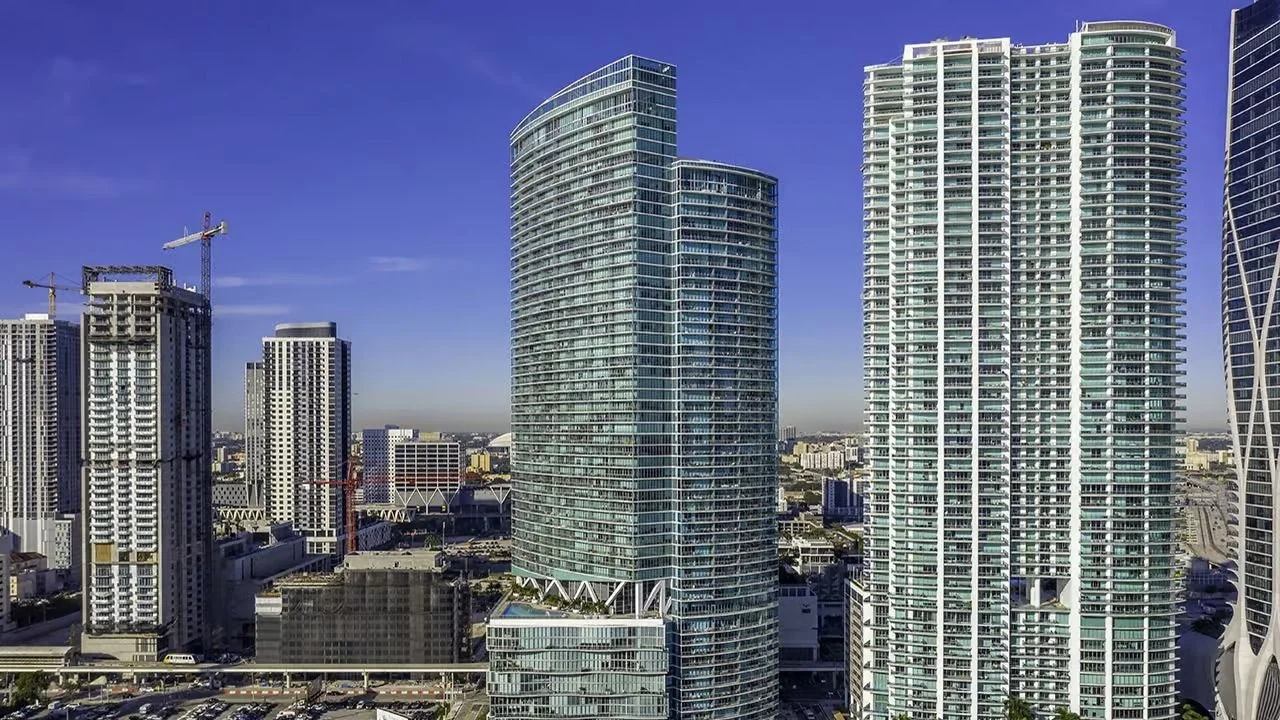
Quick answer: Three lettings a year, three-month minimum. That combination is rare in Miami, where six months is the standard floor, and it is the whole reason to look at this building rather than the tower next door. A three-month floor makes a winter season lettable. It also puts every permitted letting inside the transient tax, which is the half of the story the rule’s admirers usually skip.
Three months is the seasonal line
| Building | Lettings a year | Minimum | Seasonal letting possible |
|---|---|---|---|
| Marina Blue | three | three months | yes |
| 50 Biscayne | two | six months | no |
| Vizcayne | two | six months | no |
| Epic Residences | two | six months | no |
| Hyde Midtown | twelve | 30 days | yes, and monthly |
The Miami winter season runs roughly January to April. A six-month floor cannot accommodate it: a seasonal tenant taking three or four months simply cannot be housed. A three-month floor can, and that is the single functional difference between this building and most of its Downtown neighbours.
With three lettings permitted, the practical patterns are:
- One winter season plus one longer tenancy for the rest of the year.
- Three consecutive three-month tenancies, which is demanding to fill but legal.
- One annual tenant, using none of the flexibility.
That optionality is worth something real. It is also not free, for the reason in the next section.
Every permitted letting is taxable
This is where seasonal owners in Florida accumulate quiet liabilities, and this building’s rule sits squarely in the trap.
The county tourist development tax and the state sales tax on transient rentals attach to lodging of six months or less. Marina Blue’s maximum permitted letting under the three-month rule is well inside that. So:
| Letting | Transient taxes |
|---|---|
| Three months | yes |
| Four months, a winter season | yes |
| Five months | yes |
| A written lease over six months | no |
An owner letting for a season and treating it as an ordinary tenancy has an unregistered, unfiled liability accruing from the first booking. Miami-Dade reconciles booking data against its own registrations, and the discovery event is a letter covering the whole operating history with interest and penalties.
Register before the first letting. See Florida sales tax on rentals and the Miami-Dade short-term rental rules.
Note also that a three-month letting sits above the 30-day threshold most municipal short-stay rules target, which is why this rule is workable where a nightly one would not be. Confirm the City of Miami position for the address before relying on that.
Model both, then choose
The rule gives an option. Whether to use it is arithmetic, and it should be done on the specific residence.
| Line | Seasonal model | Annual tenancy |
|---|---|---|
| Rent | higher per month in season | lower, steady |
| Occupied months | 3 to 9 | 12 |
| County and state transient tax | yes, on all of it | none over six months |
| Furnishing | required, and replaced on wear | tenant’s own |
| Turnover cost | per letting, up to three a year | one make-good a year |
| Void | between seasons, real | between tenancies |
| Filing burden | monthly returns | none |
Run both columns to a net figure before deciding. A winter rate that looks like a large premium frequently narrows once tax, furnishing, turnover and the empty summer are deducted. Sometimes it still wins, which is the point of having the option.
Five hundred and sixteen residences on the water
Every residence has a direct water view, which in a building of this size is unusual and is the main reason the tower commands attention on Biscayne Boulevard.
| Effect | Consequence |
|---|---|
| Fixed costs divide across 516 owners | dues per foot below a boutique building’s |
| Any assessment divides 516 ways | the per-owner figure is materially smaller |
| Standing supply for sale and to let | no individual owner sets the price |
| Deep comparable set | a residence can be priced from real trades |
Ask for every trade in the building over 24 months by unit type and achieved rents by unit type over a full year, split between seasonal and annual lettings if the association or a manager can provide it. That split is the data this building’s decision actually turns on.
Reported floor counts differ between sources, so confirm the specific floor and residence from the folio rather than from a listing.
A 2007 building and a 2032 inspection
A 2007 completion places the first milestone inspection around 2032 under the 25-year coastal trigger, repeating every 10 years. A ten-year hold runs through it.
| Document | What it decides |
|---|---|
| Structural integrity reserve study | expected scope and cost |
| Reserve funding percentage | how much is already collected |
| 3 years of dues split into reserves and insurance | funding or deferring |
| Assessments in the last 24 months | what is already in motion, with minutes |
Ask also what has been replaced and when, with permits: roof and waterproofing, lifts, cooling plant and risers, glazing and sealants. Nineteen years in, several reach the end of their first cycle together.
Reading the dues
Xfinity cable with a large channel package, water, sewer and trash are included. Add those services back to any comparison building before deciding which is cheaper, and remember that a furnished seasonal letting also carries its own utility profile.
Ask the manager to split 3 years of increases into reserve contribution and master insurance premium. Coastal Miami master policies have repriced every year since 2022 and sit inside the dues. See the Florida property insurance guide.
For a let residence add Miami-Dade property tax on the assessed value without homestead, an owner’s HO-6 policy written for the letting use, management, and the void allowance the seasonal model implies.
Financing
Reserve funding and investor concentration are the project-level tests, and a building with a permissive letting rule usually reads higher on the second.
Obtain a written project eligibility determination before offering. Where a project is non-warrantable the conventional thirty-year loan is unavailable building-wide, leaving cash, portfolio lending or a DSCR loan underwritten on rent at a larger deposit. Overseas buyers work through foreign national mortgage programmes. See also the Florida condos hub.
Verification checklist before you wire
- Confirm the three-lettings and three-month minimum in the recorded declaration.
- Register for county tourist tax and state sales tax before the first letting.
- Confirm the City of Miami position for the address if seasonal letting is planned.
- Model the seasonal and annual columns to a net figure on the same residence.
- Get achieved rents by unit type, split seasonal and annual, over a full year.
- Get the structural integrity reserve study and the funding percentage.
- Request 3 years of dues split into reserve contribution and insurance premium.
- Ask what has been replaced and when, with permits, on a 2007 building.
- Obtain a written lender project eligibility determination.
Which buyer this building suits
It suits an owner who wants a Downtown Miami water view and genuine seasonal flexibility, and who will do the tax registration properly rather than discovering it later. Among large Downtown towers the three-month floor is the rare feature here, and for a snowbird owner who uses the residence part of the year it is the right building on this stretch.
It suits a buyer who wants the flexibility without the filing poorly. Every letting this rule permits is transient and taxable, monthly returns come with it, and the summer void is real. Run both models to a net number, and if the annual tenancy wins, take it and enjoy a building with a rule you did not need.
Frequently Asked Questions
Owners may let a maximum of three times per year with no lease shorter than three months. That three-month floor is unusual: most Miami buildings of this size sit at six months, and the difference is what makes a winter season lettable here.
Yes. The county tourist development tax and the state sales tax on transient rentals attach to lodging of six months or less, so every letting permitted under this rule is fully taxable. Only a written lease running longer than six months leaves that regime, and this building's rule does not require one.
About 516 residences in a tower reported at 57 storeys at 888 Biscayne Boulevard, completed in 2007, with one to four bedroom layouts and direct water views from every residence. Floor counts differ between sources, so confirm the specific floor from the folio.
Cable through Xfinity with a large channel package, plus water, sewer and trash removal, are included in the association dues. That bundling raises the headline figure relative to a building that bills those separately, so add them back before comparing.
A 2007 completion places the first milestone inspection around 2032 under the 25-year trigger that applies within 3 miles of a coastline, repeating every 10 years. That is inside a normal hold, so the reserve study and its funding percentage are documents for a buyer today.
It depends on what a winter tenancy achieves against an annual one, after the county and state taxes that apply below six months, plus furnishing, turnover and the void between seasons. Model both on the same residence before choosing. The rule gives you the option; it does not make the option automatically better.
Model the seasonal and annual options at Marina Blue
Tell us the residence type you are considering. We will come back with achieved rents split between seasonal and annual lettings, both models run to a net figure after county and state transient tax, the registration steps, the reserve study and funding percentage ahead of 2032, and dues split by line.