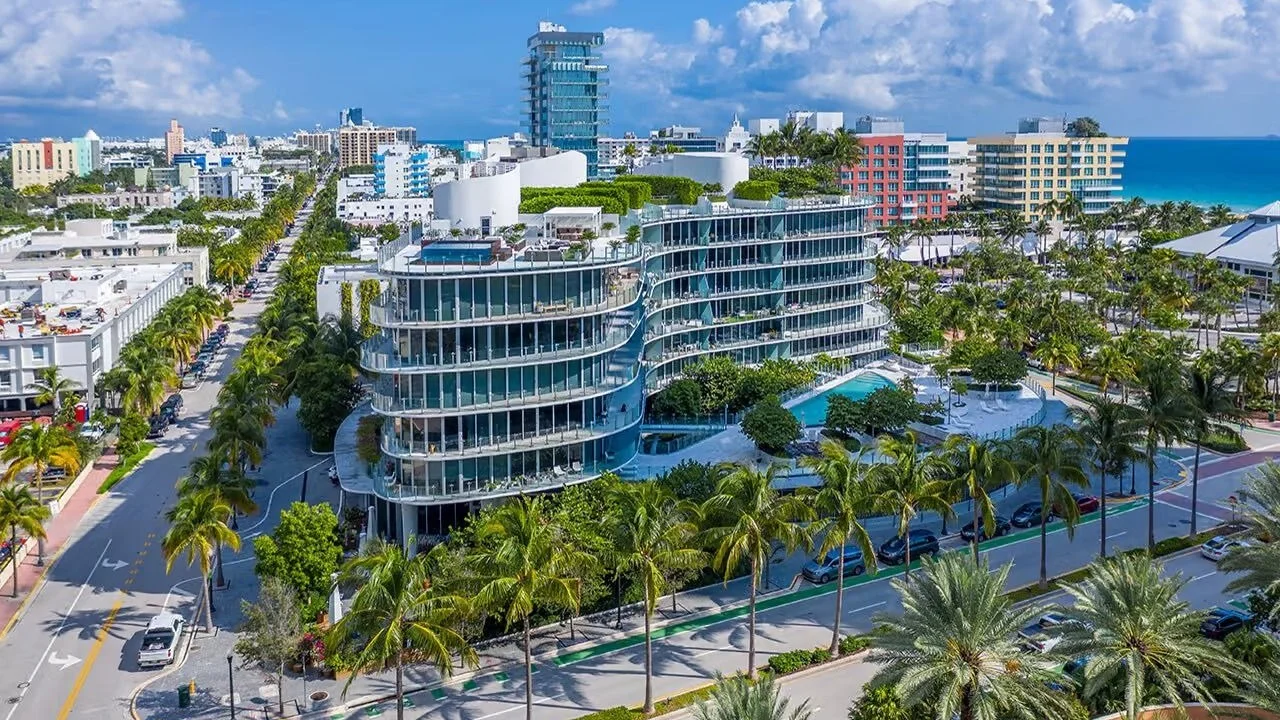
Quick answer: Two things define this building and one of them is unresolved. It holds about 50 residences of three to five bedrooms across two low-rise towers, which puts the per-owner share of every cost among the highest on this site. And two sources report two different letting rules, one a six-month minimum and one three months. Those are different businesses. On a building this small, reading the recorded declaration is not a formality; it is the diligence.
When sources disagree, the declaration decides
This page could quote a letting rule with confidence and be wrong. Instead, here is the actual state of the evidence:
| Reported rule | Consequence if true |
|---|---|
| Six-month minimum | annual tenancy only; no seasonal letting |
| Two lettings a year, three-month minimum | a winter season is lettable |
Those are not variations on a theme. One rules out the South Beach season entirely; the other builds a model around it. An owner who buys on the second and finds the first has bought a different asset.
The recorded declaration with all amendments is the only source that settles it, and it is obtainable before contract. Ask specifically for:
- The minimum lease term.
- The annual cap on lettings.
- Any waiting period after purchase before letting is permitted.
- Whether the rule has been amended since the original recording.
That last question is usually why sources disagree: one is quoting the original declaration and the other an amendment, or the reverse.
Fifty owners is the smallest denominator here
| Building | Residences | Share of a fixed cost |
|---|---|---|
| One Ocean | about 50 | the largest per owner on this site |
| Atlantis on Brickell | about 96 | very high |
| Courvoisier Courts | about 272 | moderate |
| Marina Blue | about 516 | low |
Two consequences follow, and both are structural rather than avoidable.
Dues per square foot sit high by construction. Staffing, management, master insurance, amenity operation and grounds divide across 50 owners. There is no crowd to dilute a fixed cost, and an oceanfront South of Fifth building is not run cheaply.
Assessment exposure is concentrated. Whatever the reserve study identifies, 50 owners pay for it. That is manageable when the reserve is funded and uncomfortable when it is not.
Against that, a 50-owner association is easy to govern, easy to hold to account, and usually well maintained because the owners are few enough to notice. Small is not worse; it is different, and the reserve funding percentage tells you which version you have.
A 2016 building, so the reserve study is the document
A 2016 completion places the first milestone inspection around 2041 under the 25-year coastal trigger, repeating every 10 years. That is outside a normal hold, which is the genuine advantage of newer stock.
What is live at this vintage:
| Document | Why it matters here |
|---|---|
| Structural integrity reserve study | required regardless of age; sets the reserve line |
| Reserve funding percentage | with 50 owners, this carries unusual weight |
| 3 years of dues split into reserves and insurance | funding or deferring |
| Developer turnover and any defect position | a 2016 building can still carry an open claim |
Ask directly whether developer turnover has occurred and whether any construction-defect claim is live. On a 2016 building that window may not be closed, and on a 50-owner association the outcome of such a claim is not a rounding error.
Oceanfront insurance on a small association
The master policy on an oceanfront Miami Beach building is the largest variable in the budget and has repriced every year since 2022. With about 50 owners, a given premium increase moves each owner’s dues far more than it would at a large tower.
Ask the manager for the master policy premium as a separate figure for each of the last three years, not as part of a total. On a small oceanfront association that trend line is the single most useful predictor of where dues go next. Then add an owner’s HO-6 policy covering the interior and liability. See the Florida property insurance guide and the Citizens insurance guide.
Large homes, thin markets
Residences here are three to five bedrooms. That is a house-sized programme in a low-rise oceanfront building, and it produces a very particular market.
| One Ocean | A typical South Beach tower | |
|---|---|---|
| Entry size | three bedrooms | studio or one bedroom |
| Buyer | owner-occupier, second home | investor, single occupant |
| Comparable trades | few, price from all of them | many |
| Tenant pool if let | very small | deep |
| Time to sell | longer, wider offer spread | shorter |
Draw comparables from inside the building or from other large-format South of Fifth stock, never from the South Beach average. And if letting is any part of the plan, ask for achieved rents on comparable three to five bedroom residences over several years rather than one, because a handful of lettings a year is not a data set.
For the neighbouring market see Continuum South Beach, Apogee, Monad Terrace and the Miami area page.
The pet rule is permissive
Reported rules permit one pet per residence for owners and tenants alike, which is more accommodating than Neo Vertika or Courvoisier Courts, where tenants are excluded entirely.
For an owner-occupier that is simply convenient. For a landlord in a building where the tenant pool is already small, keeping pet-owning households in play is worth more than it would be in a studio tower with hundreds of possible tenants. Confirm the current rule and any weight limit in the declaration and association rules.
Financing
Reserve funding and investor concentration are the project-level tests, and at 50 residences the second moves sharply on a handful of let units.
Obtain a written project eligibility determination before offering. Where a project is non-warrantable the conventional thirty-year loan is unavailable building-wide, leaving cash, portfolio lending or a DSCR loan underwritten on rent. At this price level cash is common, and overseas buyers work through foreign national mortgage programmes. See also the Florida condos hub.
Verification checklist before you wire
- Get the recorded declaration with amendments and settle the letting rule from it.
- Establish the minimum term, the annual cap and any waiting period.
- Ask whether the letting rule has been amended since the original recording.
- Get the structural integrity reserve study and the current funding percentage.
- Ask whether developer turnover has occurred and whether any defect claim is live.
- Request 3 years of master insurance premium as a separate figure.
- Request 3 years of dues split into reserve contribution and insurance premium.
- Draw comparables from inside the building or other large-format South of Fifth stock.
- Get achieved rents on comparable large residences over several years.
- Obtain a written lender project eligibility determination.
Which buyer this building suits
It suits an owner-occupier or second-home buyer who wants a large, low-rise, oceanfront home in South of Fifth and values scarcity over liquidity. Fifty residences of this format in this location is a genuinely limited product, and the small association is a feature for someone who intends to live there.
It suits an income buyer poorly on every axis: a very small tenant pool for large residences, dues that scale with substantial floor area across only 50 owners, and a letting rule that two sources cannot agree on. Settle the rule from the declaration first. If it turns out to be six months, treat any letting as incidental and buy the building for what it actually is.
Frequently Asked Questions
Sources disagree. One reports a six-month minimum, another two lettings a year with a three-month minimum. Those are materially different rules, and the only way to settle it is the recorded declaration with all amendments. Do not underwrite a letting model on either figure until you have read the document.
About 50, across two mid-rise towers of roughly seven storeys at 1 Collins Avenue in South of Fifth. The South Tower carries three, four and five bedroom layouts and the smaller North Tower five bedroom plans. Completed in 2016 by the Related Group.
Because every shared cost divides across about 50 owners. Dues per square foot sit high by construction, and any assessment is apportioned across a very small group, so the per-owner figure on a given remedy is among the largest of any building covered on this site.
A 2016 completion places the first milestone inspection around 2041 under the 25-year trigger that applies within 3 miles of a coastline, repeating every 10 years. That is outside a normal hold, so the live document is the structural integrity reserve study rather than an inspection report.
Reported rules permit one pet per residence for owners and renters alike, which is more permissive than several buildings covered on this site where tenants are excluded. Confirm the current rule and any weight limit in the declaration and association rules.
It reads as a residence rather than a yield asset. Fifty large oceanfront homes in South of Fifth attract owner-occupiers and second-home buyers, the tenant pool for a five-bedroom letting is very small, and the dues on that floor area are substantial. Buy it to use, and treat any letting as incidental.
Settle the letting rule and reserve position at One Ocean
Tell us which residence you are considering. We will come back with the recorded declaration and the letting rule settled from it including any amendments, the reserve study and funding percentage, three years of master insurance premium, developer turnover and defect position, and comparables from large-format South of Fifth stock.