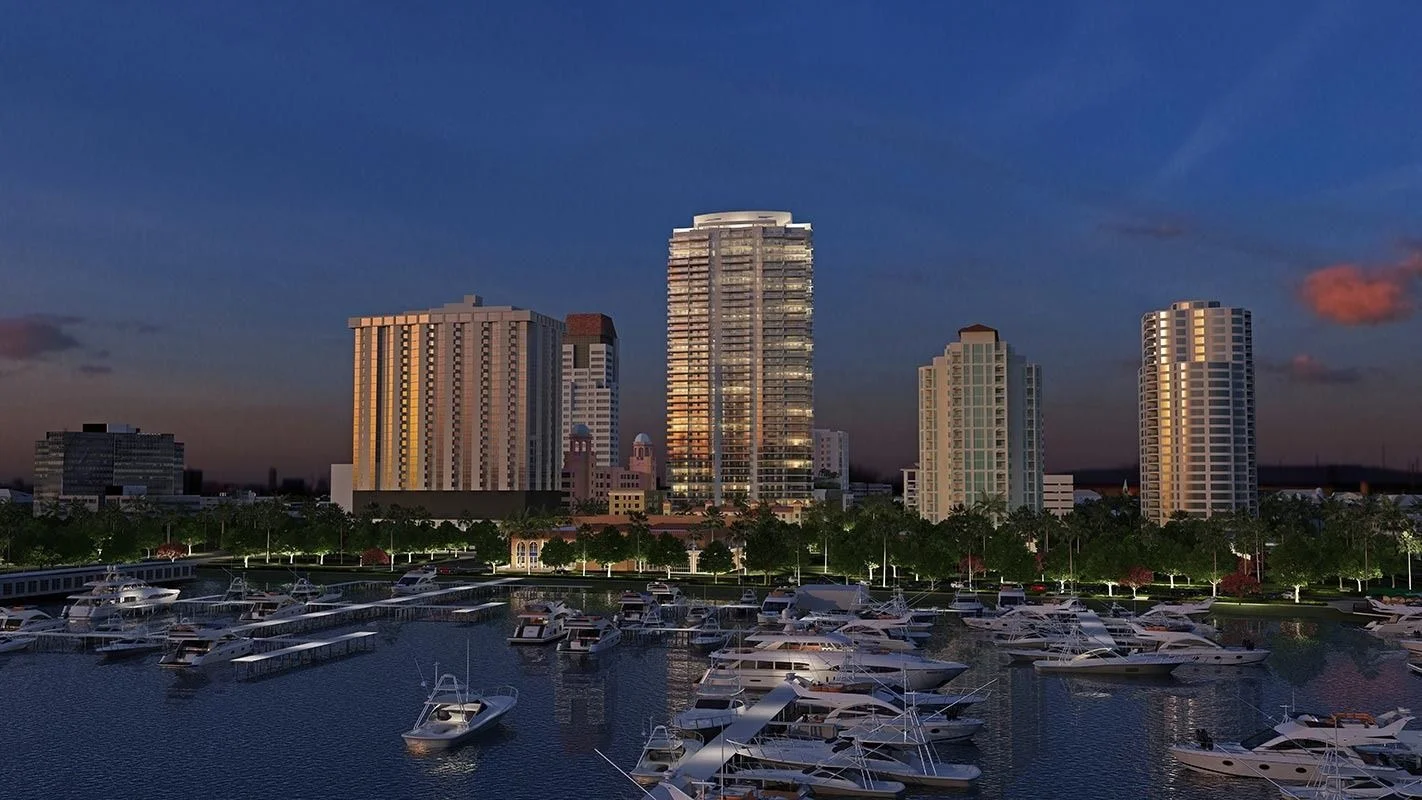
Quick answer: Dues here run $800 to $1,900 a month and cover cable, water, sewer, trash, pool, grounds, pest control and security. In Miami Beach the entry-level residence at Five Park carries about $2,653 a month for a comparable service list. That is the Tampa Bay proposition stated in one number, and it is the reason a buyer looks across the state rather than only down the coast.
The 25-year rule, stated precisely
This series has referred throughout to a coastal milestone trigger. It is worth setting out exactly, because buyers routinely get two parts of it wrong.
Florida Statute 553.899, enacted through Senate Bill 4-D in May 2022 after the Champlain Towers South collapse, requires a milestone inspection for condominium and cooperative buildings of three storeys or more:
| Condition | Trigger |
|---|---|
| Standard | by 31 December of the year the building reaches 30 years |
| Within three miles of a coastline | by 31 December of the year the building reaches 25 years |
| Thereafter | every ten years |
Age runs from the date the certificate of occupancy was issued, and the association is responsible for arranging the inspection and for its cost.
The first misunderstanding is the three-mile test. It is proximity to a coastline, not oceanfront position. A downtown building on Tampa Bay qualifies for the 25-year trigger just as a beachfront tower does, even though its exposure to salt spray is far lower. Downtown St. Petersburg sits within that distance, so this building’s first inspection lands near 2043.
The second is that the milestone recurs. It is not a single hurdle a building clears and forgets. Every ten years the inspection comes round again, with the engineering cost and whatever remedial work it identifies. A buyer modelling a twenty-year hold on a 2018 building should expect the 2043 inspection and plan for a second cycle beyond it.
For how the framework flows into reserve studies and funding, see the SB 4-D milestone guide.
What $800 to $1,900 buys
| Building | Market | Monthly dues, entry residence |
|---|---|---|
| ONE St. Petersburg | Pinellas | about $800 |
| Brickell House | Miami | about $690 on 644 sq ft |
| Murano Grande | Miami Beach | about $2,048 on a two-bedroom |
| Five Park | Miami Beach | about $2,653 on 1,434 sq ft |
| Muse | Sunny Isles | large, on oceanfront layouts |
Two drivers explain most of the gap and neither is quality.
Insurance. Coastal condominium master policies price on wind exposure and replacement cost, and a downtown Tampa Bay tower is a materially different risk from a beachfront Miami-Dade one. The master policy sits inside the dues everywhere, so the premium difference shows up as a dues difference. See the Florida property insurance guide.
Amenity scale. Cable, pool, grounds, pest control, security, water, sewer and trash is a comprehensive but conventional list. It is not a spa, a restaurant, a wine cellar and a valet operation, which is what the Miami figures at the top of that table are funding.
The instruction is the same as everywhere: compare totals rather than headline dues, and add back any service the other building bills separately. On that basis the gap narrows but does not close, and what remains is real.
A downtown building, not a beach one
At 41 storeys and 253 residences, roughly six per floor, this is a conventional density in a downtown setting rather than a resort one.
That shapes the tenant and buyer pool. Downtown St. Petersburg draws professionals, relocations from the north, and retirees choosing a walkable city over a beach community. It does not draw the international seasonal buyer who sets prices in Sunny Isles or South of Fifth.
The consequences run in both directions. The buyer pool is more domestic, which makes the market less exposed to currency and cross-border capital movement than Estates at Acqualina or the Miami luxury tier. It is also shallower at the top: fewer transactions above a certain price mean fewer comparables and slower price discovery for larger residences.
For the wider Tampa Bay picture, including how the metro compares on entry price and yield, see the Tampa area page.
Pinellas is a third rule set
This series has covered Miami-Dade and Broward. Pinellas County and the City of St. Petersburg are a third, and nothing carries across.
| Layer | Applies here |
|---|---|
| Milestone inspection | statewide, 25-year trigger within three miles of coastline |
| Short-term rental rules | City of St. Petersburg ordinances |
| Tourist development tax | Pinellas County rate and registration |
| Association letting clause | recorded declaration, not stated publicly here |
The association’s own rule is not documented in the public record, which puts this building in the same position as Axis Brickell, Monad Terrace and Paramount Fort Lauderdale. Obtain the declaration and amendments, get written confirmation from management, and verify the city and county layers separately. The strictest of the three governs and the penalty falls on the owner.
A 2018 building at the start of its cycle
A 2018 completion means the association has been operating for several years and the first replacement cycle is approaching for finishes, mechanical plant and lift equipment. That is enough history to be useful without being enough to be worrying.
Request the reserve study and funding percentage, and every year of dues history since the association registered in September 2018. On a building this age the slope of the dues line is the single most informative number: a board funding steadily toward 2043 shows a gentle rise, one deferring shows a flat line and a larger bill later.
Ask also what the reserve study assumes about the recurring nature of the milestone. A study scoped only to the first inspection understates the long-run obligation, because the second cycle arrives in 2053 whether or not anyone has budgeted for it.
Financing outside the Miami market
Lender treatment here is more straightforward than in the Miami stock covered in this series. There is no hotel component, no branded residence licence, no mixed-use commercial share and no condo-hotel programme, which removes the main routes to non-warrantable status.
The ordinary questions still apply: reserve funding, investor concentration and insurance adequacy. Obtain a written project eligibility determination before offering. Where a project is non-warrantable the conventional thirty-year loan is unavailable building-wide, leaving cash, portfolio lending or a DSCR loan underwritten on rent at a larger deposit. Overseas buyers work through foreign national mortgage programmes.
At this price point conventional financing is genuinely available to more buyers than it is in the Miami luxury tier, which widens the pool you eventually sell into. That is an underrated advantage of the market rather than of the building.
Verification checklist before you wire
- Confirm the certificate of occupancy date, since the milestone runs from it rather than from a marketing completion year.
- Confirm the building’s distance from the coastline if the 25 against 30-year trigger is material to your model.
- Ask whether the reserve study contemplates the recurring ten-year cycle or only the first inspection.
- Request every year of dues history since 2018 and read the slope.
- Get the recorded declaration and amendments for the letting clause; the public record is silent.
- Verify City of St. Petersburg and Pinellas County rental rules and tax registration separately.
- Ask what share of dues is insurance premium, and how it has moved since 2022.
- Obtain a written lender project eligibility determination.
Which buyer this building suits
It suits a buyer who wants a downtown Florida base with a genuinely lower cost of ownership than the south-east coast offers, a conventional financing route, and a domestic buyer pool at resale. The dues figure is the argument, and it is a strong one for anyone whose reason for buying in Florida is not specifically the ocean.
It suits a buyer who wants beachfront or an international resale market less well, and that is a statement about the location rather than the building. What this address offers is a well-built 2018 tower in a walkable downtown at a carrying cost that Miami cannot match. Confirm the letting rules and the reserve position, and the rest of the analysis is unusually simple by the standards of this series.
Frequently Asked Questions
Monthly dues run about $800 to $1,900 depending on residence size, covering cable television, pool and grounds maintenance, pest control, security, water, sewer and trash. In absolute terms that is a fraction of what comparable service costs in Miami Beach, where a single entry-level residence can carry $2,600 a month.
Completed in 2018 at 100 1st Avenue North, St. Petersburg FL 33701, developed by the Kolter Group. It rises 41 storeys with 253 residences. The One Saint Petersburg Condo Association was registered in Pinellas County in September 2018.
Florida requires a milestone inspection for buildings of three storeys or more by 31 December of the year the building turns 30, or 25 if it sits within three miles of a coastline. Downtown St. Petersburg is on Tampa Bay and within that distance, so the 25-year trigger applies and lands near 2043. The inspection then repeats every ten years.
No, and this is widely misunderstood. The statute requires the inspection at the initial 25 or 30-year mark and every ten years thereafter. It is a recurring obligation with a recurring cost, not a single event a building passes and forgets.
The public record does not state them. Obtain the recorded declaration and all amendments and get written confirmation from management. Separately verify City of St. Petersburg and Pinellas County requirements, which differ from Miami-Dade and Broward practice on registration and tourist development tax.
Entry prices, dues and insurance all sit materially lower, and the buyer pool is more domestic and less international. The trade is a smaller luxury segment, fewer comparable transactions at the top of the market, and a downtown rather than beachfront proposition.
Get the dues history and letting rules at ONE St. Petersburg
Tell us the residence size you are considering. We will come back with every year of dues since 2018 and the insurance share, the reserve study and whether it covers the recurring ten-year cycle, the recorded letting clause, and City of St. Petersburg and Pinellas County requirements.