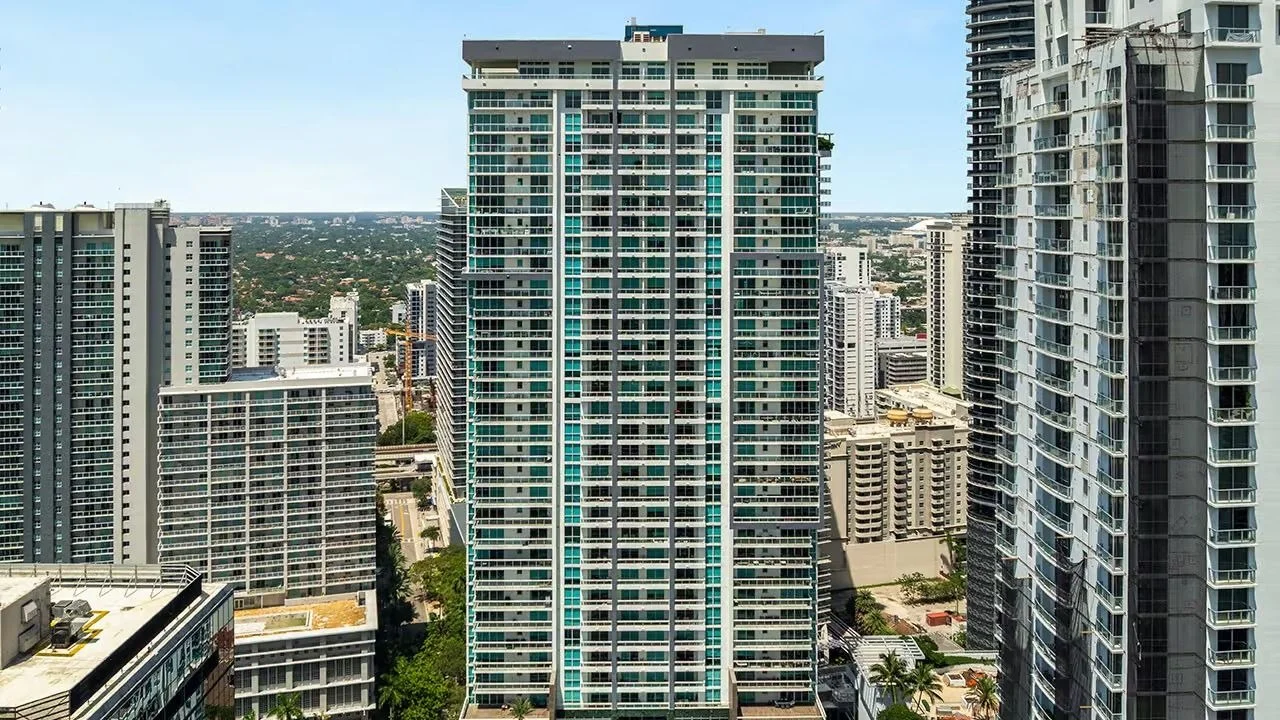
Quick answer: The Bond permits letting from a 30-day minimum, which is unusually permissive for Brickell. Two things qualify that. The association’s rule is not the public rule: City of Miami and Miami-Dade requirements govern independently and must be checked for the address. And 327 other residences hold the same permission, so what limits rent here is competition inside the building, not the declaration. Both are answerable before you offer.
Thirty days is the association’s rule, not the city’s
Across Brickell the common position is two lets a year at a six-month minimum. The Bond’s 30-day floor is genuinely more permissive, and it is one of the reasons the building attracts owners who intend to let.
It is also only half of the permission. A recorded declaration governs what the association allows. What is lawful at the address is set separately:
| Layer | Who sets it |
|---|---|
| Minimum lease term | the condominium declaration and its amendments |
| Whether short stays are permitted at all | City of Miami zoning for the property |
| Registration and licensing | Miami-Dade County and the state, where applicable |
| Sales tax and tourist development tax | state and county, on transient rentals |
A 30-day let is longer than the threshold that most short-stay rules target, which is why 30-day rules exist in the first place, and it generally sits on the safer side of the line. That is a reason to check rather than a reason to assume. Confirm the position for this address with the City of Miami before underwriting income. See the Miami-Dade short-term rental rules and the Florida short-term rental regulations guide.
Three hundred and twenty-seven neighbours have the same rule
This is the point most rental analyses skip. A permissive letting rule is not an advantage when every residence in the building holds it.
At 328 residences, all with the same 30-day floor, the constraint on achievable rent is the supply standing next to yours. In any given month a number of residences are listed at once, and the market clears at whatever the most motivated of those owners accepts. No individual owner has pricing power, and the same is true on the sale side.
That has three practical implications:
Underwrite from achieved figures, not asking rates. Ask for actual signed rents and occupancy for residences in the building over a full year, by unit type. Asking rates in a building with standing supply are aspirational.
Expect vacancy between tenancies. With 30-day leases the turnover count is higher than with annual ones, and each turnover carries cleaning, marketing time and empty nights.
Differentiate on product, not price. The building includes bi-level lofts and two-storey penthouses alongside standard floors. Those are genuinely scarce inside the building and they compete against a much smaller pool. Draw comparables from the same product.
Two products in one building
A 328-residence tower with studios, one-, two- and three-bedroom layouts, bi-level lofts and two-storey penthouses is not one market. It is at least two, and they behave differently.
Standard floors are the deep end. Many similar residences, frequent trades, a clear price per square foot, and a value set by whatever comparable inventory is listed this month. Liquidity is good and pricing power is nil. That is the ordinary condition of a large tower and it cuts both ways: easy to sell, hard to sell above the crowd.
Lofts and penthouses are the shallow end. Few of them exist, they rarely trade, and there is often no recent like-for-like sale to point at. A valuation drawn from standard-floor comparables will understate them; a valuation drawn from a single old penthouse sale proves very little. Expect a slower sale, a wider spread between the first offer and the last, and a genuine need for the appraiser to reason rather than average.
The letting market divides the same way. A studio at 30 days competes with dozens of near-identical studios. A two-storey penthouse competes with almost nothing inside the building, and its tenant pool sits outside it, in the wider Brickell luxury lettings market.
Establish which product you are buying before you look at a single number, because every figure that follows depends on it.
A 2016 building, so the reserve study is the document
A 2016 completion places the first milestone inspection near 2041, outside a normal ten-year hold. As at the other buildings of this vintage in the series, the live document is elsewhere:
| Document | What it answers |
|---|---|
| Structural integrity reserve study | expected component costs over the coming years |
| Reserve funding percentage | how much of that is already collected |
| Three years of dues history | whether the board is funding or deferring |
| Assessment history and board minutes | what has been levied, and what has been discussed |
Ask directly about any special assessment levied, pending or discussed in the last twenty-four months, and request the relevant minutes. On a 328-residence building an assessment divides widely, which is a real advantage of scale, and the total behind it is still worth knowing.
Reading the dues
Ask what the dues include. Brickell buildings of this era vary in whether cable, internet, water, sewer and trash sit inside the association budget or are billed separately, and the difference distorts any comparison of headline figures. Rebuild both sides before comparing with 1428 Brickell, Brickell Heights or Plaza on Brickell.
Then ask the manager to split three years of dues increases into reserve contribution and master insurance premium. Coastal Miami condominium master policies have repriced every year since 2022 and sit inside the dues, so a rising line can mean prudent reserve funding, insurance, or both. Only the breakdown distinguishes them. See the Florida property insurance guide.
For a let residence, add an owner’s HO-6 policy, Miami-Dade property tax, management, and the vacancy allowance the 30-day model implies. The dues line alone will understate the annual carry substantially.
Financing a permissive building
Investor concentration is the test to watch here. Lenders assess the proportion of residences that are let rather than owner-occupied, and a building whose rules encourage letting will sit higher on that measure than a six-month-minimum tower next door. That is a project-level test, applied to every applicant in the building.
Reserve funding is the second test, on every questionnaire since 2021.
Obtain a written project eligibility determination before offering. Where a project is non-warrantable the conventional thirty-year loan is unavailable building-wide, leaving cash, portfolio lending or a DSCR loan underwritten on rent at a larger deposit. A DSCR loan is often the natural fit at a building like this, since the underwriting looks at the rent the residence produces. Overseas buyers work through foreign national mortgage programmes. For the wider market see the Brickell area page.
Verification checklist before you wire
- Confirm the 30-day minimum in the recorded declaration with all amendments.
- Confirm the City of Miami position for the address and zoning, and any registration requirement.
- Get actual achieved rents and occupancy for a full year, by unit type, from inside the building.
- Establish whether your residence is a standard floor, a bi-level loft or a penthouse, and draw comparables accordingly.
- Ask what the dues include, and rebuild the figure before comparing with other buildings.
- Request three years of dues history split into reserve contribution and insurance premium.
- Get the structural integrity reserve study and current funding percentage.
- Ask about any special assessment levied, pending or discussed in the last twenty-four months.
- Obtain a written lender project eligibility determination addressing investor concentration.
Which buyer this building suits
It suits an owner who wants a Brickell address with a letting rule that permits monthly tenancies, and who has underwritten the rent from figures achieved inside the building rather than from the flexibility itself. The permissive rule is real and it is worth something; it simply is not worth what a scarcity story would imply, because it is not scarce here.
It suits a buyer seeking a differentiated asset less well, unless that buyer is looking specifically at the lofts or penthouses, which are the genuinely limited product in the building. On the standard floors this is a liquid, well-located, well-run building where the price you achieve, buying or letting, will look a great deal like what your neighbours achieve.
Frequently Asked Questions
The building permits leases from a 30-day minimum, which is permissive by Brickell standards where six months is the common floor. That is the association's rule. City of Miami and Miami-Dade requirements apply on top and govern independently, so confirm the position for the address before underwriting monthly letting income.
Forty-four storeys with 328 residences at 1080 Brickell Avenue, completed in 2016. Layouts run from studios to three bedrooms and include bi-level lofts and two-storey penthouses. Establish which product your residence is, because loft and penthouse comparables should not be drawn from the standard floors.
Rilea Group with MDR, designed by Nichols Brosch Wurst Wolfe and Associates, completed in 2016. The building carries a British theme through its common areas, including the Parliament Lounge and screening room.
A 2016 completion places the first milestone inspection near 2041 under the 25-year coastal trigger, outside a normal ten-year hold. The live document at this building is the structural integrity reserve study and the funding percentage it produces, not an inspection date.
It makes the model possible, and 327 other residences share exactly the same permission. Competition inside the building is therefore the binding constraint on rent rather than the rule. Ask for actual achieved rents and occupancy from residences in the building, not asking rates.
Ask for a written project eligibility determination. Buildings with permissive letting rules can carry a high proportion of let residences, and investor concentration is one of the tests a lender applies to the project as a whole rather than to the borrower.
Get achieved rents and the reserve position at The Bond on Brickell
Tell us which residence type you are considering. We will come back with actual signed rents and occupancy from inside the building by unit type, the recorded letting clause, the City of Miami position for the address, the reserve study and funding percentage, dues history split into reserves and insurance, and a written lender determination.