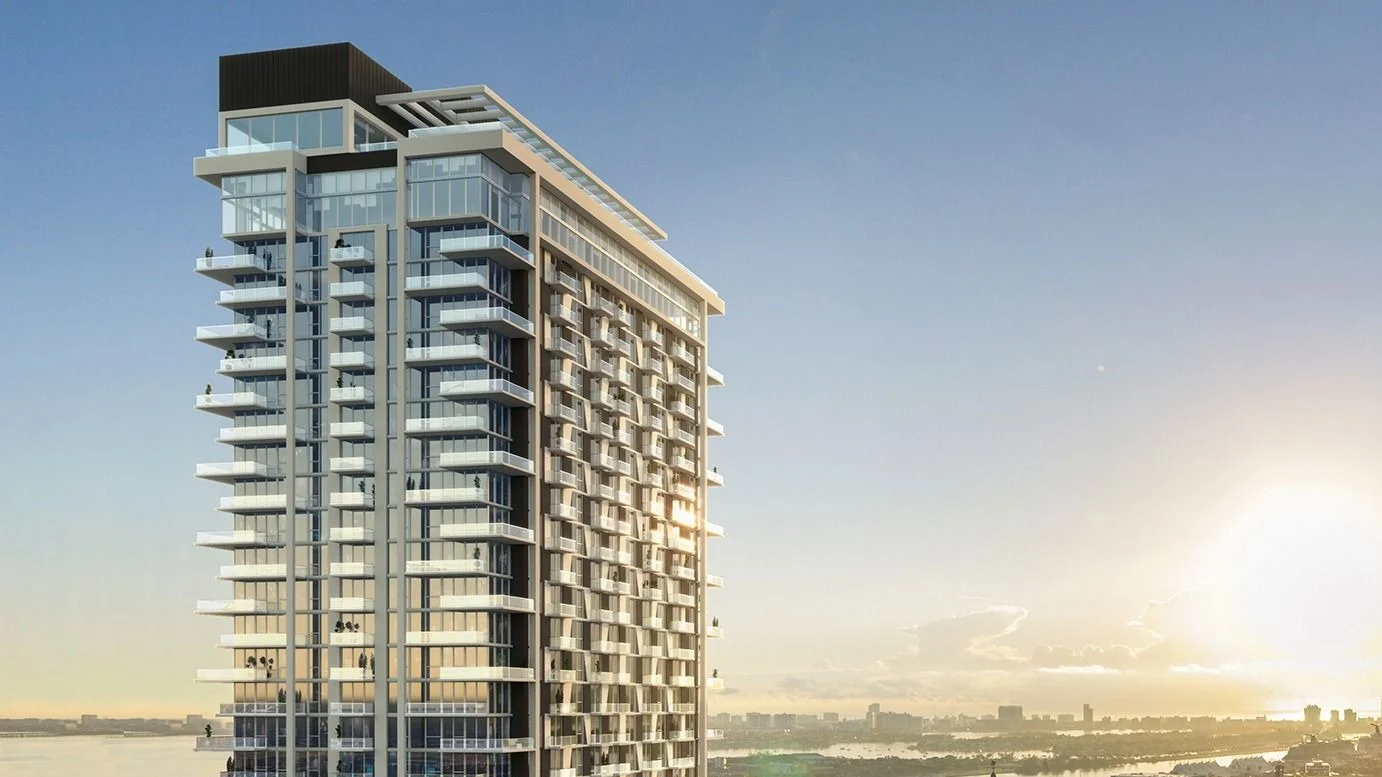
Quick answer: Across twenty-eight Miami buildings, only two permit short letting without a cap or a long minimum stay. 72 Park is one and this is the other. The difference between them is not the rules but the city: 72 Park sits in Miami Beach, The Crosby sits in the City of Miami, and the two regulate short stays under entirely separate regimes. That distinction decides which one actually works for you, and it costs nothing to check.
Two cities, two rulebooks
Every short-let purchase in South Florida passes two tests: the association’s rules and the municipality’s. Both of the buildings in this series that clear the first test sit in different cities, and that is the material difference between them.
| The Crosby | 72 Park | |
|---|---|---|
| Municipality | City of Miami | City of Miami Beach |
| Neighbourhood | Downtown, Miami Worldcenter | North Beach |
| Association rule | no restriction reported | short letting permitted |
| Residences | about 450 | 206 |
| Entry price | about $500,000 | about $700,000 |
| Delivered furnished | confirm | yes |
Miami Beach restricts short stays by zone across most of the city, with substantial fines for breach, and permits them only in defined areas. The City of Miami operates its own framework with different zoning treatment, registration and enforcement.
Neither is inherently more permissive, and the answer for any given address depends on its specific zoning designation rather than on the city name. What matters for a buyer is that the two must be checked separately, and that a rule learned in one city tells you nothing about the other.
Ask the City of Miami directly for this address’s zoning designation and any registration requirement, and keep the written response. Then read the recorded declaration for the association’s own clause. Where the two disagree, the stricter governs and the penalty falls on the owner.
Scale changes the short-let maths
At roughly 450 residences, The Crosby is more than twice the size of 72 Park, and in a short-let building that has consequences most pro formas ignore.
Internal competition. In a building designed for short letting, your competitors are not the wider market first, they are the other 449 residences with the same layouts, the same finishes and the same address. Nightly rate and occupancy converge across the building, and the pricing power of any single owner is limited.
Amenity wear. More than 22,000 square feet of amenities plus a rooftop bar and restaurant, serving a high-turnover population, wears faster than the same facilities in an owner-occupied tower. Ask what the reserve study assumes for common-area replacement intervals and whether the operating budget provides for guest-level cleaning and security.
Operational density. Four hundred and fifty residences turning over frequently produces lobby, lift and loading traffic on a hospitality scale. That is a feature if you are letting and a consideration if you are living there.
Ask the management office for building-level performance rather than projections: what occupancy and average daily rate residences have actually achieved, and what share of the building is let short at any time. In a purpose-built short-let tower that data exists.
The tax and licensing stack sits on you
Short letting is a business, and the obligations belong to the owner rather than the association:
| Obligation | Levied by |
|---|---|
| Sales tax on short-term accommodation | State of Florida |
| Tourist development tax | Miami-Dade County |
| Vacation rental licence | Florida DBPR |
| City registration where required | City of Miami |
Each requires registration before the first guest, not after. Those taxes come off gross revenue before any management fee, which is why nightly rate and net yield diverge so sharply in this model, and why a projection built on rate times occupancy overstates the return.
Add the operating layer: platform commission, cleaning between stays, linen, restocking, guest communication and a management fee well above the 8 to 12 per cent charged on annual lettings. Model those lines before the rate.
Financing is the constraint, not the rules
A condominium built around short letting invites the assessment that makes conventional financing unavailable.
Fannie Mae treats projects operated as a hotel, offering hotel-type services, or requiring rental pooling as ineligible. A 450-residence tower with a rooftop bar and restaurant, hospitality-scale amenities and unrestricted short letting sits close to those tests, and a lender may well conclude the project is non-warrantable. Where that happens the conventional thirty-year loan disappears for every residence, not only the ones being let.
The realistic routes are cash, a portfolio loan, or a DSCR loan underwritten on the income the residence produces at 25 to 30 per cent down and above conforming pricing. DSCR is the natural product here, but lenders differ on whether they will use short-let income and what evidence they require, usually platform history rather than a signed lease. Overseas buyers work through foreign national mortgage programmes.
Settle this before contracting. At a $500,000 entry the difference between a conventional loan and a DSCR loan is tens of thousands of dollars at closing and a materially different monthly payment, and it also determines who can buy the residence from you later.
Inside Miami Worldcenter
The building sits within the Miami Worldcenter development, a large mixed-use district in Downtown Miami that also contains Paramount Miami Worldcenter and Miami Worldcenter Residences.
That has the same implications set out for Rise at Brickell City Centre: shared elements, a master arrangement, service and delivery traffic on shared routes, and cost apportionment by formula rather than by your own board’s vote alone.
Ask for the shared facilities or reciprocal easement agreement and the apportionment formula, and ask what share of monthly dues funds district-level rather than building-level maintenance. In a district still under development, ask also what remains to be built and over what period, because construction next door is a real condition of ownership for a short-let owner whose guests will notice it.
A new building, and what that means
On a mid-decade delivery the first milestone inspection under the SB 4-D framework falls in the late 2040s, and it then repeats every ten years. Structural risk is not part of this decision.
What a new building lacks is history. There is no completed reserve cycle and no evidence of how the board behaves when a large bill arrives, and in a high-turnover building the replacement schedule for common-area finishes is shorter than the developer’s projection may assume. Request the developer’s projected budget alongside the association’s first adopted budget and compare them line by line, with attention to insurance, which has repriced every year since 2022 and sits inside the dues. See the Florida property insurance guide and the Miami area page.
Verification checklist before you wire
- Get the City of Miami zoning designation for this address in writing, plus any registration requirement.
- Get the recorded declaration and amendments confirming letting is unrestricted.
- Ask for building-level occupancy and average daily rate actually achieved, not projections.
- Ask what share of residences is let short at any time.
- Register for state sales tax, county tourist development tax and the DBPR licence before the first guest.
- Get the shared facilities agreement and district cost-apportionment formula.
- Ask what remains to be built in Miami Worldcenter and over what period.
- Obtain written lender views on both conventional eligibility and DSCR income treatment.
- Confirm your unit insurance covers short-let use.
Which buyer this building suits
It suits an investor who wants the short-let model at the lowest entry price available in a purpose-built Miami building, and who will check the City of Miami layer rather than assume the association’s permission is enough. At around $500,000 for a one-bedroom it is the most accessible way into this model that we have found.
It suits a resident buyer poorly, for the same reason 72 Park does: a building designed for turnover behaves like one. It also suits a buyer relying on conventional financing poorly, and that should be established before anything else, because it changes the deposit, the payment and the resale pool all at once.
Frequently Asked Questions
Yes. The building was designed to accommodate short-term letting and sources report no rental restriction in the condominium documents. That makes it the second building in this series, after 72 Park in North Beach, where the association's rules do not block the model. The city layer still applies separately.
601 North Miami Avenue in Downtown Miami, inside the Miami Worldcenter development. Some listings quote other numbers on North Miami Avenue, so take the folio and legal description from the contract rather than a street address.
One-bedroom residences start near $500,000 and two-bedrooms near $700,000. That is materially below 72 Park in Miami Beach, which starts near $700,000, and far below the beachfront stock covered elsewhere in this series.
DT G Block LLC, a joint venture between Related Group and Merrimac Ventures. The tower stands 377 feet with more than 22,000 square feet of amenities, a rooftop bar and restaurant, and about 3,370 square feet of retail, holding roughly 450 residences.
Yes, and the difference is the whole point of buying here rather than on the beach. The City of Miami and Miami Beach regulate short stays separately, with different zoning treatment, registration requirements and enforcement. Verify the City of Miami position for this address in writing before assuming any income model.
On a mid-decade delivery the first milestone inspection falls in the late 2040s under the 25-year coastal trigger, and it then repeats every ten years. Structural risk is not part of this decision. The operating cost of a high-turnover building is.
Check the City of Miami layer at The Crosby before you offer
Tell us the residence size you are considering. We will come back with the City of Miami zoning designation and registration requirements, the recorded letting clause, building-level occupancy and rate history where available, the full tax stack, and lender views on conventional and DSCR routes.