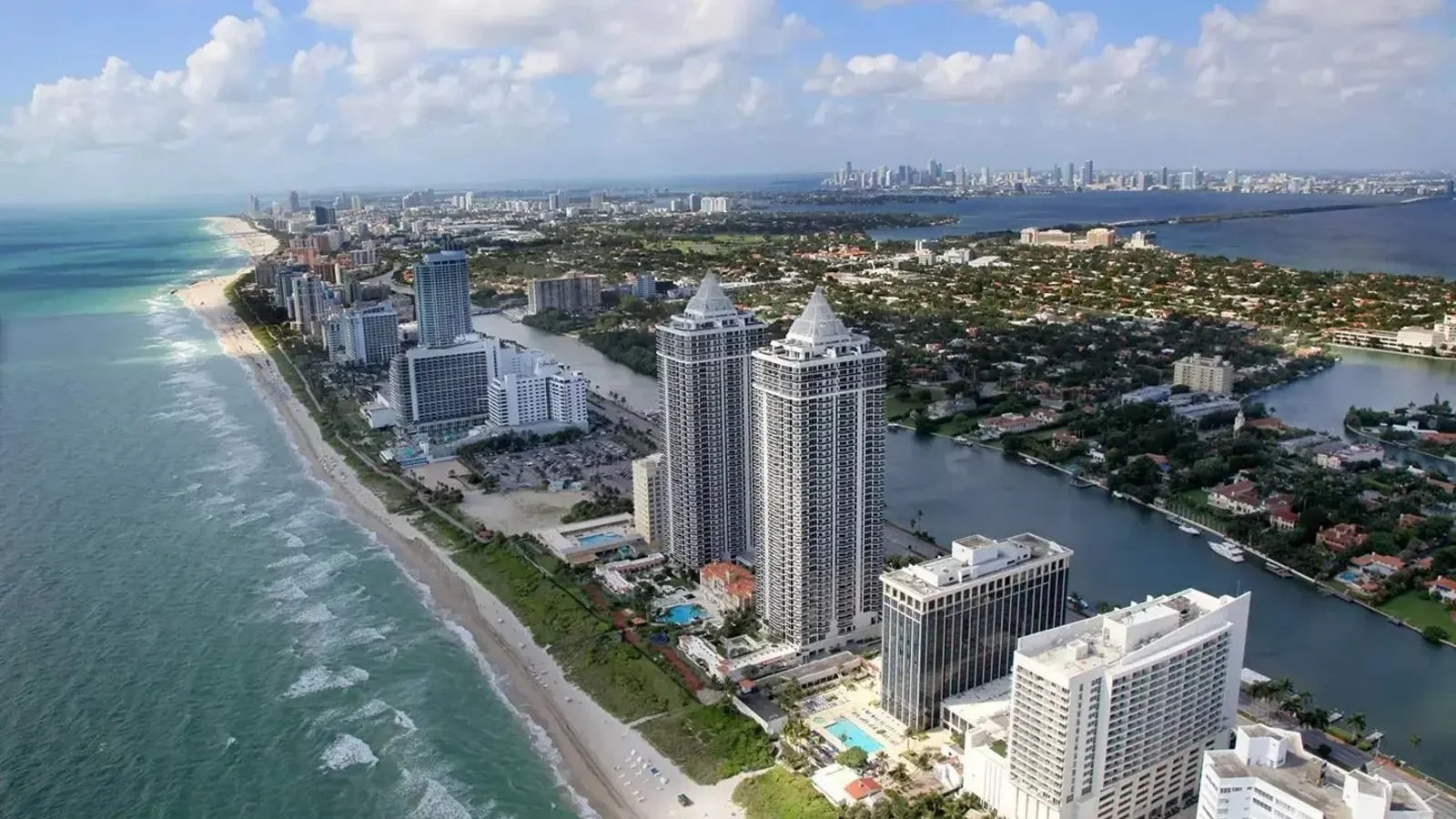
Quick answer: This is the oldest building covered on this site, completed in 1972. That single fact reorders the entire diligence. Every newer building here asks when its milestone inspection will arrive; Tower 41’s deadline was 31 December 2024 and has passed. So the question is not a date. It is what the report found, and whether the association funded the answer, and both are documents you can ask for today.
The inspection already happened
| Building | Completed | Milestone position |
|---|---|---|
| Tower 41 | 1972 | deadline passed, a report should exist |
| 50 Biscayne | 2007 | around 2032 |
| 1800 Club | 2007 | around 2032 |
| 1010 Brickell | 2017 | around 2042 |
The trigger is 25 years within 3 miles of a coastline, repeating every 10 years. A 1972 building crossed it in the 1990s, and buildings already past the threshold when the statute took effect had until 31 December 2024 to complete the initial inspection.
That inverts the usual questions. Ask for:
| Document | What it tells you |
|---|---|
| Completed phase one report | what the engineer actually found |
| Phase two findings, if required | how serious it was |
| Board resolution on those findings | what is being done, when, and at what cost |
| Structural integrity reserve study | the wider component schedule |
| Reserve funding percentage | whether the remedy is paid for |
| Assessments levied, pending or discussed in 24 months | what is already in motion, with minutes |
This is genuinely better information than a newer building offers. At a 2018 tower the inspection is a forecast. Here it is a finding, in writing, from an engineer. A buyer who reads it knows more about the structure they are buying than a buyer of almost anything newer.
What a low price means on mid-century stock
Tower 41 sits at one of the lower entry points on Miami Beach, and on a 1972 building that deserves a question rather than enthusiasm.
Two explanations are both legitimate:
The stock is modest. Residences of roughly 740 to 1,298 square feet, averaging near 1,001, in an 18-storey building from 1972, are mid-century apartments rather than modern condominiums. They price accordingly, everywhere.
The reserve is thin. A building that has completed an inspection and identified work it has not funded carries a liability that transfers with the deed.
The funding percentage separates the two in a single number, and it is the first thing to ask for. A well-funded 1972 building with high dues is a sounder purchase than a cheap one with low dues and an unfunded finding.
Four hundred and twenty owners
| Effect | Consequence |
|---|---|
| Any assessment divides 420 ways | the per-owner figure is much smaller than at a boutique |
| Fixed costs divide widely | dues per foot sit below a small building’s |
| Standing supply | no individual owner sets the price |
| Deep comparable set | a residence can be priced from real trades |
The first row is the genuine comfort on a building of this age. Whatever the inspection produced, the cost of the remedy divides across more than four hundred owners rather than a few dozen. That is a material difference from the small mid-century buildings elsewhere on Miami Beach, and it is one of the better arguments for buying scale at this vintage.
Ask for every trade in the building over 24 months by unit type, and for achieved rents by unit type over a full year. In a building of 420 broadly similar residences that data is genuinely predictive, and it is the only honest basis for pricing either a purchase or a rent here.
Read the letting rule from the document
The building carries rental restrictions, and the specific terms are not reliably reported by listings. Read them from the recorded declaration with all amendments and establish three things:
- The minimum lease term.
- Any annual cap on the number of lettings.
- Any waiting period after purchase before a residence may be let at all.
That third item is common in older Miami Beach associations and it is the one that most often surprises an investor, because a rule barring letting for the first year or two changes the purchase entirely.
Miami Beach also maintains its own restrictive position on short stays under the grandfather provision in Florida Statute 509.032(7)(b), which exempts local rules adopted on or before 1 June 2011. Do not assume a permissive state framework reaches this address. See the HOA and association restrictions checklist.
Insurance is the second big number
On a 1972 coastal building, insurance is the largest variable in the budget after the reserve, and it sits inside the dues through the master policy.
Ask for the master policy premium as a separate figure for each of the last three years, and ask what has been replaced and when, with permits:
- Roof and waterproofing, the largest single underwriting factor.
- Plumbing risers, which on mid-century stock drive both claims and assessments.
- Electrical distribution, for the same reason.
- Glazing and sealants, which govern water intrusion on an exposed elevation.
- Lifts, where a modernisation on an 18-storey building is a substantial line.
A 1972 building that has replaced its roof, risers and lifts is a fundamentally different asset from one that has replaced none of them, at a similar asking price. The permit history says which. See the Florida property insurance guide and the Citizens insurance guide.
Financing an older building
Reserve funding is the test under most pressure here, and on a building with a completed inspection a lender will want to see what it found and how it is funded. Investor concentration is the second.
Obtain a written project eligibility determination before offering. Where a project is non-warrantable the conventional thirty-year loan is unavailable building-wide, leaving cash, portfolio lending or a DSCR loan underwritten on rent at a larger deposit. Overseas buyers work through foreign national mortgage programmes.
Expect a lender to ask for the same documents you should already be collecting. That alignment is convenient: assemble the pack once. See also the Florida condos hub and the Miami area page.
Verification checklist before you wire
- Get the completed phase one milestone inspection report and any phase two findings.
- Get the board resolution on those findings, with dates and amounts.
- Get the structural integrity reserve study and the current funding percentage.
- Ask about assessments levied, pending or discussed in 24 months, with minutes.
- Get the permit history for roof, risers, electrical, glazing and lifts.
- Request 3 years of master insurance premium as a separate figure.
- Read the letting rule, the annual cap and any waiting period from the declaration.
- Ask for every trade over 24 months and achieved rents, both by unit type.
- Obtain a written lender project eligibility determination.
Which buyer this building suits
It suits a buyer who wants a Mid-Beach address at a low entry price and is prepared to read an engineer’s report before an estate agent’s description. On this building that report exists, which is more than most Miami Beach stock of the era can say, and a well-funded association at this vintage is a genuinely defensible purchase.
It suits a buyer who wants to skip the documents very badly indeed. A 1972 coastal building with an unfunded finding is the one configuration in this entire series that can cost an owner more than the purchase price. The funding percentage is one number and it is available before you offer. Ask for it first, and let the answer decide.
Frequently Asked Questions
It has already passed. A 1972 completion means the building crossed the 25-year coastal trigger decades ago, and buildings already past the threshold when the statute took effect had until 31 December 2024 to complete the initial inspection. The repeat interval is 10 years. Ask for the completed report rather than a date.
The completed phase one milestone inspection report, any phase two findings, the board resolution on those findings with dates and amounts, the structural integrity reserve study with its current funding percentage, and every assessment levied, pending or discussed in the last 24 months with minutes. On a 1972 building those documents are the purchase.
Eighteen storeys at 4101 Pine Tree Drive in Mid-Beach, with about 420 residences. Units run roughly 740 to 1,298 square feet, averaging near 1,001, and the typical layout is two bedrooms and two bathrooms. Completed in 1972.
The building carries rental restrictions and the specific terms must be read from the recorded declaration with amendments rather than from a listing. Establish both the minimum lease term and any annual cap before underwriting rent, and check for a waiting period after purchase, which older Miami Beach associations often impose.
Sometimes, and sometimes it is a reserve position. On mid-century Miami Beach stock the asking price and the funding percentage have to be read together, because an unfunded remedy identified by an inspection is a bill you take on with the deed. The funding percentage separates the two in one number.
No, but it makes insurance the largest variable in the budget. Roof age, glazing, plumbing and the state of the envelope all feed underwriting, and coastal master policies have repriced every year since 2022. Ask for the master premium as a separate figure for each of the last three years.
Get the inspection report and funding percentage at Tower 41
Tell us which unit type you are considering. We will come back with the completed milestone inspection report and any phase two findings, the board resolution and assessment history, the reserve study and funding percentage, the permit history for roof, risers and lifts, and the recorded letting rule.