Quick answer: Orlando investment property for STR buyers means Osceola County’s Kissimmee corridor, $300K-$600K entry, 6-10% gross yields in overlay-eligible resort communities, and net returns of 3-6% after management, 13% STR taxes, insurance, and HOA. Verify parcel overlay status before every offer.
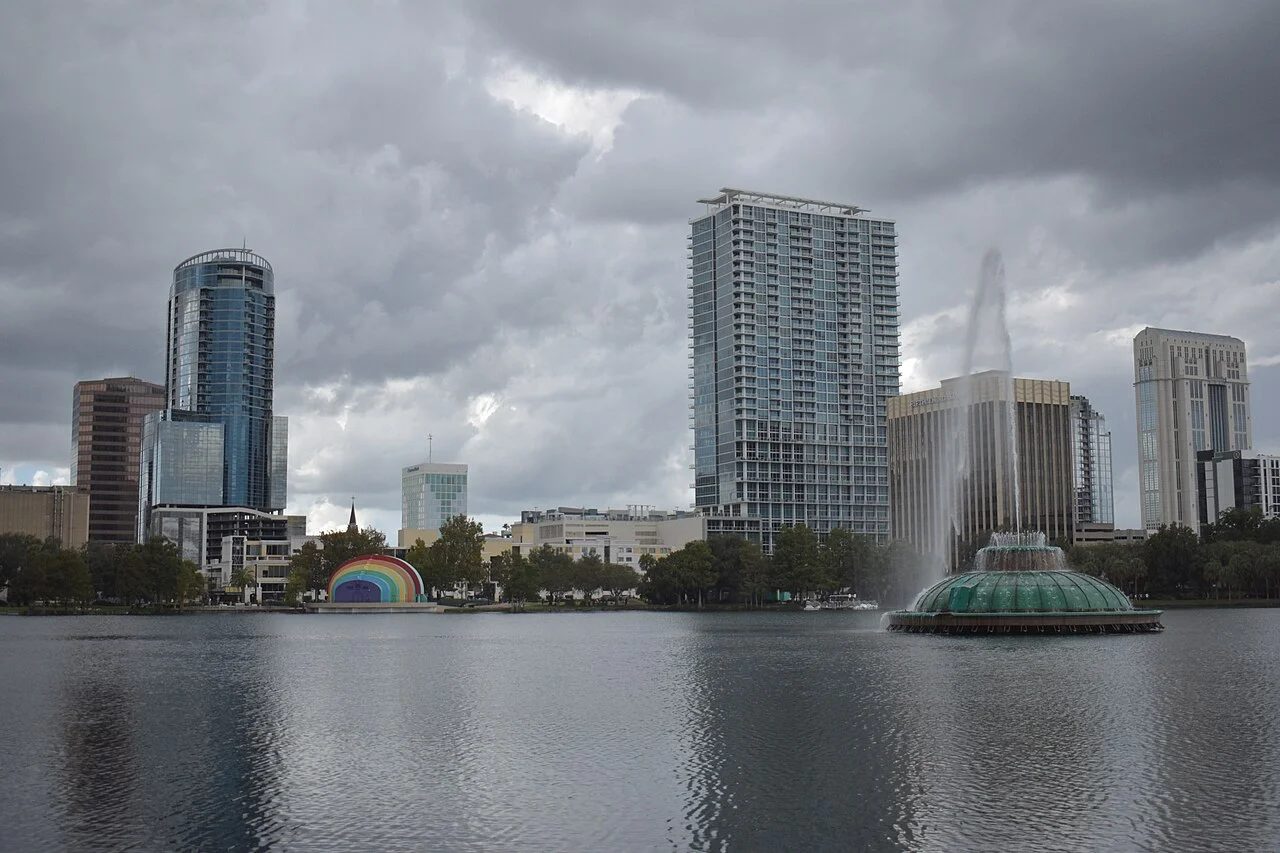
Orlando investment property sits at the intersection of two narratives that investors often conflate. The first is the city itself, Lake Eola skyline, the Orange County Convention Center, a metro population above 2.7 million, and one of the fastest-growing job markets in the southeastern United States. The second is the vacation-rental corridor that most yield-focused buyers actually mean when they search for Orlando investment property: the Kissimmee-Osceola submarket southwest of Walt Disney World, where purpose-built resort communities, county overlay zoning, and a fifty-year STR management industry produce gross yields that headline at 6-10% on purchase price.
This area guide maps the full Orlando metro for investment buyers in 2026. We cover geography and county boundaries, entry price bands by property type, where STR is legal versus where it is not, the communities that consistently rank at the top of investor due diligence lists, realistic net yield arithmetic, insurance and tax costs, foreign buyer structure, and how Orlando compares to Miami, Tampa, and Jacksonville on the Florida yield spectrum. For step-by-step STR operations, licensing, tax registration, worked NOI models, continue to our Orlando vacation rental investment guide. For statewide context, start with the Florida property investment guide.
Why Orlando Ranks First for Florida STR Investment Property
Greater Orlando draws roughly 75 million visitors a year, and the Kissimmee-Osceola corridor alone carries more than 18,000 active short-term rental listings, which makes it the largest STR market in the United States by listing count. Demand is spread across the calendar rather than a summer peak, driven by Walt Disney World, Universal Orlando Resort, SeaWorld, Legoland Florida and the Orange County Convention Center. That depth supports professional managers, cleaning networks and lenders who treat vacation rentals as an asset class, and it explains why the corridor headlines 6% to 10% gross yields against 3% to 5% for Miami condos. The yield comes with conditions: Osceola permits nightly rentals only inside Short-Term Rental Planned Development overlay districts, and a combined tax line of about 13% on gross receipts means buyers should compare the 3% to 6% net range, not the gross.
Orlando leads Florida’s gross yield table for a reason that has nothing to do with speculation. Greater Orlando attracts roughly 75 million visitors annually, making it the most-visited destination in the United States and one of the top five globally. Walt Disney World, Universal Orlando Resort, SeaWorld, Legoland Florida, and the second-largest convention facility in the country, the Orange County Convention Center, generate demand across every month of the calendar, not only summer peak season.
That demand volume supports the largest short-term rental investment market in the United States by active listing count. The Kissimmee-Osceola corridor alone carries over 18,000 active STR listings, backed by professional property managers, turnover cleaning networks, dynamic pricing tools, and lenders who underwrite vacation-rental acquisitions as a recognized asset class rather than an exotic bet.
For investors comparing Florida metros, Orlando/Osceola occupies a distinct strategic position in the 2026 landscape. Miami-Dade offers appreciation and international brand value at 3-5% gross condo yields and elevated insurance costs. Tampa Bay and Jacksonville deliver 5-8% gross on long-term rentals with simpler landlord dynamics. Orlando’s STR corridor targets investors who want the highest gross income band in the state, 6-10%, and who accept overlay zoning, DBPR licensing, and a 13% combined STR tax line in exchange for transparent, verifiable regulatory rules and deep exit liquidity from international buyers.
See how Orlando fits the full eight-metro comparison in our best areas to invest in Florida 2026 guide.
Orlando metro geography: orange county vs Osceola county for Orlando Investment Property, STR Yields & Areas 2026
The Orlando metropolitan statistical area spans multiple counties, and county jurisdiction determines whether your investment property can legally operate as a short-term rental, what tax rate applies, and which enforcement agency responds to complaints.
Orange County covers the City of Orlando proper, Winter Park, Apopka, and Lake Buena Vista-adjacent areas north and east of the theme park cluster. Orange County maintains its own short-term rental overlay system, tourist development tax schedule, and registration requirements, distinct from Osceola County. Properties marketed as Orlando investment property sometimes sit in Orange County while visually appearing close to Disney; county verification by parcel number is mandatory.
Osceola County covers Kissimmee, St. Cloud, Celebration, and the primary STR resort corridor along US-192 and I-4 southwest of Walt Disney World. Osceola uses a Short-Term Rental Planned Development (STRPD) overlay system that defines which parcels may operate nightly rentals. The majority of purpose-built vacation rental communities, Reunion Resort, Windsor Hills, Storey Lake, Terra Verde, Champions Gate, sit in Osceola County inside approved overlays.
Polk County borders Osceola to the west and contains additional STR-eligible developments in the Davenport and Four Corners area. Polk operates under separate county rules; do not assume Osceola overlay status extends across county lines.
For STR-focused investors, the practical division is simple: if your strategy depends on nightly Airbnb or Vrbo income within five to eight miles of Disney World, you are buying in Osceola County or adjacent Polk, with Kissimmee as the operational hub. If your strategy is long-term rental to Orlando’s growing workforce in tech, healthcare, and hospitality, Orange County urban and suburban inventory may fit better, but yields and regulation differ materially.
Orlando investment property price bands by strategy for Orlando Investment Property, STR Yields & Areas 2026
Orlando investment property is not a single product category. Price, yield, and regulation shift by property type and submarket.
| Strategy | Typical Entry Band | Gross Yield Band | Primary Counties | Best Buyer Profile |
|---|---|---|---|---|
| STR vacation home (4-6 bed villa) | $400,000-$750,000 | 6-10% gross STR | Osceola, Polk | Yield-focused, remote or foreign |
| STR entry townhome (3-4 bed) | $280,000-$420,000 | 7-10% gross STR | Osceola | First-time STR investor |
| STR studio / 1-bed condo | $250,000-$350,000 | 8-11% gross STR | Osceola | Capital-efficient yield seeker |
| LTR workforce rental | $250,000-$450,000 | 5-7% gross LTR | Orange, Seminole | Cash-flow landlord |
| Convention-adjacent condo | $300,000-$550,000 | 4-6% gross mixed | Orange | Hybrid STR/LTR operator |
Florida Realtors data places international buyer average prices in Florida near $635,000 statewide, with median bands around $469,000-$494,000. Orlando STR inventory clusters below that international luxury average, which is one reason the corridor attracts high volumes of Canadian, Brazilian, Colombian, and UK buyers seeking income-producing assets rather than trophy condos.
Doc stamp tax on the deed runs $0.70 per $100 of consideration, 0.7% of purchase price, on every Florida closing. A $480,000 Kissimmee villa carries approximately $3,360 in documentary stamp taxes at closing, independent of other title and attorney fees.
The Kissimmee STR Corridor: Where Orlando Yield Concentrates
When professional investors discuss Orlando investment property, they are usually describing the Kissimmee corridor, not the Orlando city limits sign on I-4. Kissimmee is the municipal anchor of Osceola County’s STR economy: the management companies, the cleaning crews, the furniture pack suppliers, and the resale market liquidity all concentrate here.
The corridor stretches along US-192 (Irlo Bronson Memorial Highway) and the I-4 interchange southwest toward Disney World. Distance to the Magic Kingdom parking lot matters for nightly rate optimization, properties within roughly five to eight driving miles consistently achieve higher occupancy and rate premiums than peripheral developments fifteen or more miles out, even when purchase prices look cheaper on a per-bedroom basis.
Our dedicated Kissimmee area guide breaks down submarket pricing, community-by-community yield profiles, and the management operator landscape. At the Orlando metro level, the five communities that appear most frequently in investor underwriting are:
Reunion Resort, Premium positioning with signature golf, a Marriott hotel tower, and water park amenities. Entry for quality 5-bedroom villas runs $500,000-$750,000. Nightly rates in peak season reach $300-$600 for larger units. Strong international resale liquidity from UK and European buyers.
Windsor Hills, Accessible entry three miles from Disney. Three- and four-bedroom townhomes from $280,000-$380,000. Gross yields frequently reach the upper end of the 6-10% band because purchase prices sit lower relative to achievable rent.
Storey Lake Resort, Purpose-built STR community developed 2016-2022 with resort pools, lazy river, and splash pad. Wide unit range from studios at $250,000 to large villas above $1 million. Studios and one-bedroom units offer capital-efficient entry with high gross yield percentages.
Terra Verde Resort, Smaller-scale community near Reunion with lower HOA fees and a private-home guest experience. Attractive for cost-focused investors who want overlay eligibility without premium resort branding overhead.
Champions Gate, Rapidly scaled north Davenport development with Oasis Club waterpark access, golf, and institutional investor presence. Townhomes from $350,000; large villas to $700,000+. Strong management infrastructure and secondary market depth.
Properties outside these and other STRPD-designated overlays, including most of Celebration and standard Kissimmee residential subdivisions, cannot legally operate nightly rentals regardless of what active Airbnb listings in the area might suggest.
STR regulation: what every Orlando investor must verify for Orlando Investment Property, STR Yields & Areas 2026
Operating a short-term rental in the Orlando area means clearing three separate layers. The state requires a DBPR vacation rental license at $155 per year for any property rented more than three times a year for periods under 30 days, plus Department of Revenue registration for 6% sales tax. Osceola County permits nightly rentals only inside STRPD overlay districts and adds Tourist Development Tax, bringing the combined burden to about 13% of gross receipts. Homeowner association declarations then add their own limits, such as seven-night minimum stays, and Celebration’s HOA prohibits short-term rental outright whatever the county zoning says. Meeting one layer does not satisfy the others, so verify the parcel on the Osceola County Property Appraiser GIS portal before any offer and read the declaration before signing the contract, not during due diligence.
Orlando investment property for STR use carries a three-layer compliance stack: state licensing, county overlay and tax, and HOA covenants. Satisfying one layer does not satisfy the others.
Florida state level: Every property rented more than three times per year for periods under 30 days requires a DBPR vacation rental license at $155 per year before listing on any platform. Florida Department of Revenue registration is required for state sales tax at 6%. Operating without a license exposes owners to administrative fines and platform delisting.
Osceola County level: Short-term rentals are permitted only inside STRPD overlay districts. Tourist development tax combines with state sales tax to produce a combined burden of approximately 13% on gross rental receipts. County registration and remittance are required separately from state tax where platforms do not handle county TDT automatically.
HOA level: Community declarations may impose seven-night minimum stays, guest conduct rules, rental registration requirements, and platform restrictions, even when county overlay status permits nightly rentals. Celebration’s HOA prohibits STR entirely; this is enforceable regardless of county zoning.
Full county-specific rules, overlay maps, and tax rate tables are documented in our Osceola County STR regulations page. For a statewide county comparison including Miami-Dade, Broward, Hillsborough, and Orange, read the Florida STR regulations guide.
The most expensive mistake in this market is purchasing based on a listing address or seller representation without parcel-level overlay verification through the Osceola County Property Appraiser GIS portal. Do this before any offer, not during due diligence after contract.
Gross vs net yield: Orlando investment property math for Orlando Investment Property, STR Yields & Areas 2026
Marketing materials for Orlando investment property quote gross yields of 6-10% because those figures reflect actual guest receipt levels at current occupancy and nightly rates in well-managed overlay communities. Professional underwriting models net yield, what remains after every operating cost, because that is what reaches your bank account.
| Cost Line | Typical Range (Osceola STR) | Notes |
|---|---|---|
| Property management | 20-25% of gross rent | Required for remote and foreign investors |
| Combined STR taxes | ~13% of gross rent | 6% FL sales + Osceola TDT |
| Insurance (wind + HO-6) | $3,500-$6,000/yr inland | Binding quote before offer |
| Property tax (non-homestead) | 1.0-1.5% of assessed value/yr | No Save Our Homes cap on investments |
| HOA / resort fees | $300-$800/mo | Reunion at high end |
| Vacancy and turnover | 5-12% of gross | Top communities 5-8% |
| Capex reserve | 5-8% of gross | Furnished STR furniture/appliance cycle |
Worked example: A $480,000 four-bedroom villa in a Windsor Hills-type community generating $43,200 annual gross receipts (9% gross yield) produces approximately $10,400 net operating income after all line items, roughly 2.2% net on purchase price. The same asset at 11% gross ($52,800) with identical fixed costs pushes net yield above 3.5% because insurance, property tax, and HOA do not scale with revenue.
This is why experienced Orlando investors optimize revenue per dollar of purchase price rather than chasing gross yield percentages on premium-priced assets. The Florida rental yield guide contains full gross-to-net frameworks across every major Florida metro and strategy.
Rule of thumb from Florida market data: net yield typically runs 2-4 percentage points below gross on STR, and 1.5-3 points below gross on long-term rentals in Tampa or Jacksonville. Orlando’s inland Osceola insurance costs, often $3,500-$5,500 per year versus $8,000-$15,000 for coastal Miami condos, are a meaningful advantage in the net yield equation.
Property types: what Orlando investors actually buy for Orlando Investment Property, STR Yields & Areas 2026
Single-family STR villas (4-8 bedrooms) dominate institutional and high-net-worth buyer activity in Reunion, Champions Gate, and large-format Storey Lake units. These assets command family-group nightly rates, justify premium management fees, and carry the strongest resale narrative for international exit buyers.
Townhomes (3-4 bedrooms) in Windsor Hills, Terra Verde, and Champions Gate offer the most common entry point for first-time Orlando investment property buyers. Purchase prices of $280,000-$420,000 against gross receipts of $28,000-$38,000 produce attractive gross yield percentages with manageable capital commitment.
Studios and one-bedroom condos in purpose-built STR communities appeal to capital-efficient investors. Lower absolute HOA and insurance costs can improve net yield percentages even when per-square-foot pricing looks high.
Long-term rental inventory in Orange County, apartments and townhomes near Medical City, Lake Nona, downtown employment centers, and University of Central Florida, serves a different investor profile. Gross yields of 5-7% without STR regulatory complexity, but without the theme-park demand premium that drives Orlando’s top gross band.
Condo investors anywhere in the Orlando metro should verify SB 4-D milestone inspection status and Structural Integrity Reserve Study requirements for buildings three or more stories. Post-Surfside legislation has triggered special assessment waves in older Florida condominiums. Newer resort buildings (post-2000) carry lower structural risk, but due diligence on reserve balances remains mandatory. See our Florida due diligence guide for the full document request list.
Insurance and operating costs in the Orlando metro for Orlando Investment Property, STR Yields & Areas 2026
Inland Osceola County properties avoid the extreme wind and flood exposure that erases STR margin on coastal Florida condos. A furnished vacation rental in the Kissimmee corridor typically quotes $3,500-$5,500 per year for HO-6 interior coverage plus wind endorsement in 2026, materially below Miami-Dade or Naples Gulf-front equivalents that can run $8,000-$15,000 annually.
Insurance repricing remains volatile across Florida since 2022. Obtain a binding quote from a Florida-licensed broker before making an offer, not after closing. Renewal increases can arrive without proportional rent growth.
Property tax on non-homestead investment property carries no Save Our Homes assessment cap. Reassessment at sale often raises the tax bill above what the prior owner paid. Budget 1.0-1.5% of assessed value annually; pull the Osceola County Property Appraiser record for the specific parcel millage rate.
Florida has no state income tax on rental income, a structural advantage for all investors, but federal tax still applies. Foreign nationals file Form 1040-NR and need an ITIN. Depreciation on the structure can offset taxable income substantially. Consult a US CPA experienced with international clients before closing.
For a full insurance cost breakdown across Florida metros, see the Florida property insurance investment costs guide.
Foreign buyers and Orlando investment property for Orlando Investment Property, STR Yields & Areas 2026
Florida absorbs 21% of all US foreign residential property purchases, the number-one state for fifteen consecutive years. Orlando’s STR corridor draws a disproportionate share of those buyers because the asset class is understandable: buy a furnished home, place it with a local manager, collect net income denominated in US dollars.
Cash purchases account for approximately 47% of Florida foreign transactions nationally versus 28% for all US buyers. Cash eliminates lender STR-use restrictions and compresses closing timelines to 30-45 days. DSCR and foreign national loan programs exist with 25-35% down payments and rates 1-2 points above domestic benchmarks.
Structural requirements for foreign Orlando investors:
- Entity formation: Florida LLC before closing for estate planning, the US estate tax exemption for non-citizens is only $60,000 versus roughly $13.6 million for US citizens in 2026.
- Tax identification: ITIN application before rental income begins; processing takes 6-10 weeks.
- FIRPTA: 15% withholding on gross sale price at resale by foreign sellers, plan exit liquidity accordingly.
- SB 264: Verify current statute scope for nationality-based purchase restrictions near critical infrastructure; tourist-corridor STR property is generally unaffected, but legal confirmation is required.
The Florida property for foreign buyers guide covers entity structures, closing mechanics, wire fraud prevention, and FIRPTA certificate procedures in full.
Orlando Investment Property, STR Yields & Areas 2026 Orlando vs other Florida investment markets
| Metro | Entry Band | Gross Yield | STR Complexity | Insurance (typical) | Best For |
|---|---|---|---|---|---|
| Orlando/Osceola | $300K-$600K | 6-10% STR | High (overlay) | $3.5K-$6K/yr inland | STR yield maximization |
| Miami-Dade | $400K-$640K+ | 3-5% condo | Medium (HOA bans) | $5K-$15K/yr coastal | Appreciation, prestige |
| Tampa Bay | $250K-$500K | 5-7% LTR | Low | $2K-$6K/yr | Workforce cash flow |
| Jacksonville | $200K-$400K | 6-8% LTR | Low | $1.5K-$3.5K/yr | Entry-level LTR |
| Naples/SW FL | $466K+ | 3-5% | Medium | $6K-$18K/yr | Luxury seasonal |
Orlando investment property makes strategic sense when your primary objective is maximizing gross rental income from institutional tourism demand and you have the operational discipline to verify overlay status, model net yield, and engage professional management. It makes less sense when you want simple long-term landlord dynamics, coastal appreciation plays, or condo exposure in a buyer’s market reset, Miami in 2026, Tampa for workforce growth, Jacksonville for pure cash-flow entry.
2026 market dynamics affecting Orlando investors for Orlando Investment Property, STR Yields & Areas 2026
Several trends shape Orlando investment property underwriting in mid-2026.
Supply growth has moderated. The 2020-2022 STR construction boom added inventory across Osceola and Polk, but higher interest rates and insurance repricing slowed new investor entry by 2024-2025. Established communities with proven occupancy histories hold nightly rates better than peripheral new builds without amenity depth.
Management consolidation continues. Large platforms and regional acquirers are consolidating local operators. Standardized agreements help remote investors but reduce boutique flexibility. Reference-check managers with existing owners in your target community.
Convention demand remains structural. The Orange County Convention Center drives midweek occupancy that pure leisure markets lack. Properties that market effectively to both family leisure and convention overflow capture a broader revenue base than Disney-only positioning.
International buyer volume is rising. Florida Realtors recorded 16,401 international transactions in the year ending July 2025, up 50% year on year, with $10.4 billion in dollar volume. Orlando’s STR corridor benefits from Canadian, Latin American, and European buyer liquidity on both acquisition and exit.
Orlando Investment Property, STR Yields & Areas 2026 red flags: what to check before you buy
Experienced Orlando investors treat these as deal-breakers until verified otherwise:
- No STRPD overlay confirmation. If the Osceola County Property Appraiser GIS does not show the parcel inside an approved overlay, no seller assurance or active Airbnb listing makes the property legal for nightly rental.
- Celebration addresses. Celebration’s HOA prohibits short-term rentals regardless of county zoning, any listing suggesting otherwise is misrepresenting the legal position.
- Seller projections without receipts. Demand 24 months of actual guest revenue through the management platform. Reject pro formas based on “potential” or calculator estimates.
- County line confusion. A property five miles from Disney can sit in Orange, Osceola, or Polk, each with different overlay rules, tax rates, and enforcement regimes. Verify county by parcel number.
- Missing DBPR license. If the current owner is renting without a state vacation rental license, you inherit compliance risk. Confirm license status and transfer procedures at closing.
- HOA minimum-stay overrides. Even inside an overlay, some communities impose seven-night minimums through CC&Rs. Read governing documents, not just county records.
What belongs on the orlando investment property due diligence checklist?
Before making any offer on Orlando investment property intended for STR income:
Zoning and legal:
- Confirm STRPD overlay status by parcel with Osceola County GIS, not by community name alone
- Review full HOA CC&Rs for minimum stay, rental caps, and platform rules
- Request 12 months of HOA board minutes and financial statements
- Verify SB 4-D milestone inspection and SIRS status for any condo building three or more stories
Income and operations:
- Obtain 24 months of actual rental receipts, not seller projections or Airbnb calculators
- Confirm management fee structure and TDT remittance responsibility in writing
- Verify DBPR license status and transfer process at closing
Costs:
- Binding insurance quote before contract, wind plus HO-6 for furnished unit
- Property tax pro forma from county appraiser records
- Model full 13% STR tax line on gross receipts
Foreign buyer structure:
- Florida LLC formed before deed recording if applicable
- ITIN application initiated before first rental month
- FIRPTA exit planning discussed with CPA at acquisition, not at sale
Pros and cons of Orlando STR investment
| Pros | Cons |
|---|---|
| Highest gross STR yield band in Florida (6-10%) | STRPD overlay system requires parcel-level verification |
| 75M annual visitors create institutional demand | Combined STR taxes reach 13% of gross receipts |
| Professional management infrastructure in place | Property management fees 20-25% vs 8-10% for LTR |
| Inland insurance materially cheaper than coastal metros | HOA rules can override county overlay permission |
| No Florida state income tax on rental income | Furnished-unit capex cycles faster than unfurnished |
| Strong international resale liquidity | Non-overlay purchases cannot legally operate STR |
Who Should Buy Orlando Investment Property: and Who Should Not
Orlando fits investors who:
- Target 6-10% gross STR yields and accept 3-6% net after full cost modeling
- Can verify overlay and HOA compliance before every acquisition
- Will use professional management (especially remote or foreign buyers)
- Want US dollar income from institutional tourism demand with international exit liquidity
- Hold a $280,000-$750,000 budget for income-producing vacation property
Orlando may not fit investors who:
- Want passive long-term rental without STR regulatory layers
- Expect net yields matching gross marketing without modeling management and taxes
- Cannot tolerate HOA fee structures of $300-$800 per month on top of all other costs
- Need coastal appreciation or luxury brand positioning, Miami or Naples may align better
- Will skip parcel-level overlay verification to accelerate closing
For deep operational guidance on licensing, tax registration, community selection, and worked NOI models, read the Orlando vacation rental investment guide. For Kissimmee-specific submarket detail, see our Kissimmee area profile. For county STR rules, see Osceola County STR regulations.
Orlando Investment Property, STR Yields & Areas 2026 commercial shortlist and building reviews
Request a curated shortlist on our invest in Orlando page, filtered for net yield, HOA rental rules, and SB 4-D document status.
Building reviews in this market:
Orlando Investment Property, STR Yields & Areas 2026 STR regulation cross-links
Verify county and city short-term rental rules before underwriting yield on this submarket:
- orange county str STR rules
- osceola county str STR rules
- seminole county str STR rules
- world cup 2026 str orlando STR rules
Pair county guides with the Florida STR regulations hub and DBPR vacation rental license checklist.
Why Orlando Airbnb Still Dominates Florida STR in 2026
Orlando metro short-term rentals remain the default Florida STR play because annual visitor volume, average length of stay, and repeat booking rates support furnished inventory better than most secondary markets. Orange and Osceola counties together host millions of room-night equivalents per year when hotels, timeshares, and whole-home STR are combined. Investors who buy at the right basis still capture cash flow; investors who pay peak 2022 pricing often subsidize guests through negative NOI.
Demand drivers in 2026 include sustained convention business at the Orange County Convention Center, cruise pre/post nights linked to Port Canaveral drives, youth sports tournaments, and international visitors on ESTA. None of these guarantee your unit books 280 nights. They do mean the addressable market for a well-located 3-bedroom pool home or resort condo is deeper than Jacksonville or Tallahassee STR.
The constraint layer is regulatory and cost-side. Florida STR law, county overlays, DBPR licensing, and HOA CC&Rs tightened the funnel after 2021. Insurance repricing after hurricane seasons moved inland wind premiums higher even away from the coast. Tourist development tax (TDT) collection is enforced through platform agreements and county audits. Professional underwriting now starts with net yield, not AirDNA screenshots.
| Factor | Orlando STR impact 2026 |
|---|---|
| Visitor demand | High baseline, event-driven spikes |
| Average gross yield (brochure) | 7-9% on furnished corridor assets |
| Typical net yield (verified costs) | 2.5-4.5% when basis is disciplined |
| Primary risk | Overpaying + HOA restriction + insurance shock |
| Licensing | DBPR state license + county tax registration |
For statewide STR context, read Florida STR regulations before you interpret any listing pro forma.
Buyer scenarios and decision framework
Cash-flow LTR investor: You target 3% to 5% net yield after 8% to 10% management, 1% to 2% property tax, and inland insurance near $2,000 to $4,500 per year. Prioritize suburban single-family homes with 12-month lease demand and avoid HOAs that cap rentals.
Licensed STR operator: You need county tax registration, DBPR licensing where required, and insurance that explicitly covers nightly guests. Budget 20% to 25% management, 12% to 13% combined tourist taxes in major counties, and 5% to 8% vacancy or capex reserves.
Pre-construction buyer: You accept 24 to 36 month completion risk for lower basis and staged deposits. Verify developer track record, completion bonds, and resale restrictions before wiring more than the initial deposit.
Foreign first-time buyer: You may hold title personally or through a Florida LLC. Confirm FIRPTA withholding on exit, SB 264 restrictions for certain China-domiciled buyers, and wire-fraud controls at closing.
Apply this decision framework to airbnb orlando investment 2026 (guides) before you wire earnest money. Florida Estate maps each scenario to verified rent, tax, insurance, and HOA inputs in writing.
Frequently Asked Questions
Orlando Airbnb can still produce positive NOI in 2026 when purchase price is discounted relative to verified gross receipts and the asset sits in an STR-permitted overlay. A furnished 3-bedroom condo at $425,000 with $38,000 annual gross often nets 2.5-4.5% after Osceola or Orange County taxes, management, insurance, and HOA. Deals priced at 2021 peaks with 8% brochure gross frequently land under 2% net.
Yes. Florida requires a Division of Hotels and Restaurants (DBPR) vacation rental license for any dwelling rented more than three times in a calendar year for stays under 30 days, unless exempt as a licensed hotel. Osceola and Orange County investors must hold the state license and register for county and state tourist taxes before accepting the first paying guest.
Osceola County short-term rentals typically remit about 13% combined Florida state sales tax plus tourist development tax (6% county TDT plus state components). Orange County runs near 12-13% depending on district. On $38,000 gross receipts, expect roughly $4,560-$4,940 in pass-through tax remittance before other operating costs.
Kissimmee and unincorporated Osceola corridor assets usually deliver higher gross nightly rates and stronger occupancy near Disney gates, but HOA and resort fees compress net yield. Downtown Orlando and Lake Eola condos see lower gross but sometimes better net when HOA is moderate and STR is permitted. Run identical NOI worksheets on both submarkets before choosing.
Budget a dedicated short-term rental or landlord policy with wind coverage, plus HO-6 if condo, plus flood if FEMA zone requires it. Inland Orlando corridor quotes in 2026 often run $3,500-$6,500 per year for a 3-bedroom STR, higher than 2021 renewals. Citizens and surplus lines dominate when admitted carriers decline STR use.
Start with trailing 12-month gross receipts, subtract tourist and sales tax remittance, then subtract management (20-25% of gross), insurance, non-homestead property tax, HOA, cleaning if outside management, platform fees if not netted, and a 5% capex reserve. Divide remaining NOI by purchase price. Example: $38,000 gross on $425,000 with $24,500 operating costs yields NOI of $13,500 and net yield of 3.2% when cost assumptions are moderate.
Yes. Florida condominiums may restrict or prohibit short-term rentals through governing documents and recent legislative windows. Even when county zoning allows STR, an HOA prohibition blocks legal operation. Review CC&Rs, rental minimums, and registration rules before closing. Orange and Osceola resort communities often allow STR in designated phases only.
Get an Orlando Airbnb net yield model
Send a listing link or address. We return DBPR eligibility, TDT stack, and line-item NOI using 2026 insurance and tax inputs within one business day.
Florida Estate publishes independent research, not legal or tax advice. STR rules, tax rates, and insurance premiums change. Verify with DBPR, county tax collectors, licensed insurers, and Florida counsel before acquisition. For metro context see the Orlando vacation rental investment guide and Florida STR regulations.
Florida Estate’s insider tip
Insider tip: check STR overlay status by parcel with Osceola County GIS, not by community name, before every offer. The overlay follows parcels, and a marketing name tells you nothing about whether a given home qualifies.
Frequently Asked Questions
Orlando ranks as Florida's highest-gross-yield metro for short-term rental investors, with overlay-eligible properties in the Kissimmee-Osceola corridor producing 6-10% gross annually on purchase price. Entry bands run $300,000-$600,000 for income-producing vacation homes. Net yields after management (20-25%), insurance, property tax, HOA, and combined STR taxes of roughly 13% typically land at 3-6% for well-structured acquisitions.
Purpose-built STR townhomes and villas in Osceola County resort communities typically trade between $280,000 and $750,000 depending on bedroom count and community tier. Entry-level studios and one-bedroom units in communities like Storey Lake start near $250,000. Premium villas in Reunion Resort or Champions Gate reach $600,000-$1,000,000 or more.
The highest STR liquidity sits in Osceola County along the US-192 and I-4 corridor southwest of Walt Disney World, communities including Reunion Resort, Windsor Hills, Storey Lake, Terra Verde, and Champions Gate. These parcels sit inside county STRPD overlays. Kissimmee is the operational hub. Properties in Celebration or standard residential zones outside overlays cannot legally operate nightly rentals.
Gross STR yields of 6-10% on purchase price are achievable for overlay-eligible vacation properties with professional management. After deducting property management at 20-25% of gross rent, Osceola combined STR taxes near 13%, insurance, non-homestead property tax, HOA fees, and capex reserves, net yields realistically fall to 3-6% for favorable assets. Model net, not gross.
Yes. Foreign nationals routinely purchase Orlando vacation rental property. Cash is common. Form a Florida LLC before closing for estate planning, obtain an ITIN for US tax filing, and plan for FIRPTA withholding of 15% of gross sale price on resale. Verify SB 264 applicability for your nationality with a Florida attorney.
Three layers: DBPR vacation rental license at $155 per year, Osceola County STRPD overlay eligibility by parcel with combined taxes near 13% of gross receipts, and HOA covenants that may restrict minimum stays. Celebration prohibits STR entirely. Orange County has separate rules from Osceola.
For vacation rental yield, Kissimmee in Osceola County is the core STR submarket, not downtown Orlando. Kissimmee sits inside the purpose-built resort corridor with STRPD overlays, established management infrastructure, and proximity to Disney World. Most theme-park STR investors target Kissimmee rather than Orange County urban cores.
Get an Orlando investment property shortlist
Share your budget, bedroom target, and whether you are buying for STR income as a US or foreign national. We return overlay-eligible communities and a net yield sketch within one business day.