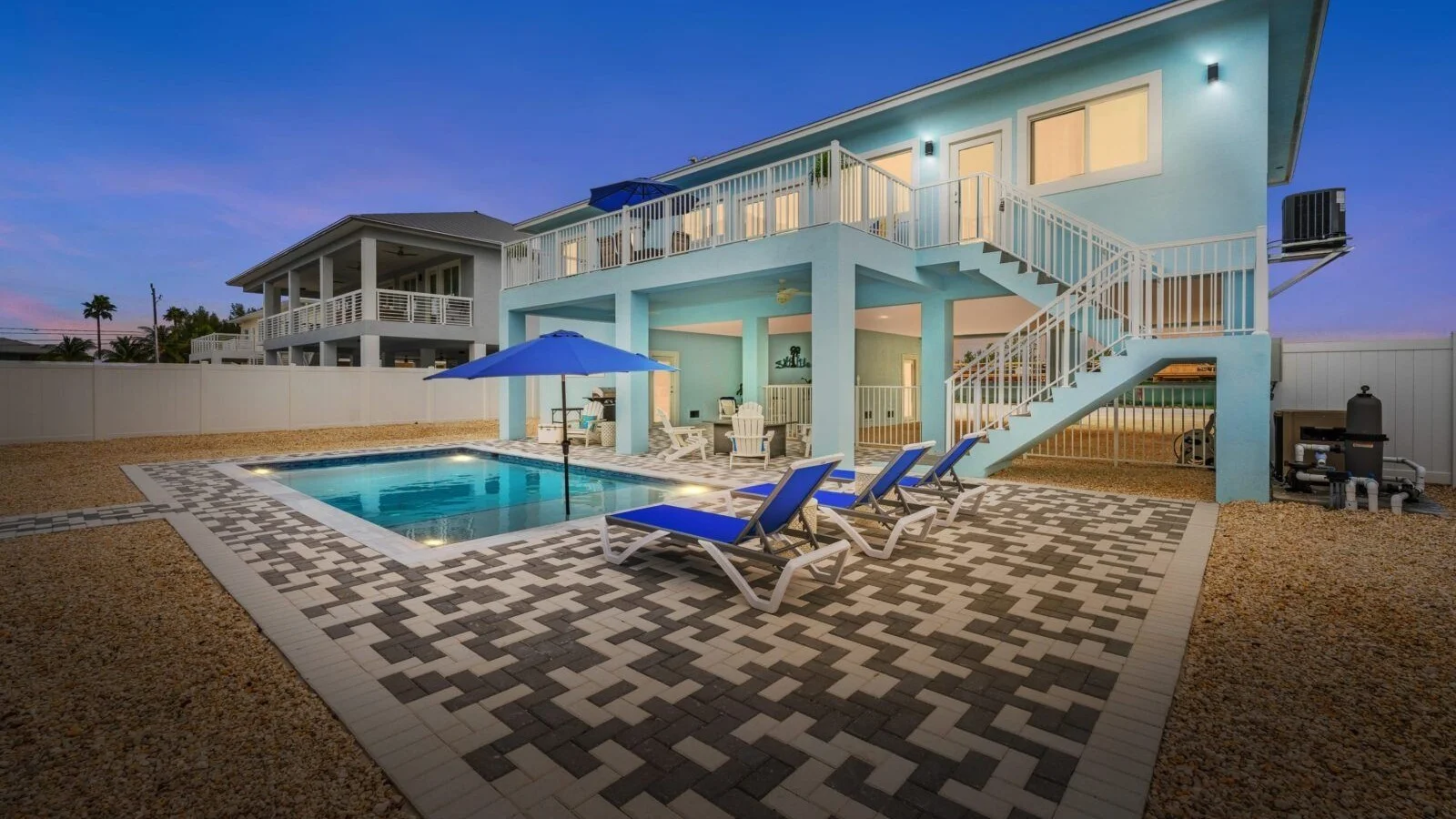
Quick answer: Florida short-term rental operators should carry dedicated liability insurance with at least $1 million per occurrence, plus property and wind coverage appropriate for pool and storm exposure. Standard homeowners policies often exclude paying guests.
Insurance gaps destroy STR economics after a single guest injury or storm claim. This guide outlines liability benchmarks, policy types, and documentation investors should prepare for brokers and HOAs.
Use this STR Insurance 1M Liability Florida compliance guide together with our Florida STR regulations guide, Florida rental yield guide, and due diligence in Florida real estate. Licensing steps are detailed in our DBPR vacation rental license guide. Tax registration and filing obligations are covered in our Florida tourist development tax by county.
Policy types for Florida STR
| Policy type | STR suitability |
|---|---|
| Standard HO-3 | Usually excludes paying guests |
| Home sharing endorsement | Limited coverage |
| Dedicated STR policy | Designed for transient guests |
| Commercial landlord policy | Larger multi-unit assets |
| Umbrella liability | Extra limit above base policy |
Coverage stack table
| Coverage | Target benchmark | Notes |
|---|---|---|
| General liability | $1M per occurrence | Common DBPR expectation |
| Property | Replacement cost | Include contents |
| Wind / hurricane | Separate deductible | Confirm sublimits |
| Loss of income | 12 months optional | Helps debt service |
| Umbrella | $1M to $5M | Pool and waterfront homes |
What belongs on the underwriting data checklist for brokers?
| Data point | Why it matters |
|---|---|
| Bed and bath count | Rate class |
| Pool and spa | Liability surcharge |
| Trampoline or dock | Carrier appetite |
| Expected rental nights | Usage rating |
| Management company | Named insured questions |
Platform guarantees versus real insurance
Airbnb AirCover and similar programs do not replace owner liability policies or property coverage on the underlying asset.
Extended STR insurance planning notes for multi-property investors
Scaling STR portfolios increases audit and HOA enforcement visibility. Use a master compliance calendar across counties with separate tax accounts per parcel.
| Portfolio task | Cadence | Owner benefit |
|---|---|---|
| Tax account reconciliation | Monthly | Avoid penalties |
| HOA estoppel refresh | Before each acquisition | Prevent rental bans |
| Insurance requote | Annual | Control premium drift |
| Regulation monitor | Quarterly | Catch ordinance changes |
County pages to read next
Pair county guides with our Florida STR regulations guide and due diligence in Florida real estate when expanding beyond a single market.
Recordkeeping and audit readiness
| Record | Purpose |
|---|---|
| Tax filing confirmations | Penalty defense |
| HOA estoppel archive | Restriction defense |
| Guest registration logs | HOA and city compliance |
| Insurance certificates | Liability defense |
| Platform tax reports | Reconciliation |
Operational metrics to track
| Metric | Why it matters |
|---|---|
| Net ADR after fees | Platform mix decisions |
| Effective tax rate | Underwriting accuracy |
| HOA fee ratio | Cash flow stability |
| Compliance ticket count | Enforcement risk |
| Shoulder season occupancy | Debt service coverage |
Investor decision framework for STR insurance
Standard HO-3 homeowner policies often exclude short-term rental commercial use. Underwriting must reflect STR endorsements, wind coverage, and liability limits managers expect.
| Investor profile | Coverage target | Proceed if | Walk away if |
|---|---|---|---|
| Single pool home STR | $1M liability plus wind | Carrier binds STR endorsement | Carrier excludes pool or game room |
| Luxury coastal asset | $2M liability plus flood | Elevation certificate current | Wind deductible exceeds 5% of value |
| Condo investor | HO-6 plus master policy review | Association allows STR use | Master policy excludes rental |
| Portfolio operator | Blanket liability program | Centralized certificate tracking | Each property on different carrier with gaps |
Scenario A, new acquisition: Bind STR coverage before first guest check-in, not after first booking payment.
Scenario B, renewal season: Requote 90 days before renewal; Florida coastal premiums can move 10 to 25 percent year over year.
Scenario C, claim event: Document pool fence, trampolines, and waterfront features before adjusters arrive; missing photos delay payouts.
Ho-3 versus commercial STR policy comparison
| Feature | Typical HO-3 | STR endorsement or commercial lessor policy |
|---|---|---|
| Business use | Often excluded | Required for paying guests |
| Liability limit | $300k common default | $1M minimum for OTAs |
| Loss of rental income | Limited | Endorsement or rider needed |
| Wind and hurricane | High deductibles | Must model cash reserve |
| Trampoline or game room | May void coverage | Must disclose to carrier |
Coastal and inland storm exposure affects both property and liability pricing. Investors should model three layers:
| Layer | Purpose | Planning note |
|---|---|---|
| Property wind coverage | Structure and contents | Deductible may be 2 to 5% of insured value |
| Flood policy | Water surge damage | Required in many FEMA zones for lenders |
| Liability umbrella | Excess over base policy | Often needed above $1M for large groups |
Pair insurance review with Florida property insurance investment costs and due diligence in Florida real estate.
Documentation carriers expect before binding
| Document | Why carriers request it |
|---|---|
| DBPR license copy | Confirms legal rental use |
| Pool barrier photos | Drowning liability mitigation |
| Trampoline or water feature disclosure | Exclusion avoidance |
| HOA STR permission letter | Proves insurable interest |
| Prior claims history | Pricing and eligibility |
Red flags when quoting STR insurance
| Red flag | Consequence |
|---|---|
| Listing without STR endorsement | Claim denial |
| Undisclosed major renovations | Policy rescission |
| Mixed long-term and STR without rider | Coverage gap |
| $300k liability only | OTA and HOA rejection |
| Expired wind mitigation form | Higher premium |
Claims preparation playbook for STR operators
| Event | Immediate action | Documentation to capture |
|---|---|---|
| Guest injury | Contact insurer and manager hotline | Photos, witness statements, pool fence status |
| Water leak | Shut off source and notify guests | Plumber invoice, moisture readings |
| Hurricane warning | Secure outdoor furniture | Time-stamped exterior photos |
| Theft allegation | File police report | Lock change receipts |
| Neighbor complaint | Respond within HOA time window | Message log and resolution note |
Carriers deny claims when STR use was not endorsed or when undisclosed amenities such as trampolines appear in post-loss photos but not on the application. Walk the property quarterly with the same photo checklist your insurer provides at bind.
Liability scenarios that trigger $1m minimums
| Scenario | Why $1M matters | Prevention |
|---|---|---|
| Pool drowning | Seven-figure settlements possible | Self-closing gate and rules signage |
| Deck collapse during party | Multi-guest injury claims | Annual inspection after heavy use |
| Golf cart or bike injury | Common in resort communities | Disable undeclared vehicles |
| Carbon monoxide event | Rare but catastrophic | Annual HVAC inspection |
| Slip on wet lanai | Frequent guest injury claim | Non-slip treatment and mats |
Review umbrella coverage once you exceed $1M base limits or host groups above 10 guests regularly. Read DBPR vacation rental license requirements alongside insurance binders because inspectors may ask for both documents during complaints.
Advantages and disadvantages for investors
| Advantages | Disadvantages |
|---|---|
| Clear compliance framework reduces guesswork before scaling listings | Multi-layer tax and HOA rules increase setup cost and timeline |
| Documented processes support lender and insurance underwriting | Penalties for registration gaps can exceed one season of profit |
| Cross-county playbooks help compare markets with consistent checklists | Rule changes by city or HOA can invalidate prior assumptions |
What belongs on the investor compliance checklist?
- Disclose STR use to insurance broker in writing.
- Quote dedicated STR policy with $1M liability.
- Add umbrella when pools or docks present.
- Confirm wind deductible separately.
- Provide certificate to HOA if required.
- Store policy and renewal dates in compliance folder.
- Requote annually with updated rental night counts.
County regulation cross-links
Florida Estate provides research, not legal or tax advice. Confirm all compliance steps with Florida-licensed attorneys, CPAs, and insurance brokers before operating STR assets.
Florida Estate’s insider tip
Insider tip: Requote 90 days before renewal, because Florida coastal premiums can move 10 to 25 percent year over year. Buy a dedicated STR policy with $1M per occurrence, since a $300k liability-only policy is rejected by OTAs and HOAs, and check whether the wind deductible runs 2 to 5% of insured value.
Frequently Asked Questions
DBPR vacation rental rules and many county ordinances expect commercial-grade liability coverage. $1 million per occurrence is a common minimum benchmark for professional operators.
Standard HO-3 policies often exclude business use and short-term paying guests. Purchase dedicated short-term rental or commercial landlord coverage.
Platform guarantees are limited and do not replace owner liability insurance or loss-of-income coverage on the underlying asset.
Many attorneys recommend umbrella coverage above primary STR liability limits given pool, trampoline, and waterfront exposure common in Florida vacation homes.
Wind and hurricane deductibles are separate from liability limits. Confirm both property and liability carriers before accepting guests during storm season.
Some resort HOAs request certificates of insurance naming the association before approving rental registrations or gate access for guests.
Provide DBPR license status, bed-bath count, pool and water features, expected annual rental nights, and management company details for accurate quoting.
Request Florida STR insurance checklist
We outline liability, property, and wind coverage benchmarks for vacation rental acquisitions.