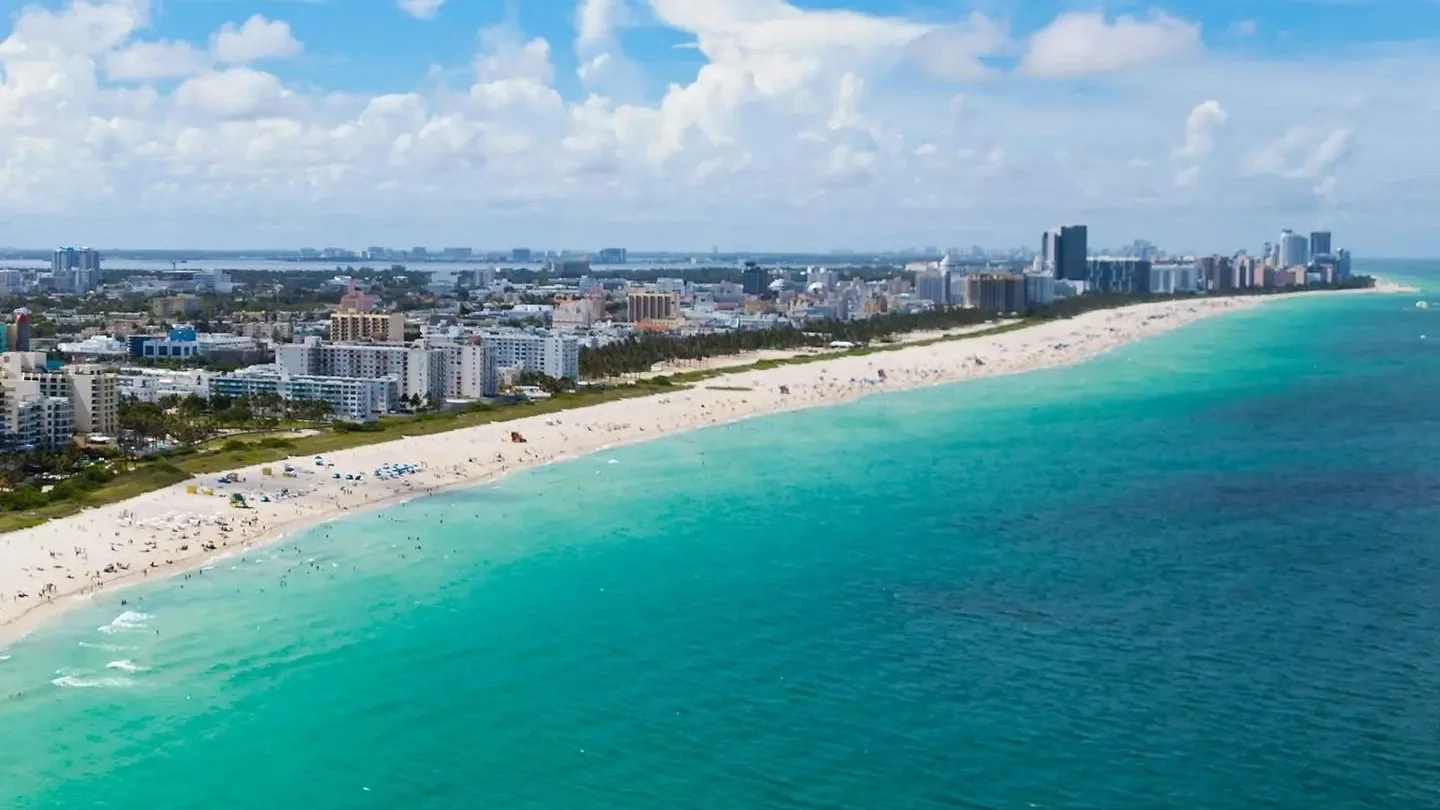
Quick answer: This guide provides a detailed overview of Florida real estate for Colombian buyers, covering wealth preservation, capital flight hedging, Miami neighborhoods, and fund transfer mechanics.
Florida real estate has long served as a safe haven for Colombian investors seeking to protect their capital from local economic volatility and currency devaluation. Historically, buyers from Bogota, Medellin, and Cali have viewed South Florida, particularly the Miami metropolitan area, as an extension of their financial portfolios. The combination of geographic proximity, cultural alignment, and a stable US dollar makes Florida property an attractive asset class for wealth preservation.
Whether you are looking to acquire a luxury condo in Brickell, a family home in Doral, or a high-yielding vacation rental in Kissimmee, buying property in the United States requires careful planning. This guide explores the legal, financial, and tax structures that Colombian buyers must implement to ensure a secure and compliant transaction.
Wealth preservation and capital flight hedging in Florida
For Colombian investors, the primary driver for purchasing Florida real estate is wealth preservation. Over the past decade, the Colombian Peso (COP) has experienced significant volatility and long-term devaluation against the US Dollar (USD). For example, in 2014, the exchange rate hovered around 2,000 COP per USD. By 2024, the rate had fluctuated between 3,900 COP and 4,800 COP per USD, representing a substantial loss of purchasing power for domestic assets.
By converting volatile local currency into US dollar-denominated real estate, Colombian buyers create a robust hedge against inflation and political uncertainty. Florida property values have consistently appreciated over the long term, outperforming many Latin American investment options. According to market data, South Florida residential properties have seen average annual price increases of 6% to 8% over the past decade, driven by strong population growth and corporate relocations.
| Currency and Property Performance Indicators | 10-Year Historical Average | Annual Volatility | Recommended Strategy | Impact on Colombian Wealth |
|---|---|---|---|---|
| Colombian Peso (COP) Devaluation | 8% to 12% annual decline | High (currency fluctuations) | Convert excess cash to USD | Protects against local purchasing power loss |
| Florida Real Estate Appreciation | 6% to 8% annual increase | Low (stable demand) | Buy in high-growth submarkets | Generates long-term capital appreciation |
| Miami Rental Yields (Net) | 4% to 6% annual return | Low (high occupancy) | Target multi-family or condos | Provides stable, dollar-denominated cash flow |
| Colombian Domestic Inflation | 5% to 10% annual rate | Moderate (monetary policy) | Diversify assets internationally | Prevents cash erosion in local bank accounts |
| US Federal Estate Tax Threshold | $60,000 USD limit for foreign | Low (legislative stability) | Use corporate holding structures | Avoids 40% tax on US-situs assets at death |
| Florida Property Tax Rate | 1.5% to 2% of assessed value | Low (county-level caps) | Budget tax in annual cash flow | Predictable operating expense for owners |
Generating rental income in US dollars provides a steady stream of hard currency that can be repatriated or reinvested. Investors who focus on cash flow should consult the Florida rental yield guide to analyze net cap rates after accounting for property taxes, insurance, and management fees.
Miami neighborhood focus: Brickell vs Doral for colombians
Miami is the undisputed capital of Latin American real estate investment, and Colombian buyers have historically concentrated their purchases in two primary neighborhoods: Brickell and Doral. Each area offers a distinct investment profile, catering to different buyer goals.
Brickell: The Financial Hub
Known as the “Wall Street of the South,” Brickell is Miami’s financial district and a hub for luxury high-rise living. It attracts young professionals, corporate executives, and international investors who value walkability, high-end dining, and proximity to major financial institutions.
- Property Type: Luxury condominiums, pre-construction towers, and penthouses.
- Average Price: $800 to $1,200 USD per square foot, depending on the building and views.
- Rental Market: High demand for long-term rentals, with average monthly rents ranging from $3,500 to $7,000 USD for a two-bedroom unit.
- Investment Profile: Lower immediate rental yields but high potential for capital appreciation and strong appeal to high-net-worth tenants.
Doral: The Family-Friendly Suburb
Located just west of Miami International Airport, Doral is affectionately nicknamed “Doralzuela” or “Doralombia” due to its large and vibrant Venezuelan and Colombian populations. It is a master-planned city known for its gated communities, world-class golf courses, top-rated charter schools, and family-oriented parks.
- Property Type: Single-family homes, townhomes, and low-rise garden condos.
- Average Price: $400 to $600 USD per square foot, offering significantly more space than Brickell.
- Rental Market: Extremely stable tenant base consisting of corporate families and business professionals working in Doral’s thriving logistics and commercial sectors.
- Investment Profile: Higher net rental yields, lower vacancy rates, and excellent stability during market downturns.
| Neighborhood Comparison: Brickell vs Doral | Brickell (Urban Luxury) | Doral (Suburban Family) |
|---|---|---|
| Average Purchase Price (2BR Condo/Townhome) | $750,000 to $1,200,000 USD | $450,000 to $650,000 USD |
| Average Price per Square Foot | $900 USD | $450 USD |
| Average Gross Rental Yield | 4.5% to 5.5% | 6.0% to 7.5% |
| Primary Tenant Profile | Young professionals, corporate executives | Families, logistics managers, expats |
| Walkability Score | High (90+ walk score) | Low (car-dependent, gated communities) |
| School District Rating | Moderate (urban public schools) | High (top-rated charter and private schools) |
For buyers looking to compare these markets with other high-performing regions, our guide on the best areas to invest in Florida in 2026 provides a comprehensive analysis of alternative markets like Tampa Bay, Sarasota, and Jacksonville.
Pros and cons of Florida real estate for colombian buyers
Before committing capital to a Florida property purchase, Colombian investors should carefully evaluate the advantages and disadvantages of the US market.
| Pros of Florida Property | Cons of Florida Property |
|---|---|
| Hedge against Colombian Peso devaluation and inflation | High initial cash down payments (30% to 40% for loans) |
| Stable legal system with strong private property rights | US estate tax exposure on assets over $60,000 USD |
| Access to dollar-denominated rental income and capital | Complex outbound capital registration requirements |
| Proximity to Colombia with direct flights under 4 hours | High property insurance premiums in coastal zones |
| Thriving local Colombian communities and businesses | FIRPTA withholding of 15% on future resale |
| Favorable financing options via foreign-national loans | Annual corporate maintenance fees for LLC structures |
While the benefits of stability and cash flow are compelling, buyers must be prepared for the higher transaction costs associated with US real estate, including title insurance, loan origination fees, and association reserve requirements.
Risks and Red Flags: Fund Transfer Mechanics and US Tax Rules
To ensure a successful purchase, Colombian buyers must navigate several regulatory and tax hurdles. Failing to comply with these rules can lead to severe financial penalties and transaction delays.
Outbound Capital Registration (Form 4)
Colombia has strict foreign exchange controls managed by the central bank, the Banco de la República. When transferring funds out of Colombia to purchase real estate abroad, you must legally register the transaction.
- Intermediary Channel: All funds must be transferred through authorized financial intermediaries (such as commercial banks) or through a registered compensation account (cuenta de compensación).
- Filing Form 4: You must file Form 4 (Declaración de Cambio por Inversiones Internacionales) with the central bank. This form registers your outbound capital as an international investment.
- Tax Compliance: Ensure that the funds being transferred have been fully declared on your Colombian tax return (Declaración de Renta) and that you pay any applicable wealth taxes (Impuesto al Patrimonio) to the DIAN. Unreported offshore assets can trigger penalties of up to 200% of the asset value.
US Anti-Money Laundering (AML) Compliance
US title companies and banks are subject to strict federal regulations under the Bank Secrecy Act and the Patriot Act. When receiving funds from abroad, they must verify the source of the capital.
- No Cash Transactions: You cannot purchase US real estate with physical cash or through unregulated money transmitters.
- Direct Wire Transfers: Funds must be wired directly from the buyer’s registered Colombian bank account (or a declared offshore account in Panama or the Bahamas) to the licensed escrow agent or title company handling the closing.
- Source of Funds Documentation: Be prepared to provide bank statements, tax returns, and corporate financial records proving the legitimate origin of your investment capital.
US Estate Tax and FIRPTA
Nonresident aliens who own US real estate in their personal names are subject to US federal estate tax upon their death. The tax rate starts at 18% and rises to 40% on US-situs assets valued over $60,000 USD. To protect their families, Colombian buyers should avoid personal title and instead hold the property through a US Limited Liability Company (LLC) or a foreign corporation.
Additionally, when a foreign national sells US property, the transaction is subject to FIRPTA withholding. The buyer must withhold 15% of the gross sales price and send it to the IRS as a tax deposit. To understand how to manage this withholding, review the Florida property for foreign buyers guide and our detailed due diligence in Florida real estate checklist.
Buyer scenarios and decision frameworks
Let us examine two typical Colombian buyer profiles to illustrate how these rules are applied in practice.
Scenario A: The Wealth Preservation Investor
- Profile: A business owner from Bogota looking to invest $800,000 USD of surplus corporate capital into a stable, low-risk asset.
- Investment Goal: Long-term capital preservation and stable USD income.
- Target Market: A luxury 2-bedroom condo in Brickell, Miami.
- Recommended Structure: The investor forms a Florida LLC to hold the property. To protect against the US estate tax, the Florida LLC is owned by a Delaware or BVI holding company. This structure ensures that upon the investor’s death, the shares of the foreign holding company are transferred, bypassing US probate and estate tax.
- Fund Transfer: The investor wires the $800,000 USD from their corporate bank account in Colombia to the Miami title company’s escrow account, filing Form 4 with the Banco de la República to register the outbound investment.
- Market Strategy: The investor reviews the Florida property investment guide to optimize property management and tenant screening.
Scenario B: The Relocating Family
- Profile: A family from Medellin relocating to South Florida on an E-2 investor visa, with a budget of $500,000 USD.
- Investment Goal: A primary residence close to top-rated schools and family amenities.
- Target Market: A 3-bedroom townhome in Doral, Miami.
- Recommended Structure: Because they are moving to the US on a residency visa, they will eventually become US tax residents under the substantial presence test. Therefore, they choose to buy the property in their personal names to qualify for the Florida Homestead Exemption, which provides property tax discounts and asset protection for primary residences.
- Financing Strategy: They secure a foreign-national mortgage from a local Miami lender, putting 35% down ($175,000 USD) and financing the remaining 65% at a competitive international buyer interest rate.
- Market Strategy: They use our localized guide on Miami to identify the best school districts and gated communities in Doral.
By aligning your legal structure, financing, and neighborhood choice with your long-term residency goals, you can maximize the security and profitability of your Florida investment.
Ready to secure your Florida property?
Connect with our bilingual cross-border advisors for a personalized property shortlist and transfer guidance.
Florida Estate’s insider tip
Insider tip: Settle the ownership structure before closing. Nonresident aliens holding US real estate in their own names face federal estate tax from 18% up to 40% on US-situs assets above $60,000, and FIRPTA withholds 15% on a future resale.
Frequently Asked Questions
Yes, Colombian citizens can legally buy, own, and rent out residential and commercial properties in Florida with no foreign restrictions.
Brickell is highly popular for urban luxury and corporate hubs, while Doral is favored for family-friendly communities and top schools.
Funds must be registered with the Banco de la República using Form 4, and transferred via registered financial intermediaries.
Yes, US lenders offer international buyer mortgages with a 30% to 40% down payment, requiring proof of income and bank references.
Yes, holding Florida property through a US LLC is highly recommended to provide liability protection and avoid probate complications.