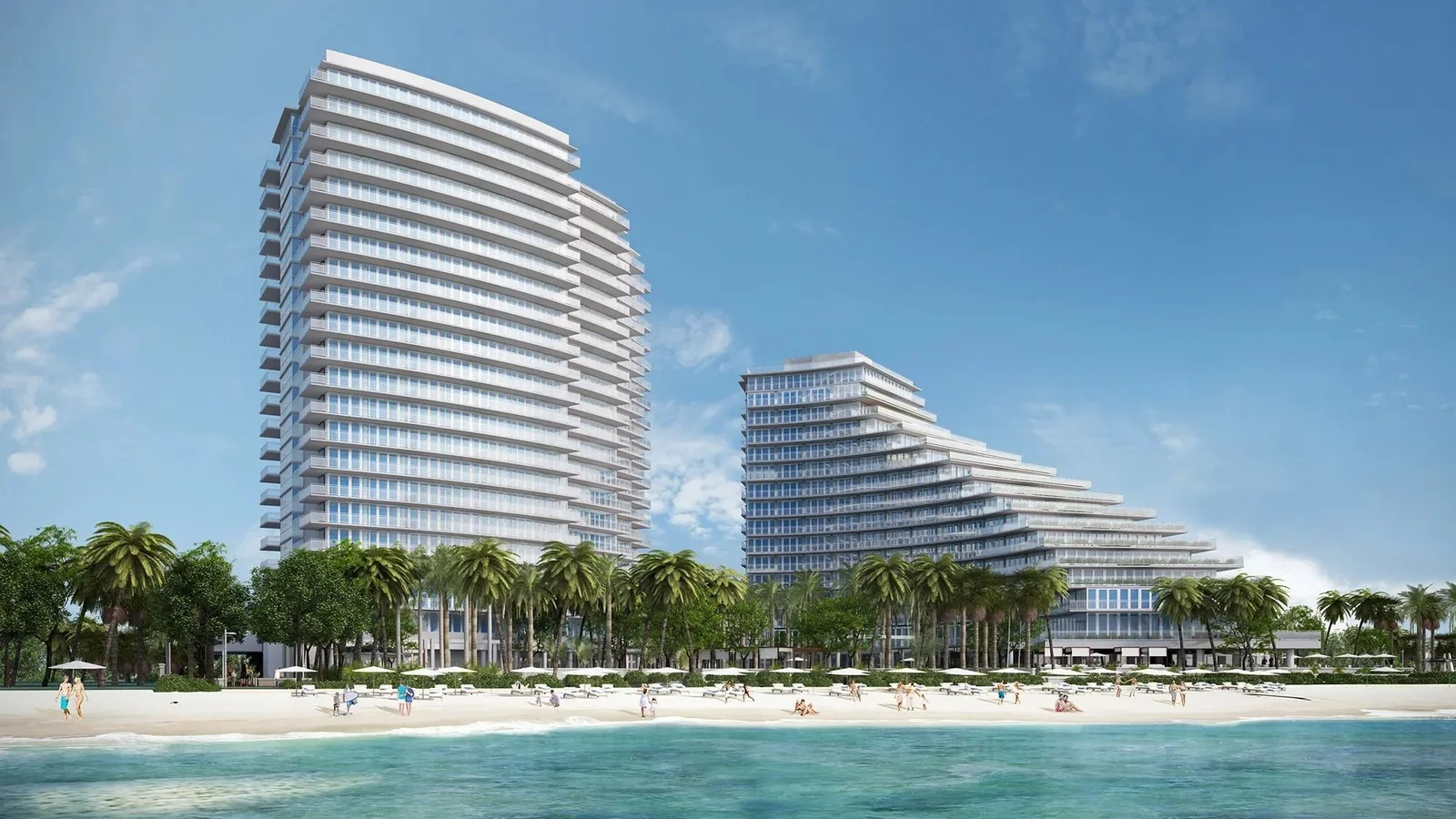
Quick answer: A seawall costs what a seawall costs. So does a structural repair, a roof, a chiller plant and a hurricane deductible. None of those bills care how many owners are standing behind them, which is why the most important number on an oceanfront condominium is not the price per square foot. At Auberge Beach it is 171.
We publish a review of Icon Brickell where 1,718 units share every cost. This building is the same arithmetic run the other way, on a site with considerably more exposure. Reading the two together tells you more about Florida condominium risk than either does alone.
What the building is
| Item | Detail |
|---|---|
| Location | Fort Lauderdale oceanfront |
| Completed | 2018 |
| Storeys | 17 |
| Residences | 171 |
| Architecture | Nichols Architects |
| Milestone, 25-year coastal trigger | about 2043 |
Low-rise and low-density on a beachfront site is a deliberate product. It buys larger floor plans, fewer neighbours, quieter common areas and a service ratio a large tower cannot match. Those are real advantages and they are what the pricing reflects.
They also mean the building has 171 cheques to write against every shared cost it incurs.
The denominator, stated plainly
| Shared cost | Split across 171 units | Split across 1,718 units |
|---|---|---|
| $1 million | about $5,850 | about $582 |
| $3 million | about $17,500 | about $1,750 |
| $6 million | about $35,100 | about $3,500 |
Arithmetic on unit counts, not quotations for any actual work.
The point is not that this building has a known repair coming. It is that the structure of the risk differs. In a very large association, capital events arrive as irritations. In a 171-unit building they arrive as decisions: five figures per owner, on a timetable the owner does not control.
Two things follow for a buyer.
Reserve funding matters more here than almost anywhere. A well-funded reserve converts a five-figure assessment into a line already paid. A poorly funded one leaves it in front of you.
And the reserve study is the document to read first, not last. It lists the components, their remaining life and the sums required. On a coastal building it will include the elements that cost the most: the envelope, the balconies, the waterproofing and, where applicable, the seawall.
Coastal exposure and a modern code, together
Fort Lauderdale oceanfront is about as exposed as Florida residential property gets. Wind, salt, storm surge and flood all apply, and they apply to the building’s structure rather than only to its contents.
Set against that, a 2018 completion is close to the best construction standard available in the state. Florida’s code was tightened substantially after the 1992 and 2004 to 2005 storm seasons, and buildings permitted under the later standards perform measurably better on opening protection, roof attachment and impact resistance. Carriers price that difference building by building.
So the honest reading of the insurance position is that the exposure is high and the mitigation is modern, which is the most favourable combination a beachfront site can offer. It is not the same as the exposure being low.
Three documents settle where a specific building actually sits:
- The master policy declarations page, showing the premium and, more importantly, the deductible.
- The wind mitigation position for the structure.
- The elevation certificate, which drives the separate flood policy.
The deductible is the one investors skip. Florida windstorm deductibles are commonly expressed as a percentage of insured value rather than a flat sum, so on a high-value oceanfront building the amount payable before the policy responds is substantial, and it is met by the association through an assessment. The mechanism is set out in our hurricane deductible update.
The milestone clock is this building’s clearest advantage
Florida requires a milestone structural inspection at 25 years from the certificate of occupancy for buildings within three miles of the coastline. A 2018 completion puts this building’s first milestone around 2043.
That is a genuine and underappreciated advantage. A buyer here is not acquiring an unquantified structural liability, which is the single largest uncertainty attached to older Florida coastal stock. The building will produce a structural integrity reserve study on the statutory timetable, and the components it identifies will be funded over years rather than discovered at once.
The corollary is that the absence of near-term milestone risk is already in the price. You are not being paid to take a risk that does not exist here.
What the brand arrangement costs
Auberge is a hospitality brand, and a branded residence carries a service proposition that ordinary condominiums do not: managed amenities, spa operations, food and beverage, and a front-of-house standard closer to a hotel than to a residential lobby.
All of that is funded by the association.
The questions worth asking, in order:
- What does the association pay annually for branded services, as a separate line rather than folded into the total?
- Is the arrangement a licence, a management agreement, or both, and what is its term?
- What happens to the cost, and to the service, if the arrangement is not renewed?
- Are amenity operations subsidised by the association or self-funding?
A branded building where the answers are clear and the cost is funded is a good asset. One where the branded service is running at a loss covered by dues is a different proposition, and the difference is visible in the budget rather than in the lobby.
What the reserve study should already contain
A building completed in 2018 has been in service long enough that its structural integrity reserve study is a real document rather than a projection, and on a coastal site it is the most informative thing an owner produces.
The components that matter here are not the ones that matter inland.
The envelope. Salt air attacks sealants, glazing gaskets and metal fixings faster than inland weather does. Envelope maintenance on an oceanfront building is a recurring cycle rather than a one-off, and the study should show it as such.
Balconies and railings. Exposed concrete and steel on a beachfront elevation is the single most common source of expensive structural work in Florida, and it is what the milestone regime was written to catch.
Waterproofing. Roof, terrace and podium waterproofing all have defined service lives, and replacing them is disruptive as well as costly.
Pool decks and beach access structures. These sit outside the building envelope, take direct exposure, and are frequently under-reserved because they do not feel structural.
Mechanical plant. Chillers, pumps and lifts have known replacement cycles. On a serviced building they run harder than on a plain one.
Read the study for two things: whether each component has a funded reserve against its remaining life, and whether the association is funding at the level the study recommends or at some lower level agreed by the board. Those are different numbers, and the gap between them is the assessment you will eventually pay.
What to verify on rental income
Fort Lauderdale beach has genuine seasonal rental demand, and a building at this level attracts a specific tenant. Before underwriting any of it:
- The minimum lease term in the current recorded rules, and how many leases per year are permitted.
- Whether the association approves tenants, and how long approval takes.
- Whether short-term letting is permitted at all, which at this end of the market is frequently prohibited by the association regardless of what municipal rules allow.
- The dues, with the reserve contribution identified separately.
- The estoppel letter for the specific unit, covered in our estoppel letter guide.
The method for turning those into a net figure is in our Florida rental yield guide.
Who actually buys on this stretch of coast
Fort Lauderdale beachfront at this price point draws a specific and fairly narrow set of buyers, and knowing who they are tells you more about your exit than any yield calculation.
Northern relocations. Buyers leaving higher-tax states for Florida residency, buying a primary or long-season home. They are price-insensitive relative to income, they hold for years, and they are the most reliable source of demand on this coast.
Second-home buyers from the Northeast and Canada. Seasonal occupancy, low rental interest, and a purchase decision driven by climate and flight times rather than by yield.
Downsizers from larger South Florida houses. Trading maintenance and land for services and lock-up-and-leave convenience. Large floor plans matter enormously to this group, which is why low-density buildings suit them.
Investors. The smallest group at this level, because the yield arithmetic on a high-value coastal condominium with substantial dues rarely competes with cheaper stock inland.
Two consequences follow. Resale demand here is driven by lifestyle and tax considerations rather than by rental returns, so the building’s value holds up in ways a pure yield model would not predict. And because the buyer pool is narrow, marketing time on resale is longer than in a mass-market building: fewer buyers exist, and the right one may not be looking this quarter.
An investor should price that illiquidity honestly rather than assuming a beachfront address guarantees a fast sale.
Pros and cons for an investor
Advantages. A 2018 construction standard on an oceanfront site, which is the best insurance position available in that location. No near-term milestone liability, with the first inspection around 2043. Low density, large floor plans and a service level that is genuinely scarce on this stretch of coast. Fort Lauderdale beachfront supply is physically constrained and cannot expand.
Disadvantages. A 171-unit denominator means every capital event lands in five figures per owner. Branded service is an ongoing cost that the association carries whether or not an individual owner uses it. High absolute entry price narrows the resale pool. And coastal exposure is real regardless of construction standard: the building is well built, not out of the weather.
Red flags before you offer
- A reserve study that has not been updated since the building opened, on a coastal structure now several years into service.
- Dues quoted without the branded service cost identified.
- A master policy deductible expressed as a percentage, with no calculation of what that means in dollars for this building.
- Rental income modelled on a letting model the association’s current rules do not permit.
- Board minutes showing disagreement about the brand arrangement, which is the early signal of a cost change.
- A unit whose interior has been renovated well beyond the original specification, insured under an HO-6 policy written at the original value. The gap only becomes visible after a loss, and on a beachfront building losses are not hypothetical.
- Any comparison of this building against a mainland condominium on dues alone. A coastal building funds a different set of components, and lower dues elsewhere usually mean fewer components rather than better management.
One practical note on timing. Because the buyer pool here is narrow and seasonal, listing and closing calendars matter more than they do in a mass-market building. Demand concentrates in the months when northern buyers are physically in Florida, and a unit listed against that rhythm rather than with it can sit for a season without the price being wrong. If you are underwriting an exit, underwrite the marketing period as well as the price.
Our reading: this is a well-built building on a scarce site with the milestone question genuinely answered, and the price reflects all of that. The risk that remains is the denominator, and the way to manage it is to buy into a building whose reserves are funded rather than one whose dues are low.
A closing thought on how to use this page. The two numbers that decide an oceanfront condominium purchase are the unit count and the reserve funding level, and both are obtainable before you make an offer. Everything else on a listing, the finishes, the views, the brand, is real but secondary: it affects what you enjoy, not what you are exposed to. Establish the two numbers first and the rest of the decision becomes considerably simpler. Both are in documents the seller or the association can produce in a day, and a seller who cannot produce them within the inspection period has told you something useful about how the building is run.
For the same analysis with the arithmetic reversed, see our Icon Brickell review, where 1,718 owners share every cost. For a coastal building already inside its milestone window rather than decades from it, see our Akoya review.
Frequently Asked Questions
171, across a 17-storey oceanfront building in Fort Lauderdale completed in 2018 and designed by Nichols Architects.
Because every shared cost divides by 171 rather than by a thousand. Seawall work, structural repair and insurance deductibles are the same size whoever owns them, and a small owner base carries each one in larger individual slices.
On the 25-year coastal trigger, a 2018 certificate of occupancy points to roughly 2043. That is a long way out, which is one of the building's genuine advantages.
Oceanfront location and a 2018 construction standard pull in opposite directions. The exposure is high and the building code it was built to is modern, which is the most favourable combination available on a beachfront site.
It depends on whether the service arrangement is contractual and funded. Ask what the association pays for branded services annually and what happens to that cost if the brand arrangement changes.
The reserve study and the master policy declarations page. On a 171-unit oceanfront building those two documents contain most of the risk.
Sources: completion year, storey count, residence count and architect from Fort Lauderdale condominium market records for Auberge Beach Residences and Spa. Milestone timing is computed from the statutory 25-year coastal trigger and requires the certificate of occupancy date to confirm. Cost division figures are arithmetic on unit counts, not quotations. Verified 27 August 2026.
Read the reserve study before the floor plan
Send a unit at Auberge or any low-density coastal building. We pull the reserve study and master policy deductible and tell you what a capital event would cost you personally.