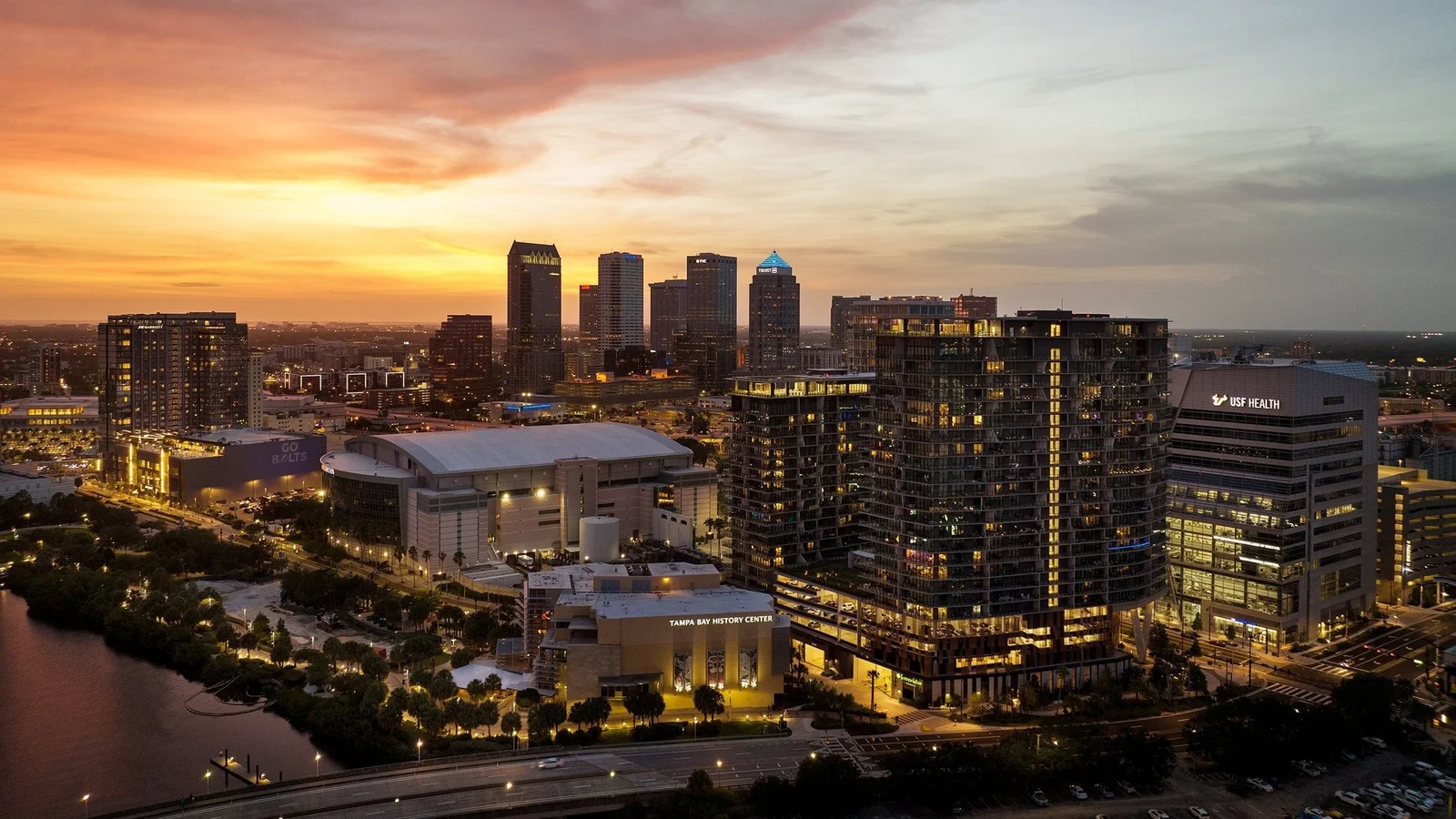
Quick answer: Anyone who bought early into a master-planned district bought a plan as much as a building. This district is a documented case of what happens next: the partnership that authored the plan is no longer the partnership that owns it.
Nothing about that is improper, and it is exactly the risk that buyers of phase one systematically fail to price.
The venture, in outline
| Formed as | A joint venture between Jeff Vinik and Cascade Investment |
| Project | Water Street Tampa |
| Site | roughly 50 acres of waterfront redevelopment |
| Planned scale | around 9 million square feet, mixed use |
| Stated private investment | over $3.5 billion |
| Vertical construction began | 2018 |
| Ownership change | 2023, Vinik sold his interest to Cascade Investment |
Vinik’s route into the district is itself part of the story: he acquired the Tampa Bay Lightning in 2010, which led to an interest in the land around the arena, and he came to the project without a background in commercial development. The capital partner supplied that side.
What an early buyer is actually buying
In a single building the product is finished at closing. In a district built over a decade the product is finished long after.
| What is delivered at your closing | What you are also paying for |
|---|---|
| Your building | Later residential phases |
| Its own amenities | Retail that has not been tenanted |
| Streets that exist | Public realm still on a plan |
| Current neighbours | Offices, hotels and cultural uses still to come |
The right-hand column is where the district premium sits. Our Related Group profile makes the related point about single buildings: a sponsor’s completed work is evidence, and a sponsor’s plans are not. A buyer pays more per square foot in a master-planned district than in an unplanned one precisely because of what is promised around them, and that promise is delivered by the sponsor over years.
So the question is not whether the sponsor is good. It is what happens to the promise if the sponsor is a different party by the time it falls due.
Three things that survive a change of ownership, and one that does not
This is the distinction that decides how much of a district premium is safe to pay.
- Recorded easements and covenants survive. They run with the land and bind successors.
- Approved entitlements largely survive. Zoning and development approvals attach to the property, though they can be amended.
- Completed construction obviously survives. What is built is built.
- Stated intentions do not survive. A future phase described in marketing, a promised retail mix, an intended cultural use: none of it binds a successor owner, and none of it is enforceable by a residential buyer.
The 2023 change here did not disrupt the district, and a consolidation into a long-horizon capital partner is arguably a stabilising outcome. That is not the point. The point is that the change could happen at all, and that a buyer’s protection lay entirely in the first three bullets rather than in the identity of the people who made the pitch.
We work through the same distinction from the residents’ side in our Faena House review, where a substantial part of an address’s value rests on adjacent assets the condominium neither owns nor votes on.
What to establish before buying into any district
- Which parts of the master plan are approved and entitled, and which are aspiration.
- What is recorded against the title of your building: easements, access rights, reciprocal agreements, shared-cost arrangements.
- Who currently owns the sponsor entity, and whether that has changed since the project began.
- What obligations, if any, the sponsor owes your association in writing.
- What the association owes the district, which is the question buyers forget to ask in the other direction.
The contrast worth drawing is with a sponsor that retains the commercial components indefinitely, which we cover in our Swire Properties profile. A holder with a permanent income interest has a continuing commercial reason to deliver. A developer building to sell has an interest that ends at each phase’s sell-out, and can transfer the remainder to anyone.
Our HOA restrictions guide covers the residential documents, and our due diligence guide the general file.
Where to walk away
- A district premium justified by phases with no approvals behind them.
- Marketing material describing future uses that appear in no recorded document.
- No clear answer on who currently owns the developing entity.
- Reciprocal or shared-use arrangements described but not produced.
- Any assurance about future phases given verbally by a sales office.
Our reading: master-planned districts frequently deliver what they promise, and the promise is not what a buyer is protected by. Pay confidently for what is built and recorded, discount what is merely intended, and remember that the people making the pitch may not be the people finishing the work. The 2023 ownership change here is the clearest available illustration that this is a real possibility rather than a theoretical one.
Frequently Asked Questions
The developer of Water Street Tampa, formed as a joint venture between Jeff Vinik, owner of the Tampa Bay Lightning, and Cascade Investment, Bill Gates's investment vehicle. It began vertical construction on the district in 2018.
Water Street Tampa is a phased waterfront redevelopment of roughly 50 acres, planned at around 9 million square feet of office, retail, residential, hospitality, cultural and educational space, with stated private investment of over $3.5 billion.
Jeff Vinik sold his interest in Strategic Property Partners to his partner, Cascade Investment, remaining as an adviser. The district's ownership consolidated into one of the two original partners.
Because in a district built over a decade or more, an early buyer is paying for phases that have not been built yet. Those phases are delivered by whoever owns the sponsor at the time, not by whoever pitched the plan.
Distinguish between what is built and legally secured, and what is a stated intention. Price the first with confidence and the second at a discount, because only the first survives a change of sponsor.
Sources: the joint venture between Jeff Vinik and Cascade Investment, the approximate 50-acre site, the planned scale of around 9 million square feet, stated private investment above $3.5 billion, the start of vertical construction in 2018, Vinik’s 2010 acquisition of the Tampa Bay Lightning and his 2023 sale of his interest to Cascade with a continuing advisory role, from contemporaneous business and local press reporting. No price, rent or yield figures for the district are asserted here.
Separate what is recorded from what is promised
Send a building in any master-planned Florida district. We check which future phases are entitled and which are marketing.