Quick answer: Brickell is Miami’s financial district and the top LATAM buyer address for condo investment, but it is an appreciation play, not a yield play. Median Miami-Dade condos sit near $640,000 with 17 months of supply in 2026. Gross yields run 3-5%; net is lower after HOA, tax, and insurance. SB 4-D special assessments are the biggest hidden risk in older towers. Read the full area guide for price bands, three net-yield scenarios, and the due diligence checklist.
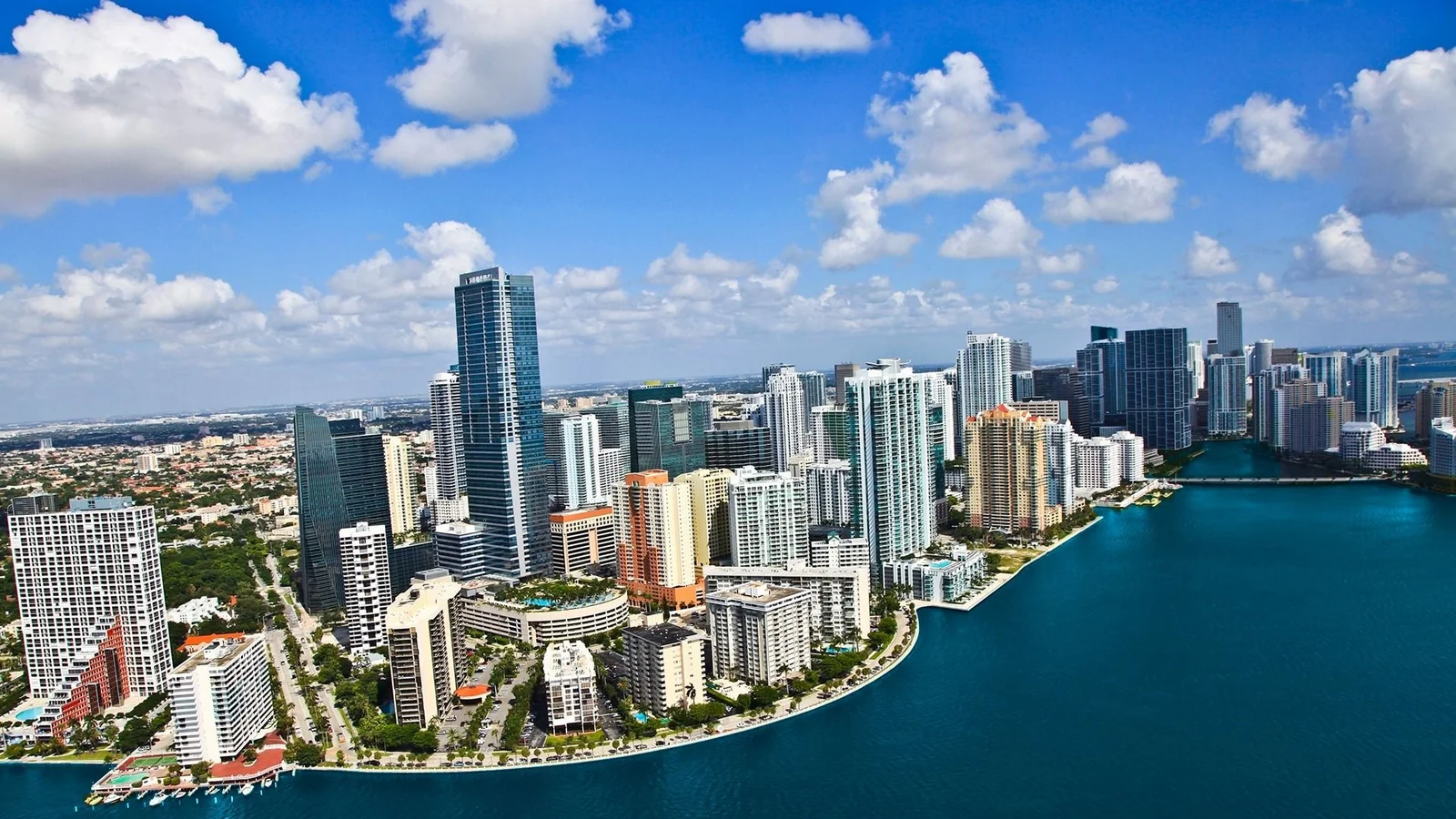
Brickell is the densest concentration of international capital in Miami-Dade, a vertical neighborhood of glass towers, bank headquarters, and walk-to-work living south of the Miami River. For investors searching brickell condo investment, the question is not whether Brickell is recognizable globally. It is whether the 2026 price reset, the rental rules, and the post-Surfside regulatory wave align with your budget and timeline.
This guide covers Brickell specifically: 2026 price bands, gross and net yield math, short-term rental reality, SB 4-D exposure in local towers, insurance and HOA costs, pros and cons, buyer profiles, and the document checklist to run before you sign. For Miami-wide foreign buyer mechanics, see the Miami Foreign Buyer Guide. For SB 4-D depth, see the Florida Condo SB 4-D Guide. For the broader Miami metro context, see Miami Investment Area Overview.
Disclaimer: Florida Estate publishes independent research, not legal or tax advice. Yields are illustrative ranges, not guarantees. Verify SB 4-D status, insurance quotes, and tax exposure with a Florida-licensed attorney, CPA, and broker before binding decisions.
What Makes Brickell Different From Other Miami Neighborhoods
Brickell is not a beach neighborhood and not a suburban family district. It is Miami’s central business district, home to major bank offices, law firms, wealth managers, and the Brickell City Centre retail complex. Residents walk to restaurants on Brickell Avenue, take the Metromover for free circulation downtown, and reach Miami International Airport in roughly 20-30 minutes depending on traffic.
That urban character defines the investment case. Tenants in Brickell are typically young professionals, finance workers, medical residents, and corporate transferees who pay a premium for walkability and building amenities. Owner-occupiers include international buyers who want a Miami address without maintaining a single-family home. The neighborhood skews condo-only: nearly every investable asset is a unit in a high-rise association, which means HOA governance and SB 4-D compliance matter as much as the view.
Compared to Edgewater or Sunny Isles Beach, Brickell trades bay views for financial-district convenience. Compared to Coconut Grove, it trades leafy streets for density and rental liquidity. For investors, the trade is clear: Brickell offers the strongest brand recognition and resale liquidity in Miami’s urban core, but it does not offer Orlando-style gross yields or Tampa-style entry prices.
Miami-Dade entered 2026 in a measurable buyer’s market. Condo inventory reached approximately 17 months of supply, the highest in over a decade, while median condo prices fell roughly 9% from the 2023 peak to about $640,000 in Q1 2026. South Florida absorbed $4.4 billion in foreign capital in 2025 alone, up 42% year on year, but that capital has more choices than at the 2022 peak when supply was under four months.
Brickell sits inside that macro picture with its own micro-dynamics. Newer towers delivered since 2015-2020 compete with 1980s and 1990s stock that faces SB 4-D assessments. Pre-construction projects along the Brickell corridor continue to attract foreign deposits, approximately 52% of South Florida new-construction sales went to foreign nationals in recent reporting windows, while resale inventory gives cash buyers room to negotiate on older units with documented reserve issues.
| Metric | Brickell / Miami-Dade context | Investor takeaway |
|---|---|---|
| Median condo (county) | ~$640,000 Q1 2026 | Entry one-bed Brickell often $450K-$650K |
| Supply | ~17 months countywide | More negotiating leverage than 2021-2022 |
| Price change from peak | ~−9% median condo | Reset favors patient capital, not flippers |
| Foreign capital (South FL 2025) | $4.4B (+42% YoY) | Structural demand remains; timing improved |
| Typical gross LTR yield | 3-5% Brickell condo | Net lower after carry costs |
| STR allowed (typical) | No in most buildings | Confirm HOA minimum-stay rules in writing |
The buyer window is real, but it is selective. A discounted 1990s unit with a pending six-figure assessment is not the same opportunity as a 2018 tower with fully funded reserves and lender-friendly warrantability. Price per square foot alone misleads if SB 4-D liabilities travel with the deed.
Price bands: what investors actually pay in Brickell
Brickell investment condos in 2026 trade across five bands, and the unit type decides both the entry ticket and the liquidity. Studios of 450-650 sq ft list at $350,000-$480,000, one-bedrooms of 650-900 sq ft at $450,000-$650,000, two-bedrooms of 1,000-1,400 sq ft at $650,000-$950,000, and three-bedrooms of 1,400+ sq ft at $950,000-$1.8M+. Pre-construction units use a 20-50% deposit schedule instead of a single closing payment. These bands sit against a Miami-Dade median condo price near $640,000 in Q1 2026, roughly 9% below the 2023 peak, with about 17 months of supply countywide. The one-bedroom is the workhorse product because it matches the finance and professional tenant base and resells to both investors and owner-occupiers, while studios carry thinner rental demand and higher HOA cost per square foot.
Brickell pricing splits sharply by era, floor height, parking inclusion, and reserve health. The bands below reflect 2026 transaction ranges for investment-grade units, not trophy penthouse outliers.
| Unit type | Typical price band | Typical size | Notes |
|---|---|---|---|
| Studio / convertible | $350,000-$480,000 | 450-650 sq ft | Thin rental demand; higher per-sf HOA |
| One-bedroom | $450,000-$650,000 | 650-900 sq ft | Core investor product; best liquidity |
| Two-bedroom | $650,000-$950,000 | 1,000-1,400 sq ft | Professional tenants; parking critical |
| Three-bedroom+ | $950,000-$1.8M+ | 1,400+ sq ft | Smaller tenant pool; higher carry |
| Pre-construction (new) | 20-50% deposit schedule | Varies | Foreign buyer heavy; verify developer |
Studios can look affordable on a per-unit basis but often underperform on rent-per-dollar and face heavier investor concentration limits for financing. One-bedroom units remain the workhorse for brickell condo investment because they match the neighborhood employment base and resell to both investors and owner-occupiers.
Two-bedroom units make sense when parking is deeded, the building allows leases to corporate tenants, and monthly HOA plus taxes still leave positive cash flow on a conservative rent assumption. Three-bedroom units in Brickell are often lifestyle purchases with weaker yield math unless the building is new and the unit includes premium views.
Rental strategy: long-term yes, short-term mostly no
Brickell is a long-term rental market for most investors. The neighborhood’s employment anchor supports 12-month leases to professionals. Furnished annual rentals to corporate transferees can achieve modest premiums over unfurnished, but they require turnover management and furniture capital.
Short-term rental is the exception, not the rule. Miami-Dade County regulates vacation rentals, but HOA declarations override county permissiveness in most Brickell towers. Typical restrictions include:
- Minimum lease terms of 30, 90, or 180 days
- Prohibitions on transient occupancy and hotel-style operations
- Registration requirements and fines for violations
- Investor concentration caps that affect financing eligibility
Before purchasing for rental income, request the declaration, rules and regulations, and any rental addendum from the seller or association. Call the management company and ask specifically: “What is the minimum lease length for an investment unit?” If the answer is 90 days or more, treat Airbnb-style projections as invalid.
| Strategy | Feasibility in Brickell | Gross yield band | Management intensity |
|---|---|---|---|
| Long-term unfurnished | High in most buildings | 3-4.5% | Low-medium |
| Long-term furnished | Medium; corporate niche | 3.5-5% | Medium |
| Short-term / vacation | Low, HOA blocked | Not reliable | High if allowed |
| Owner seasonal use + LTR | High for hybrid buyers | Varies | Medium |
For full gross-to-net modelling across Florida strategies, see the Florida Rental Yield Guide.
Gross yield vs net yield: three 2026 scenarios
Gross yield is annual rent divided by purchase price. Net yield subtracts the carrying costs that Brickell investors actually pay. Florida’s lack of state income tax helps, but Miami-Dade property tax, HOA fees, insurance, and management still compress returns.
Scenario A: One-bedroom, $520,000 purchase, long-term unfurnished
| Line item | Annual amount |
|---|---|
| Gross rent ($3,100/mo) | $37,200 |
| Property tax (non-homestead ~2%) | ~$10,400 |
| HOA ($850/mo) | $10,200 |
| HO-6 insurance | ~$2,200 |
| Management (8% of rent) | ~$2,976 |
| Vacancy / turnover reserve (5%) | ~$1,860 |
| Net before capex | ~$9,564 |
| Gross yield | 7.2% → 1.8% net |
Note: Gross on rent alone is 7.2%, but Miami-Dade carry costs reduce net to roughly 1.8% in this example. Many marketing sheets quote rent-to-price without taxes and HOA, that overstates Brickell cash flow.
Scenario B: Two-bedroom, $780,000 purchase, furnished corporate lease
| Line item | Annual amount |
|---|---|
| Gross rent ($4,800/mo furnished) | $57,600 |
| Property tax (~2%) | ~$15,600 |
| HOA ($1,100/mo) | $13,200 |
| HO-6 insurance | ~$2,800 |
| Management (10%) | ~$5,760 |
| Vacancy / turnover (5%) | ~$2,880 |
| Net before capex | ~$17,360 |
| Gross yield | 7.4% → ~2.2% net |
Furnished corporate leases can lift gross rent, but HOA and tax scale with price. Net remains modest, consistent with an appreciation-led strategy.
Scenario C: One-bedroom pre-construction, $590,000 delivery 2027
| Line item | Notes |
|---|---|
| Gross yield at delivery | Often projected 3.5-4.5% on optimistic rent |
| Special assessment risk | Lower in new build if SIRS funded from start |
| Carry during construction | Deposit schedule + closing costs + first-year HOA |
| Net in year one | Frequently negative after closing costs |
Pre-construction can work for buyers who want new reserves compliance and modern amenities, but net yield in the first 24 months rarely matches Orlando STR markets. The return thesis is often capital appreciation and currency diversification, not monthly cash flow.
Rule of thumb: Net Brickell condo yields often land 1.5-3 points below gross on long-term rental. If a pro forma shows 6% net on a $500,000 Brickell unit without line-item expenses, rebuild the model.
SB 4-D Risk in Brickell: The Non-Negotiable Due Diligence Layer
Brickell’s skyline includes dozens of towers built between 1980 and 2005, exactly the cohort most affected by Florida SB 4-D after the 2021 Surfside collapse. The law requires milestone structural inspections for buildings of three or more stories at 25 years (coastal) or 30 years (inland), plus Structural Integrity Reserve Studies with no reserve waivers for covered components.
Miami-Dade also maintains its own 40-year recertification program, which predates SB 4-D. Brickell buildings may need to comply with both county recertification and state milestone rules, doubling the documentation surface for buyers.
Practical risk for investors:
- Associations that waived reserves for years are now funding catch-up assessments
- Phase 2 milestone findings can imply seven-figure building-wide repairs
- Underfunded reserves (under 50% of SIRS recommendation) signal near-term levies
- Insurance carriers scrutinize compliance status for master policy renewal
Document requests before any Brickell offer:
- Phase 1 and Phase 2 milestone inspection reports (if triggered)
- Most recent SIRS with component-level cost tables
- Reserve study showing current funding percentage
- Two years of board minutes mentioning assessments or structural repairs
- Pending or approved special assessment schedule
- Master insurance certificate and any non-renewal notices
The full legal and technical framework lives in the Florida Condo SB 4-D Guide. For a cross-property checklist, use Due Diligence for Florida Real Estate.
In a 17-month supply market, SB 4-D status is a negotiating lever. Sellers of non-compliant units with pending assessments have limited alternatives. Buyers can request price reductions, seller credits, or escrow holdbacks, or walk away. That dynamic separates informed investors from buyers who discover a $40,000 assessment three months after closing.
Insurance and hurricane exposure in Brickell towers
Brickell condo investors carry two insurance layers, and each one hits a different line of the budget. The association buys the master policy for the building structure and common elements and funds it from HOA fees, which commonly run $600-$1,500 per month. The unit owner buys an HO-6 policy for interior, contents, and loss assessment coverage, and HO-6 premiums for Brickell units commonly run $1,500-$3,500 per year. In Scenario A for a $520,000 one-bedroom, HO-6 insurance of about $2,200 per year sits beside $10,200 of annual HOA, so pass-through risk matters. High master-policy deductibles can reach unit owners as loss assessments after named storms, and a building on a carrier watch list can raise HO-6 costs or block financing. Obtain a quote before removing inspection contingencies.
Brickell sits on Biscayne Bay’s edge, coastal wind and storm surge exposure is real even without direct beach frontage. Condo investors carry two insurance layers:
| Layer | Who pays | What it covers |
|---|---|---|
| Master policy | Association (from HOA fees) | Building structure, common elements |
| HO-6 unit policy | Unit owner | Interior, contents, loss assessment rider |
Investors should verify the master policy’s wind coverage, flood coverage, and deductible structure. High master deductibles can pass through to unit owners as loss assessments after named storms. HO-6 premiums for Brickell units commonly run $1,500-$3,500 per year, higher for larger units or upgraded finishes.
Obtain an insurance quote before removing inspection contingencies. A building on a carrier watch list can raise HO-6 costs or block financing, both affect resale liquidity. For statewide insurance context, see Florida Property Insurance Investment Costs.
Foreign Buyers in Brickell: Structure, Tax, and Closing
Brickell is the first Miami neighborhood many Latin American buyers target. Colombia and Argentina together represent a large share of South Florida international volume; Brazil, Mexico, and Canada follow closely in statewide Florida Realtors data.
Foreign buyers face the same ownership rights as US citizens on purchase, but different tax geometry on exit and estate:
| Topic | Brickell investor impact |
|---|---|
| FIRPTA on sale | 15% withholding on gross sale price |
| US estate tax (non-resident) | ~$60,000 exemption vs ~$13.6M for US citizens |
| FL doc stamp | 0.7% of purchase price at closing |
| FL state income tax | None on rental income |
| Federal rental tax | Applies; treaty may reduce for some nationalities |
| SB 264 | Restricts only seven listed countries, not Colombia, Brazil, Argentina, Mexico, Canada |
Entity structure matters. A Florida LLC can help with estate planning and privacy for cash buyers, but may complicate foreign national mortgage products. Many Brickell investors buy cash in an LLC; financed buyers often close in personal name then transfer after lender consent.
Remote closing is standard: apostille or consulate notarization, courier to Miami title company, wire 3-5 business days before closing with phone-verified wire instructions. Full process detail is in the Miami Foreign Buyer Guide.
Financing: warrantability and investor concentrations
Not every Brickell tower qualifies for conventional or foreign national financing. Lenders evaluate:
- Investor concentration percentage in the building
- Pending litigation involving the association
- Reserve funding and SB 4-D compliance
- Single-entity ownership limits
- Hotel or transient-use restrictions
Older Brickell buildings with high investor ratios may require portfolio loans or cash. Pre-construction projects often offer developer financing or staged deposits but require developer due diligence, track record, escrow structure, completion bond.
DSCR loans underwrite on projected rent versus debt service and can suit foreign investors without US income documentation, but the building and unit must still pass lender condo questionnaires. Ask about financing eligibility before spending on inspection and appraisal.
Advantages
- Global brand liquidity, Brickell resells to international buyers year-round
- Employment anchor, finance and professional tenants support long-term leases
- Walkable urban product, no car dependency for tenants; Metromover access
- 2026 entry window, countywide supply reset improves buyer leverage
- USD asset, capital preservation for LATAM and Canadian buyers
- New construction option, modern towers with SB 4-D compliance built in
Disadvantages
- Low net yield, carry costs compress returns versus Tampa or Jacksonville
- STR blocked, most buildings forbid short-term rental income
- SB 4-D assessments, older towers carry six-figure liability risk
- High HOA, $600-$1,500+ monthly common; rising with reserve catch-up
- Insurance volatility, coastal master policies affect building economics
- Investor concentration, can limit financing and resale pool in some towers
Red flags: when to walk away from a Brickell deal
Treat these as stop signals unless price fully compensates:
- Milestone Phase 2 triggered but repairs not funded or scheduled
- Reserve funding under 50% of SIRS recommendation with no assessment plan
- Pending special assessment vote with undisclosed per-unit amount
- Master insurance non-renewal notice or carrier cancellation
- HOA litigation involving structural defects or water intrusion
- Rental rules incompatible with your stated strategy (STR plan in a 180-day minimum building)
- Seller refuses to provide SIRS or milestone reports within contract timeline
- Investor concentration above lender limits when you need financing
Brickell rewards buyers who underwrite liabilities, not just comparables. A unit priced 15% below market with a $80,000 assessment pending is not cheap, it is appropriately discounted risk.
Buyer profiles: who Brickell works
| Investor profile | Fit | Typical hold |
|---|---|---|
| LATAM cash buyer seeking USD foothold | Strong | 7-15 years |
| Appreciation-first US domestic buyer | Strong | 5-10 years |
| Yield-first cash-flow investor | Weak | , |
| STR / Airbnb operator | Weak (HOA blocks) | , |
| Pre-construction foreign buyer | Medium-strong | Through delivery + 5 years |
| Portfolio builder seeking multiple doors | Weak | Capital better in Jacksonville/Tampa |
Decision framework: If your success metric is monthly net cash flow, prioritize Tampa, Jacksonville, or Orlando STR corridors per the Best Areas to Invest in Florida 2026 guide. If your metric is Miami exposure, walkability, and resale depth, and you can underwrite SB 4-D, Brickell belongs on the shortlist.
What belongs on the pre-offer checklist for brickell condo investors?
Use this sequence after you identify a building and unit:
- Confirm rental rules and minimum stay with HOA management in writing
- Request full SB 4-D package: milestone report, SIRS, reserve study, assessment history
- Review two years of financials and board minutes
- Obtain HO-6 quote and confirm master policy status
- Model net yield with Miami-Dade tax rate, actual HOA, and 5% vacancy
- Verify financing eligibility or confirm cash path
- Run title and lien search; confirm no open association claims against unit
- For foreign buyers: align entity structure, FIRPTA plan, and estate exposure with attorney
- Compare against Edgewater and downtown alternatives within Miami urban core
- Link decision to metro context on Miami Investment Area Overview
Closing timeline for cash buyers: 30-45 days. Financed: 45-60 days. Never wire funds without verbal confirmation of instructions.
Brickell vs nearby Miami core alternatives
Investors often cross-shop Brickell against Edgewater, Downtown, and Coconut Grove. At a high level:
| Neighborhood | Entry (1-bed) | Gross LTR yield | STR feasibility | SB 4-D exposure |
|---|---|---|---|---|
| Brickell | $450K-$650K | 3-5% | Low | High in 1980s-90s stock |
| Edgewater | $400K-$600K | 3-5% | Low-medium | High; similar vintage |
| Downtown | $350K-$550K | 3-4.5% | Low | Mixed by building |
| Coconut Grove | $500K-$800K | 2.5-4% | Low | Lower rise; varied |
Brickell commands a premium for financial-district positioning and resale depth. Edgewater offers bay views at a modest discount. The right choice depends on tenant profile and building-specific SB 4-D health, not neighborhood marketing alone.
Closing Verification: What to Re-Check Before Wire
Even after inspection, re-verify within seven days of closing:
- No new special assessment vote scheduled between contract and closing
- Master insurance certificate current through closing date
- HOA estoppel letter matches expected fees and shows no unpaid unit assessments
- Seller credits for known SB 4-D items appear on closing statement
- Lease assignment rules if taking over tenant
Florida Estate research is editorial, not a substitute for licensed professional advice on your specific unit and association.
Commercial shortlist and building reviews
Request a curated shortlist on our invest in Miami page, filtered for net yield, HOA rental rules, and SB 4-D document status.
Building reviews in this market:
STR regulation cross-links
Verify county and city short-term rental rules before underwriting yield on this submarket:
Pair county guides with the Florida STR regulations hub and DBPR vacation rental license checklist.
Florida Estate’s insider tip
Insider tip: Ask for the SIRS and the reserve funding percentage before you discuss price on any pre-2005 Brickell tower. Reserves under 50% of the SIRS recommendation signal near-term levies, and with about 17 months of supply you can ask for a price cut, a seller credit, or an escrow holdback for any assessment already scheduled.
Frequently Asked Questions
Brickell suits appreciation-focused investors with a five-to-ten-year horizon, not yield-first buyers. Gross long-term rental yields run 3-5% on typical one- and two-bedroom units. Miami-Dade median condo prices fell roughly 9% from the 2023 peak to about $640,000 in Q1 2026, with 17 months of supply giving buyers negotiating power. Net returns after HOA, insurance, property tax, and management typically land 1.5-3 points below gross.
Studios and one-bedroom investment units in Brickell start around $400,000-$550,000 in 2026. Two-bedroom units in desirable towers near Brickell Avenue or Brickell City Centre run $600,000-$900,000. Three-bedroom penthouses and bay-view units exceed $1 million. Pre-construction launches in the Brickell pipeline often require 30-50% deposits staged over two to three years.
Most Brickell condo buildings restrict or ban short-term rentals. Typical HOA rules require minimum stays of 30, 90, or 180 days, which effectively blocks Airbnb-style income. A handful of investor-friendly buildings permit shorter stays, but they are the exception. Before buying, request the condo declaration and rental rules in writing and confirm minimum-stay requirements with the association manager.
Brickell has one of the highest concentrations of older high-rise condos in Florida. SB 4-D requires milestone structural inspections at 25 years for coastal buildings and full Structural Integrity Reserve Studies with no reserve waivers. Many 1980s and 1990s towers have issued special assessments of $15,000-$200,000 per unit. Request the milestone report, SIRS, reserve funding percentage, and pending assessments before any offer.
Long-term furnished or unfurnished rentals on one-bedroom units typically produce 3-4.5% gross annually on a $500,000-$650,000 purchase. Two-bedroom units in premium buildings with amenities and parking may reach 4-5% gross. Short-term rental yields are not realistic in most Brickell buildings due to HOA restrictions. Net yield after expenses is usually 1.5-3 points lower than gross.
Colombian, Argentine, Brazilian, and Canadian buyers dominate Brickell's international segment. Many are finance professionals, entrepreneurs, or families seeking a dollar-denominated foothold in Miami's financial district. Cash purchases are common; roughly 47% of Florida foreign buyers pay cash nationally, and Brickell skews higher. Pre-construction buyers often come from Latin America and pay staged deposits in USD.
Monthly HOA fees in Brickell typically run $600-$1,500 for one- and two-bedroom units, depending on building age, amenities, and reserve funding status. Older towers facing SB 4-D compliance may carry higher fees as associations rebuild reserves. Luxury newer buildings with full-service amenities, pools, and concierge can exceed $1,200 per month even on smaller units.
Investors carry an HO-6 policy for interior and contents, typically $1,500-$3,500 per year depending on unit size and coverage limits. The building master policy covers the structure; verify it is current and not under non-renewal. Wind and flood exposure in Brickell is coastal, so master policy premiums affect overall building economics and can trigger pass-through assessments after hurricane events.
Get Brickell condo investment options
Share your budget, rental strategy, and timeline, we respond within one business day with buildings that match your SB 4-D and HOA requirements.
Buildings we cover in Brickell
12 buildings, listed by entry price. Entry starts at $380,000. Each card carries dues, letting rules and the milestone inspection position.
| Building | Neighbourhood | Built | From |
|---|---|---|---|
| Plaza on Brickell Condos | Brickell | n/a | $380,000 |
| Brickell Heights Condos | Brickell | n/a | $389,000 |
| Astor Crown Brickell Condos | Brickell | n/a | $390,000 |
| Vue at Brickell Condos | Brickell | n/a | $395,000 |
| Icon Brickell Condos | Brickell | n/a | $420,000 |
| The Sail on Brickell Condos | Brickell | n/a | $470,000 |
| Carbonell Brickell Key Condos | Brickell Key | n/a | $550,000 |
| House of Wellness Brickell Condos | Brickell | n/a | $550,000 |
| 1428 Brickell Condos | Brickell | n/a | $750,000 |
| Cipriani Residences Miami Condos | Brickell | n/a | $900,000 |
| Santa Maria Brickell Condos | Brickell | n/a | $1,100,000 |
| Panorama Tower Condos Brickell | Brickell | n/a | n/a |