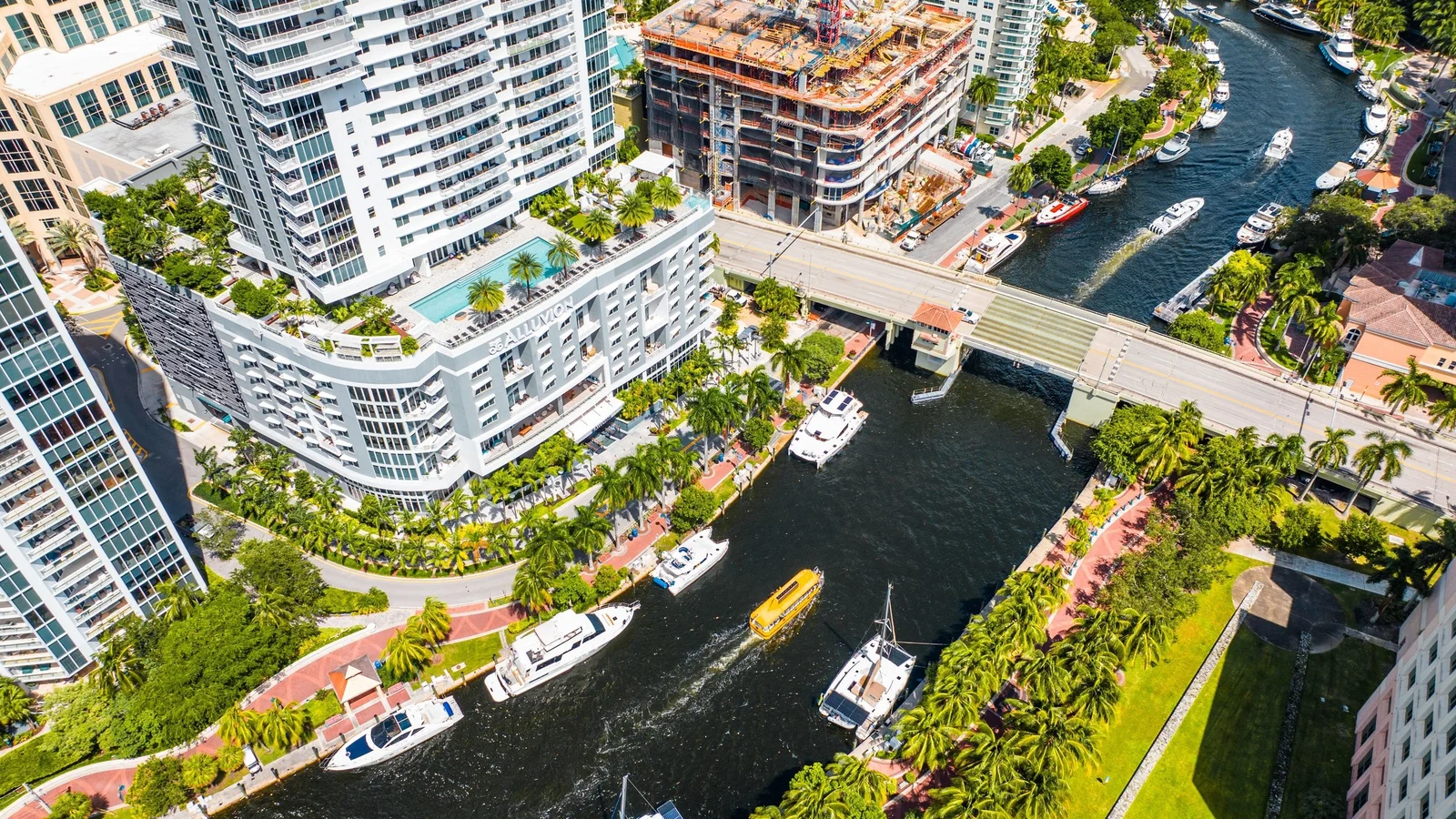
Quick answer: Buying a Florida property does not qualify for EB-5. Not a house, not a condominium, not a portfolio of rentals. What qualifies is capital placed at risk in a new commercial enterprise that creates at least 10 full-time jobs for US workers, at 1,050,000 dollars, or 800,000 dollars in a targeted employment area or qualifying infrastructure project. Real estate connects to EB-5 through development, and buying a finished unit in a project is not investing in it.
The distinction that decides everything
| Act | EB-5 position |
|---|---|
| Buying a condominium to live in | does not qualify |
| Buying a condominium to let | does not qualify |
| Buying several rental properties | does not qualify |
| Buying land and holding it | does not qualify |
| Investing capital at risk in an enterprise that develops property and creates 10 jobs | can qualify |
The programme is an employment-based immigrant category. Its object is job creation, and capital that simply changes hands for an existing asset creates none. A finished condominium already exists; buying it transfers ownership rather than employing anyone.
That is why the sentence “buy property and get a green card” is not a simplification of EB-5. It describes something the programme does not contain.
Owning Florida property is entirely lawful for any foreign national, requires no visa, and confers none. Those are two separate subjects that share a buyer and nothing else. See Florida property for foreign buyers.
The numbers, as they currently stand
| Requirement | Level |
|---|---|
| Standard minimum investment | 1,050,000 USD |
| Targeted employment area or qualifying infrastructure project | 800,000 USD |
| Jobs required | at least 10 full-time positions for qualifying US workers |
| TEA definition | a rural area, or unemployment of at least 150% of the national average |
| Governing reform | EB-5 Reform and Integrity Act, signed 15 March 2022 |
Two cautions about the second row. TEA designation is a question of fact, tied to the specific location and the relevant unemployment data, and it is the difference between 800,000 and 1,050,000 dollars. Verify it independently rather than accepting a project’s own characterisation.
And these figures are set by statute and subject to adjustment. Confirm the current levels with a licensed immigration attorney before relying on any published number, including this one.
Where real estate genuinely enters the programme
Development is the connection, and it is a real one. Florida has a large pipeline of construction, and an enterprise that develops property can create the jobs the programme requires, through construction employment and through the operations that follow.
Most such investments are made through a regional center, an entity designated to sponsor projects and, in the usual case, permitted to count indirect and induced employment as well as direct jobs. That job-counting methodology is why development projects feature so heavily in the programme.
The distinction to hold on to is between two very different transactions:
| Transaction | What you own | EB-5 relevance |
|---|---|---|
| Buying a residence in a new development | a condominium unit | none |
| Investing in the enterprise developing it | an interest in the enterprise, at risk | can qualify |
Buyers occasionally believe that purchasing a unit in an EB-5 funded project associates them with the programme. It does not. The investor is the party whose capital is at risk in the enterprise; the purchaser is a customer of it.
The timeline is measured in years, not weeks
An approved EB-5 applicant is first granted conditional permanent residence, and the conditions run for 2 years. Removing them requires demonstrating that the investment was sustained and that the required jobs were created, which is a second filing and a second evidentiary exercise.
That structure matters to anyone weighing EB-5 against simply buying a property. A Florida purchase can complete in weeks and produces a deed. An EB-5 process runs for years across at least two filings, and the outcome depends on a project’s performance rather than on the applicant alone.
Neither is better; they answer different questions. What they are not is interchangeable, and a buyer weighing a 2,000,000 dollar property purchase against an 800,000 dollar EB-5 investment is not comparing two versions of the same decision. See the Florida condos hub for what the property side of that comparison actually involves.
What “at risk” actually means
The capital must be genuinely at risk in the enterprise until the job creation requirement is met. It cannot be secured by a redemption arrangement or guaranteed against loss, because a guaranteed return is a loan rather than an investment.
That has a plain consequence a property buyer should absorb: an EB-5 investment can lose money. If the project fails, both the capital and the immigration outcome can be lost together, which is a materially different risk profile from buying a condominium that continues to exist regardless of who developed it.
It is also why project diligence matters as much as immigration diligence. The questions that decide the financial outcome are ordinary development questions: who the sponsor is, what the capital stack looks like, where the EB-5 tranche sits within it, what happens if construction costs rise, and what the sponsor’s completed projects have actually delivered.
Source of funds is the part that takes longest
The programme requires the invested capital to come from lawful sources, fully documented and traceable. For an applicant whose wealth arose across several countries, businesses or decades, assembling that record is frequently the longest part of the process.
Start it early, in parallel with project selection rather than after it, and take direction on scope from the immigration attorney rather than assembling material speculatively.
The same discipline applies on the property side of a buyer’s life, where a closing agent will ask for source-of-funds documentation on a purchase. The two exercises are separate and neither substitutes for the other. See Latin American buyers in Florida for how the property-side documentation works.
If you are buying property anyway, the tax picture is unchanged
An EB-5 applicant is frequently also a Florida property buyer, and the property is taxed on its own terms regardless of any immigration process.
That means no homestead exemption and no Save Our Homes cap until the property is a permanent primary residence, a 10% annual assessment cap on non-homestead property covering non-school levies, tangible personal property tax on a furnished rental with a DR-405 filing by 1 April, and FIRPTA withholding of generally 15% of the amount realised on a future disposition by a foreign person.
Residency status changes some of that and immigration status changes tax residency in ways that need advice. Take the property tax, income tax and estate exposure questions to a US tax professional in one conversation. See Florida property tax for non-residents and the estate tax guide.
What to ask before committing to a project
- Which regional center sponsors it, and what is its record?
- Where does the EB-5 capital sit in the project’s capital stack?
- On what basis is the location claimed as a targeted employment area?
- What is the job creation model, and what happens if construction is delayed?
- What has the sponsor’s completed pipeline actually delivered?
- What are the terms on which capital is returned, and when?
- What is the exit if the project stalls?
- What does the immigration attorney, engaged separately from the project, think of it?
That last question is the one that protects an applicant. Engage your own immigration counsel, independent of the project’s promoters, before committing capital.
Where this leaves a property buyer
If the objective is a Florida home, buy the home. It requires no visa, no minimum, no job creation and no regional center, and it can be completed in weeks. Financing is available through foreign national mortgage programmes, the deposit expectations are set out in how much down payment a foreign buyer needs, and an ITIN will be needed for tax filing. On a condominium, add the reserve and inspection questions in the condominium safety guide and the holding costs in the insurance guide.
If the objective is US permanent residence, EB-5 is a capital-at-risk investment programme with a job creation test, and the property market is where some of those projects happen to operate. The two objectives can both be pursued, and they should be pursued as two separate transactions with two separate sets of advisers.
What should never happen is a property purchase made in the belief that it advances an immigration outcome. It does not, and the money spent on the wrong instrument is the most expensive mistake in this entire subject. For the non-immigrant equivalent of the same confusion, see the E-2 visa and Florida property.
This page is general information about how the programme intersects with property purchases. It is not immigration advice, and eligibility, project selection and filing are matters for a licensed US immigration attorney.
Frequently Asked Questions
No. Purchasing a home, a condominium or a rental property is a passive acquisition of real estate and does not qualify. EB-5 requires capital placed at risk in a new commercial enterprise that creates at least 10 full-time jobs for US workers. Owning property creates no immigration status of any kind.
1,050,000 dollars as the standard amount, reduced to 800,000 dollars where the investment is in a targeted employment area or a qualifying infrastructure project. Those levels come from the EB-5 Reform and Integrity Act signed on 15 March 2022. Confirm the current figures with a licensed immigration attorney, since they are subject to statutory adjustment.
A rural area, or an area with unemployment of at least 150% of the national average. TEA designation is what reduces the qualifying investment from 1,050,000 to 800,000 dollars, and whether a specific project sits in one is a question of fact to be verified rather than accepted from marketing material.
Yes, and this is the genuine connection between EB-5 and property. Investment in a new commercial enterprise that develops real estate can qualify where the required jobs are created, commonly through a regional center. The qualifying act is investing in the development enterprise, not buying a finished unit in it.
At least 10 full-time positions for qualifying US workers, attributable to the investment, and the capital must remain at risk in the enterprise until that requirement is met. Job creation is what allows conditions on residency to be removed, so it is the substantive test rather than a formality.
No. This page explains how EB-5 interacts with property purchases so that buyers do not confuse the two. Eligibility, source of funds, project selection and filing are matters for a licensed US immigration attorney, and no property professional should be advising on them.
Buying property alongside an immigration process? Keep them separate
Tell us what you are considering on the property side. We will come back with entry prices, holding costs, the tax position for a non-resident owner and financing options, so the property decision stands on its own numbers while your immigration counsel handles the rest.