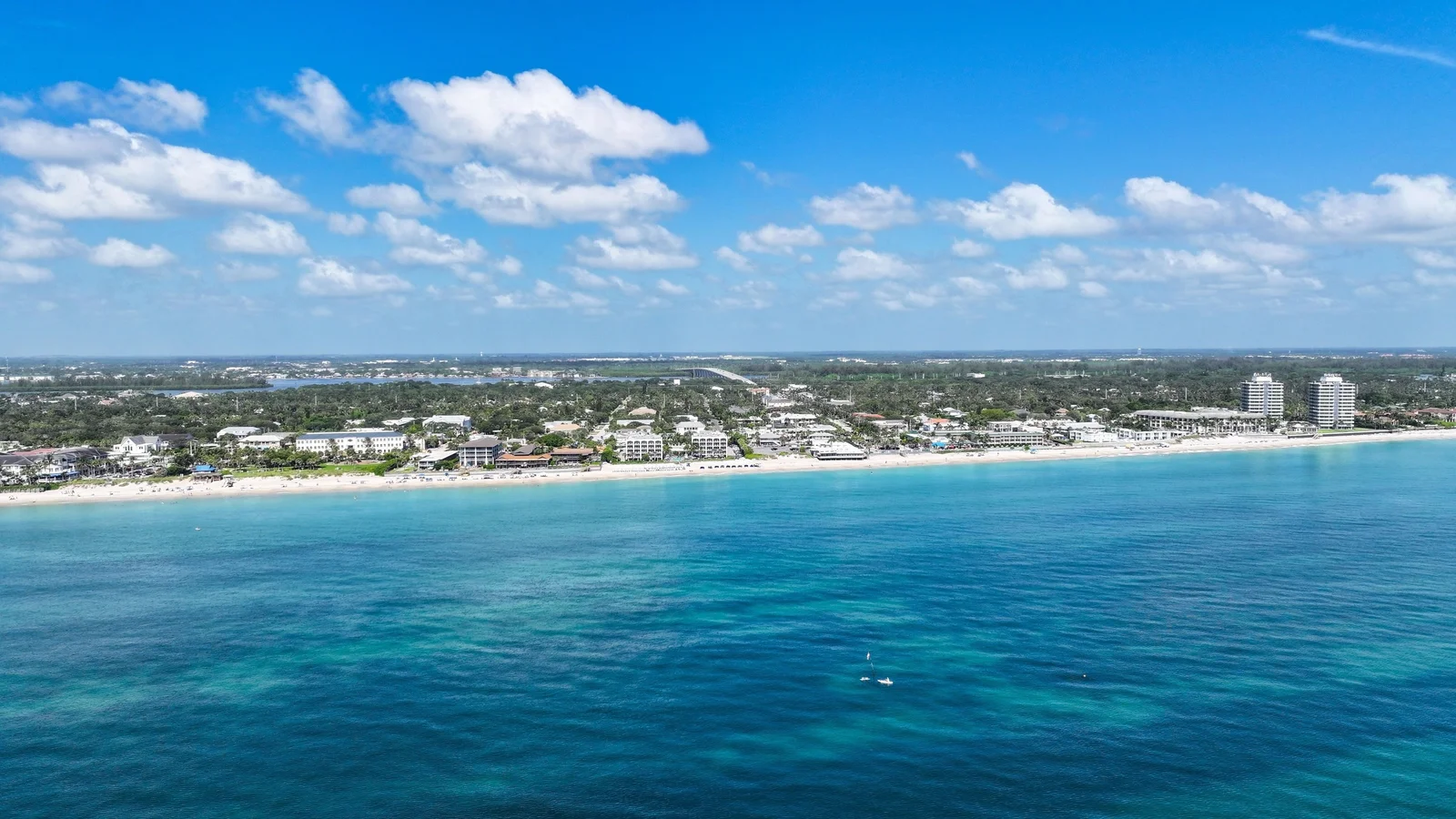
Quick answer: Search for a Treasure Coast rental and you will search for Vero Beach, and Vero Beach is the one place in this county where nightly letting is prohibited. The unincorporated county permits it. The pattern most Florida investors have internalised, restrictive county and permissive cities, runs the other way here.
An investor who has worked in several Florida counties develops a reliable habit: check the county rule, then check whether the city is more permissive. That habit produces the wrong answer here.
The city carries the name, the beach and the search volume, and it is closed to the model. The permission sits in the unincorporated county around it, in places most buyers have not heard of.
Why the city can prohibit and the county does not
Florida preempts local regulation of vacation rentals to the state, with a grandfather provision for ordinances adopted on or before 1 June 2011. Vero Beach has had its prohibition in place for decades, comfortably before that date, so it survives.
The county, by contrast, permits and regulates rather than prohibits. Vacation rentals, meaning residential units let or offered for periods of fewer than 30 days, are allowed in unincorporated Indian River County subject to conditions.
| Jurisdiction | Position on letting under 30 days |
|---|---|
| City of Vero Beach | Prohibited |
| Unincorporated Indian River County | Permitted, subject to registration and conditions |
The lesson generalises beyond this county. Whether a Florida jurisdiction may prohibit letting is usually a question about the calendar rather than about current policy, and the boundary between a permitted and a prohibited parcel can be a municipal line that a postal address conceals.
Establish the jurisdiction from the parcel record. In this county that single check decides the entire investment case.
What the county requires of a permitted rental
Three registrations and a set of operating conditions.
| Requirement | Issued or held by |
|---|---|
| Transient public lodging licence | Florida DBPR |
| Tourist development tax registration | Clerk of the Court |
| Vacation rental registration | Indian River County |
The operating conditions are where this county differs from its neighbours: occupancy limits, special parking regulations for vacation rentals, noise standards, and a contact available 24 hours a day to respond to problems at the property.
The 24-hour contact is a real cost, not a formality
Of all the conditions, the round-the-clock local contact is the one that changes the economics for an out-of-state or overseas owner, and it is routinely underestimated.
It is not an answering service requirement. The point of the rule is that somebody can attend and resolve an issue, which means a person within reasonable distance, awake or contactable at three in the morning, willing to be called about a party, an alarm, a lockout or a neighbour complaint.
For an owner living elsewhere this is a management contract, not a phone number, and it is priced accordingly. Three consequences follow:
- Self-management from another state or country is not realistic here in the way it can be on a platform-driven listing elsewhere.
- The management fee is effectively a floor cost of compliance rather than an optional service, so it belongs in the model from the first calculation.
- The requirement favours owners with a genuine local relationship, which is part of why the licensed supply base is small.
That small supply base, around 200 licensed vacation rentals across the whole county, is itself a market fact. It limits competition, and it tells you that the barriers here are doing what they were designed to do.
What the tax stack comes to
| Component | Rate | Registered with |
|---|---|---|
| Indian River County tourist development tax | 5% | Clerk of the Court |
| Florida state sales tax | 6% | Florida Department of Revenue |
| County discretionary surtax | As applicable | Florida Department of Revenue |
Registration for the tourist development tax runs through the Clerk of the Court rather than a tax collector, which is a small administrative difference that sends first-time owners to the wrong office.
The tenant pool question the ordinances do not answer
Even where letting is permitted, this stretch of coast has a demand profile that rewards a specific model.
The Treasure Coast draws a quieter, older and longer-staying visitor than the high-volume Florida tourist markets. Seasonal residents occupy properties for months rather than nights. That produces steady demand for furnished lettings above 30 days, which is unaffected by the Vero Beach prohibition and needs no vacation rental licence.
For many buyers here that is the better business, and it is available on parcels where the nightly model is closed. The comparison to run is not permitted-versus-prohibited, it is nightly-in-the-county against seasonal-in-the-city, on the specific properties available at your budget.
Our insider tip: when a Vero Beach property looks unusually good value against county comparables, check the jurisdiction before you get excited. The discount is frequently the prohibition, already priced in by a local market that understands the rule better than an out-of-state buyer does.
Building the contact requirement into the numbers
Because the 24-hour contact is a condition rather than a service, it belongs in the model before the property is compared with anything elsewhere.
Three arrangements satisfy it in practice, and they price differently. A full management contract covers the requirement alongside cleaning, guest communication and maintenance, at the highest cost and the least owner effort. A local co-host or agent engaged specifically for response duty costs less and covers less. A genuinely local owner satisfies it personally at no cash cost, which is the arrangement the rule quietly favours.
What does not satisfy it is a call-centre number answered out of state, because the obligation is to respond to a problem at the property.
The comparison that matters is against counties where remote self-management is viable. Against those, an Indian River property carries a compliance cost that a similar property elsewhere does not, and that gap should be subtracted before the two are ranked on yield.
Set against it is the supply position. A requirement that makes casual remote ownership impractical is also a requirement that keeps casual remote owners out, which is visible in a licensed field of roughly 200 properties across an entire county. Barriers that cost you something also protect you from the operator who would otherwise undercut you.
Pros and cons of this county
Advantages. A small licensed supply base limits competition among permitted properties. The county permits and regulates rather than prohibits, so a compliant unincorporated parcel has a durable position. Seasonal demand supports a strong 30-day-plus model on any parcel, including prohibited ones. Entry pricing is moderate for oceanfront Florida.
Disadvantages. The most searchable location in the county is closed to nightly letting. The 24-hour contact requirement makes remote ownership costlier. Occupancy and parking conditions constrain what larger properties can earn. And the inverted pattern catches out investors applying habits from elsewhere in the state.
Red flags before you offer
- A Vero Beach address marketed with nightly rental income. The city prohibits it, and the history being shown may be unlawful rather than valuable.
- A pro forma with no line for the 24-hour contact, which is a compliance requirement rather than an optional management upgrade.
- Advertised sleeping capacity above the county occupancy limit.
- Guest parking arrangements that do not satisfy the county’s specific vacation rental parking regulations.
- Tourist tax registered with the wrong office, or not at all, on a property with a booking history.
Which buyer this county suits
Suits. An investor buying an unincorporated parcel, with a local management relationship already in place to satisfy the contact requirement, operating inside a small and lightly contested licensed field.
Suits differently. A buyer taking a Vero Beach property for seasonal furnished letting above 30 days, which is lawful, needs no vacation rental licence and matches the actual visitor profile of this coast.
Does not suit. A remote owner intending to self-manage nightly bookings, particularly one attracted by a Vero Beach address. The city rule and the contact requirement close that combination from both directions.
Compare the platform collection gap immediately south in our Martin County STR rules, the minimum-term tiers to the north in our Brevard County STR rules, and the larger metro market in our Palm Beach County STR rules. State licensing is in our DBPR vacation rental licence guide, county rates in tourist development tax by county, and the document list in our due diligence guide.
Frequently Asked Questions
No. The city has prohibited renting residences for periods of fewer than 30 consecutive days for decades, and that ordinance predates Florida's preemption cut-off so it remains enforceable.
Yes. They are permitted subject to registration, safety compliance, occupancy limits, parking rules, noise standards and a 24-hour local contact requirement.
The county requires a responsible contact available around the clock to respond to issues at the property, which a remote owner must arrange through a manager or agent.
6% Florida state sales tax, any county discretionary surtax, and a 5% county tourist development tax registered through the Clerk of the Court.
Around 200 across the county, which is a small supply base compared with Florida's larger tourist markets and concentrates competition among a limited field.
Because the city ordinance predates 1 June 2011 and is grandfathered under Florida's preemption. The pattern is unusual: in most Florida counties the county restricts and the cities are more permissive.
Sources: Indian River County Planning and Development, vacation rentals guidance; City of Vero Beach residential rental ordinance; Indian River County Clerk of the Court, tourist development tax; Florida Statutes section 509.032(7). Verified 27 August 2026.
Confirm the jurisdiction before you offer
Send a Vero Beach or Indian River County address. We establish whether the parcel sits inside the city prohibition or in the permitted unincorporated county.