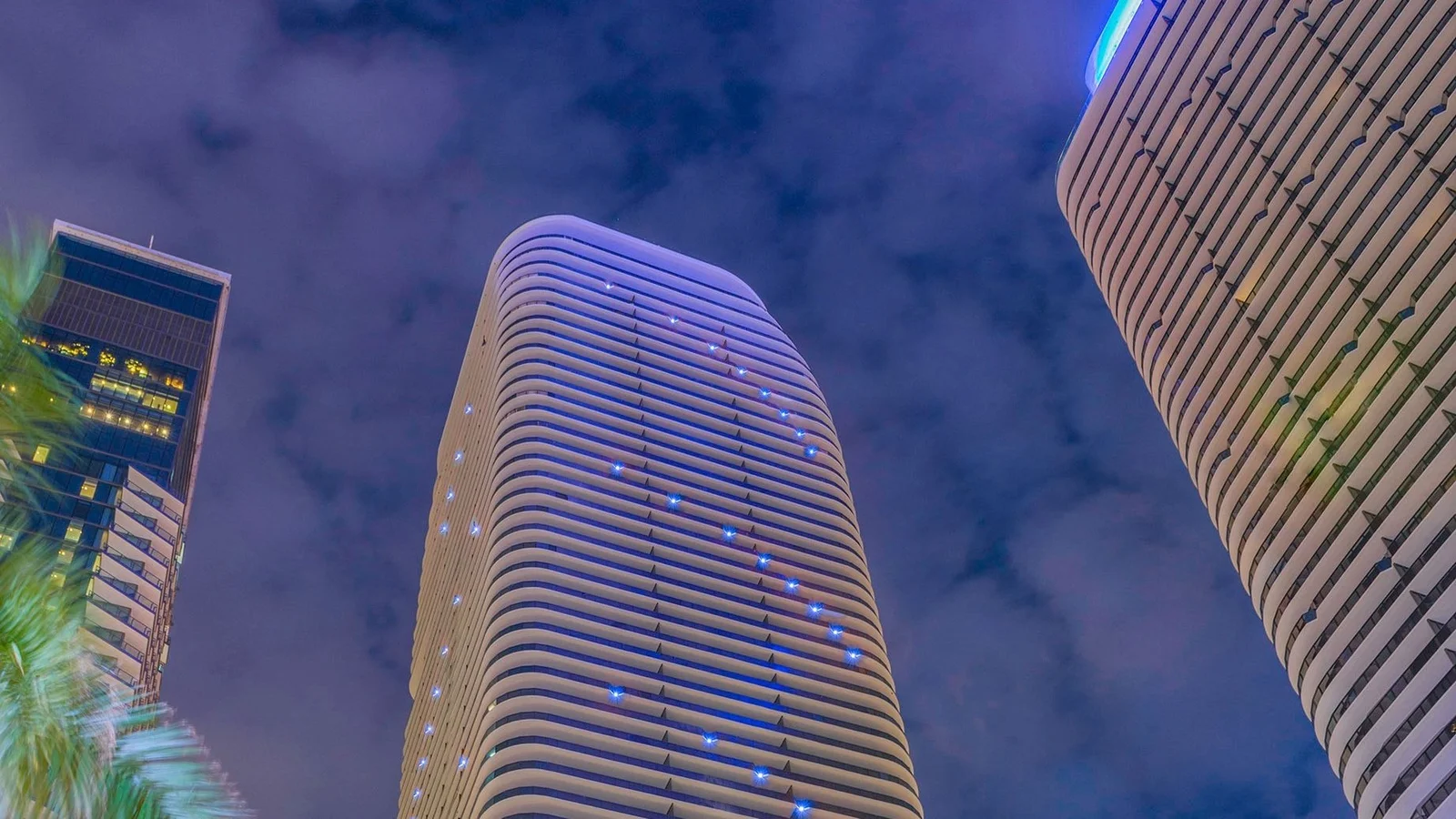
Quick answer: SLS LUX is not expensive because of the price per foot. It is expensive because of what arrives every month afterwards. Dues run about $1.63 per square foot against a Brickell average near $0.72, and the rental rules cap a residential owner at three tenancies a year with a 31-day floor. Those two numbers decide the building. The asking price is the least interesting thing about it.
The rental cap is the whole investment case
Most Brickell towers restrict rentals. SLS LUX restricts them harder than most, and the restriction is specific enough to model.
A residential owner may rent the unit three times per year, and no lease may run shorter than 31 days. Those two clauses together remove the nightly model completely and most of the flexible model with it. Three tenancies with a 31-day floor means, in practice, a small number of medium-stay tenants or one annual lease with a change of tenant permitted if it goes wrong.
That is not a defect. It is a choice the association made, and it produces a quieter building with fewer suitcases in the lift. But it means the yield case has to be built on annual rent, not on seasonal peaks. Anyone who has modelled this address on Airbnb comparables has modelled a different building.
The nightly business at 801 South Miami Avenue is real, but it happens in the condo-hotel suites, roughly 83 of them, inside a managed programme operated by CE Hospitality alongside the SLS hospitality brand. Those are a different product with different economics, a different share of gross, and a different resale market. Confirm which of the two you are being shown before anything else, because the listing photographs look identical and the ownership does not.
What $1.63 a foot actually costs you
Dues at SLS LUX sit near $1.63 per square foot per month across active 2026 listings. The Brickell district average is near $0.72, and the broad range across the neighbourhood runs roughly $0.55 to $1.10.
The arithmetic on a 1,000 square foot unit:
| Line | SLS LUX | Brickell average |
|---|---|---|
| Dues per square foot, monthly | $1.63 | $0.72 |
| Monthly dues, 1,000 sq ft | $1,630 | $720 |
| Annual dues | $19,560 | $8,640 |
| Difference per year | $10,920 |
Nearly eleven thousand dollars a year of difference, recurring, on a single mid-sized unit. Over a ten-year hold that is $109,000 before any increase, and dues in amenity-heavy Miami towers do not hold flat for ten years.
What the money buys is not hidden: a rooftop pool terrace and additional pools, indoor and outdoor lounges, a restaurant, a wine cellar, a billiards room, a business centre, a media screening room, and 24-hour valet and security. That is a hotel operating budget attached to a residential building, and the residents fund it monthly whether or not they use it.
The question for a buyer is narrow and answerable: does the rent this unit commands exceed the rent an equivalent unit commands three blocks away by more than $910 a month? If it does, the amenity package pays for itself. If it does not, you are buying a lifestyle at a measurable annual price, which is a legitimate purchase but not an investment one.
Where the published figures disagree
Sources do not agree on the basic dimensions of this building, and a buyer should know that before quoting any of them in an offer.
| Figure | Reported range |
|---|---|
| Storeys | 57 to 58, with no 13th floor |
| Condominium residences | 438 to 450 |
| Condo-hotel suites | 83 to 84 |
| Total doors | near 521 |
| Unit sizes, square feet | 553 to 3,882, penthouses past 4,200 |
The spread is not large but it is real, and it usually comes from whether condo-hotel suites are counted in the residence total and whether balcony area is included in quoted square footage. The second one matters to you directly: dues are charged per square foot, so a measurement that includes terrace area produces a larger monthly bill than the interior floor plan suggests.
Ask for the declaration page that states the unit’s square footage as the association bills it, not the square footage the listing advertises. On a 1,753 square foot unit the difference between billed and marketed area at $1.63 a foot can run several hundred dollars a month.
What 2018 means for the structural question
The tower received its certificate of occupancy in 2018. Under the coastal 25-year trigger that places the first milestone inspection near 2043, which is far enough away that it is not the risk to underwrite here.
That is genuinely good news and it separates SLS LUX from the older Brickell stock where a 1990s or early-2000s completion puts the inspection and its consequences inside a normal hold period. Buy a 2004 tower and the structural reserve question arrives during your ownership. Buy this one and it does not.
The trade is that the recurring cost is higher from day one instead of arriving as a special assessment later. Older buildings defer; this one pays as it goes. Neither is free. The difference is that the SLS LUX bill is visible in the listing before you buy, and the deferred one is not.
Request the reserve study summary anyway. A building funding a restaurant, multiple pools and a valet operation has a large annual replacement schedule for finishes and equipment that has nothing to do with structural concrete, and that schedule is where dues increases originate.
The financing question comes before the price question
There is a mechanical consequence to sharing an address with a managed hotel programme, and it is the thing to settle first.
Fannie Mae’s selling guide treats a project as ineligible when it is operated as a hotel or motel, when it offers hotel-type services such as daily rentals and central registration, or when owners are required to participate in rental pooling. A building carrying a managed condo-hotel component frequently meets one of those tests. When it does, the project is non-warrantable, and non-warrantable is not a property-level label: the conventional 30-year fixed loan disappears for every unit in the building, including the plain residential ones.
What is left is cash, a portfolio loan from a lender holding the paper itself, or a DSCR loan underwritten on the rent rather than your income. All three cost more than the conventional product. Portfolio and DSCR pricing typically sits above conforming, and down payments commonly start at 25% to 30% rather than 20%. For a foreign buyer the arithmetic tightens again, and the route runs through foreign national mortgage programmes with their own documentation load.
This is not a prediction about SLS LUX specifically. It is the question to put to a lender in writing before an offer, because the answer changes the deposit, the rate and the buyer pool you will eventually sell into. A building financed only by cash and portfolio lenders has a narrower resale market than one a first-time buyer can finance conventionally, and that shows up in exit liquidity rather than in the asking price.
How it sits against the rest of Brickell
Two comparisons are worth drawing, and both are about the shape of the cost rather than its size.
Against Brickell Heights, completed 2017 with 690 residences across two towers: a near-identical vintage, a near-identical milestone horizon, and no hotel component. The structural question is equally absent in both. The difference is the monthly bill and the financing route, and on both counts Brickell Heights is the simpler asset.
Against 500 Brickell, completed 2008 with 633 residences: an older building where the 25-year trigger arrives near 2033, inside a normal hold period rather than beyond it. There the structural reserve question is live and the dues are lower. That is the honest trade in Brickell, older stock carries a deferred structural bill at a lower running cost, newer stock carries a higher running cost and no near-term structural event.
Neither comparison makes SLS LUX wrong. They locate it: the most serviced, the most expensive to hold, the least flexible to rent, and the furthest from its inspection. For the wider district picture, including where the price per foot sits by building, see the Brickell area page.
Insurance, tax and the rest of the monthly number
Dues are the visible recurring cost and they are not the only one.
Florida property tax runs broadly 1% to 2% of assessed value, which on a $985 per square foot building is a material annual figure on its own. Coastal condominium insurance has repriced hard since 2022, and while a unit owner’s HO-6 policy is smaller than a single-family premium, the association’s master policy sits inside the dues and is one of the main reasons Miami dues have risen. We set out how those lines behave across the state in the Florida property insurance guide.
For a building of this vintage, the SB 4-D milestone and reserve framework is the document set to request even though the inspection itself is years away, because the structural integrity reserve study drives the funding percentage, and the funding percentage drives whether dues rise gently or in steps.
Put the three together before modelling anything: dues at $1.63 a foot, tax at 1% to 2% of assessed value, and an insurance line that has moved every year since 2022. On a 1,000 square foot unit bought near $985 a foot, the dues alone are $19,560 a year. Add the other two and the annual carry before a single repair is a number most spreadsheets built on price per foot never show.
Verification checklist before you wire
- Confirm in writing whether the unit is a residential condominium or a condo-hotel suite. The rental economics and the resale pool differ completely.
- Get the association’s billed square footage, not the marketed figure, and recompute the monthly dues yourself at $1.63.
- Ask for the last three years of dues history. The level matters less than the slope.
- Request the reserve study summary and the current funding percentage.
- Confirm the three-rentals-per-year and 31-day minimum clauses in the current declaration, not in a listing description. Rules change by amendment.
- If the plan involves the condo-hotel programme, obtain the CE Hospitality management agreement and read the revenue split, the blackout provisions and the termination terms before signing anything.
- Model the yield on an annual lease. If the number only works with seasonal pricing, the building has already told you no.
Which buyer this building suits
It suits an owner-occupier who wants a serviced address in the centre of Brickell and will use the amenities enough to justify $19,560 a year on a mid-sized unit. It suits a second-home buyer who wants the building looked after while they are away and will accept a long lease when they are not there.
It suits a yield-first investor poorly. The dues are the highest tier in the district, the rental cap removes the flexibility that would justify them, and the units compete for tenants with newer Brickell inventory carrying half the monthly cost. That is not a judgement about the building’s quality, which is high. It is arithmetic about what the quality costs to hold.
Frequently Asked Questions
Completed in 2018 at 801 South Miami Avenue, Miami FL 33130. The tower runs 57 to 58 storeys depending on the source and skips the 13th floor. It holds roughly 438 to 450 condominium residences plus about 83 to 84 condo-hotel suites, near 521 doors in total. The Related Group developed it, Arquitectonica designed it, Yabu Pushelberg did the interiors.
Not on a residential unit in any meaningful way. Owners may rent a maximum of three times per year and no lease may run under 31 days. The nightly business at the address belongs to the condo-hotel suites, which sit in a managed programme run by CE Hospitality with the SLS brand. Buying a residential unit and planning Airbnb income is buying the wrong line of the price list.
Around $1.63 per square foot per month across active listings in 2026. The Brickell average sits near $0.72 and the range across the district runs roughly $0.55 to $1.10. On a 1,000 square foot unit that is about $1,630 a month, or $19,560 a year, before tax and insurance.
Asking prices run from about $575,000 to $8.8 million, averaging near $985 per square foot in 2026. Residences are quoted between 553 and 3,882 square feet depending on the source, with penthouse layouts extending past 4,200 square feet including terraces.
Ask the lender before you make the offer. Fannie Mae's selling guide treats projects operated as a hotel, offering hotel-type services, or requiring owners to join a rental pool, as ineligible. A building with a managed condo-hotel component often falls into that category, and when it does the conventional 30-year loan is off the table for every unit in the project, not only the hotel suites. The route is then cash, a portfolio loan, or a DSCR loan at a larger down payment and a higher rate.
A 2018 certificate of occupancy puts the 25-year coastal trigger near 2043. That is far enough out that the structural question is not the near-term risk here. The reserve study and the dues trajectory are, because a building this amenity-heavy funds a large recurring bill rather than a deferred one.
Get the SLS LUX declaration and dues history before you offer
Tell us the unit and whether you are looking at a residence or a condo-hotel suite. We will come back with the billed square footage, the current dues, the rental clauses as written, and two comparable Brickell buildings at the same price per foot.