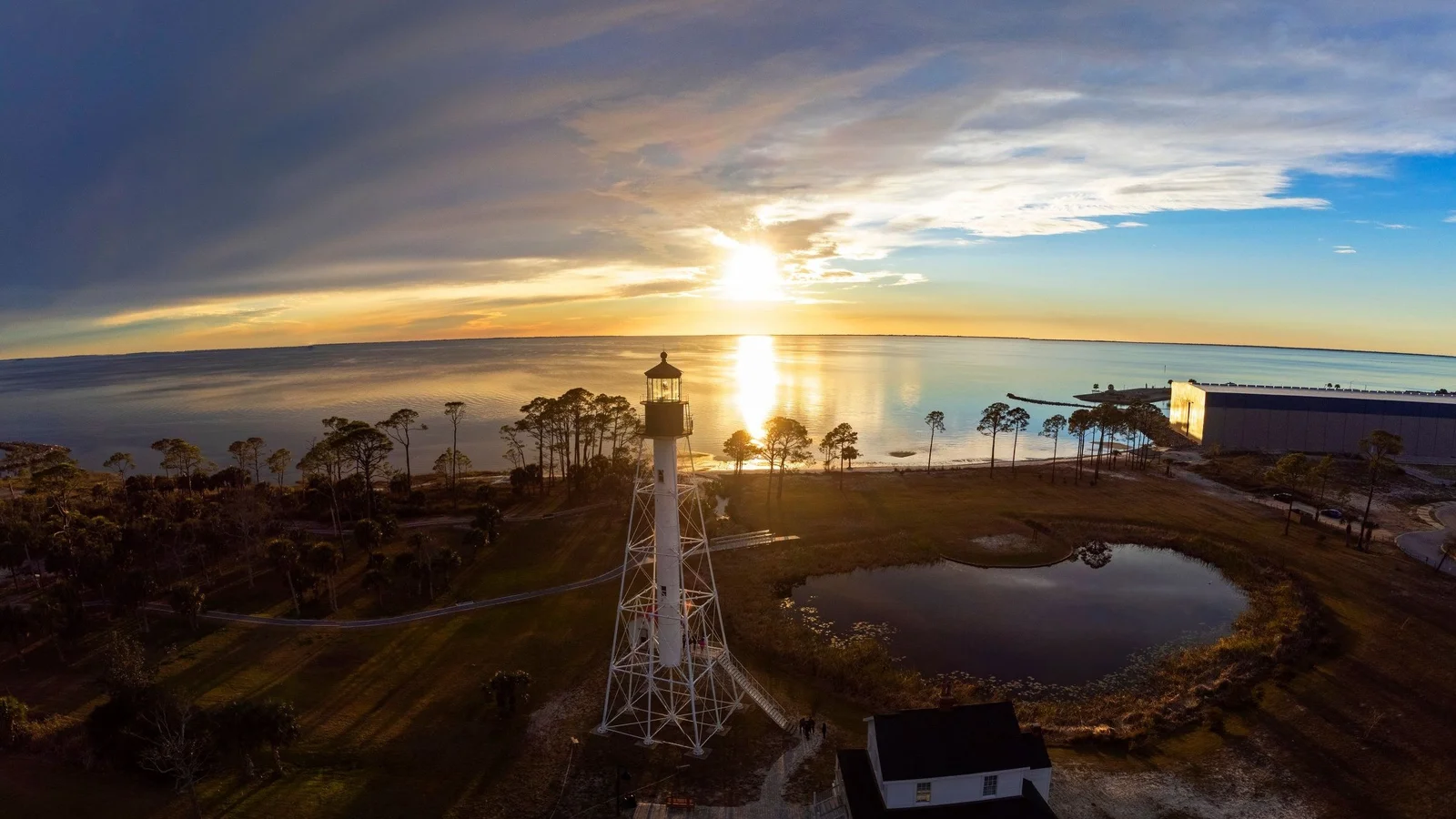
Quick answer: Gulf County levies a 5% tourist development tax, collects it itself, and appears on neither of the two lists that would let an owner stop thinking about it: it is not administered by the state, and it is not collected by Airbnb. The 5% is remitted by the owner. The second thing to get right here is physical rather than fiscal: this is a county that rebuilt after 2018, so construction and insurance history vary house by house.
Two lists, and this county is on neither
Florida splits its counties three ways for tourist tax purposes, and the split decides how much administration an owner carries.
| Category | What it means for the owner | Examples |
|---|---|---|
| Collected by the Department of Revenue | the state administers it, and platforms remitting to the state cover it | Citrus, Highlands, Sumter |
| Collected by the county, with Airbnb collecting | the platform remits the county tax for its own bookings | Pasco, Hernando, Alachua |
| Collected by the county, no platform collection | the owner registers and remits directly | Gulf, Escambia, Santa Rosa |
Gulf sits in the third row. The county administers its own 5%, and no platform is remitting it on a host’s behalf. Booking platforms commonly handle the state sales tax component, which is precisely what makes the gap hard to see: the payout summary shows tax collected, and it is telling the truth about the half it collected.
Counties reconcile third-party booking data against their own registration and filing records. The owner’s first notice is usually a letter, it covers the entire operating history, and interest and penalties sit on top of a figure calculated from gross rent. The tax itself was never the cost; the guest expected to pay it and would have.
Register before you list
Open the county account first. At registration, settle two questions that decide whether the account stays clean:
- What filing frequency the county expects.
- Whether a zero return is required in months with no bookings.
An open account with no filings generates enforcement contact even when nothing was due, which is a needless way to start a relationship with a tax collector. For the state component see Florida sales tax on rentals and for the wider picture tourist development tax by county.
What the county actually is
The rental market here is the coastal strip: Cape San Blas, Indian Pass, the St. Joseph Peninsula and Port St. Joe. It is a low-rise market of individual houses rather than condominium towers, and that changes the economics in ways worth naming.
No association budget carries the building. Roof, envelope, insurance and grounds are the owner’s, in full, rather than a share of a master budget. There is no reserve study to read and no assessment risk, and equally no one else maintaining the structure.
Guest profile skews to groups and families taking a whole house for a week rather than a couple taking a unit for two nights. That produces higher gross per booking, fewer bookings, and a heavier cleaning and turnover cost per stay.
Seasonality is sharper than in the year-round urban markets, and the shoulder months carry real vacancy. Model the year, not the peak.
Access matters more than a view. In a peninsula market the drive time, the road, and the parking arrangement affect bookings measurably.
What the 2018 storm left behind
Hurricane Michael made landfall in this part of the Panhandle in 2018, and a large share of the county’s building stock was damaged, repaired or replaced afterward. The rebuild is not a historical footnote; it is the reason two houses on the same street can have entirely different risk and cost profiles.
Ask for documents rather than impressions:
| Document | What it answers |
|---|---|
| Permit history for the parcel | what was rebuilt, when, and to which code |
| Roof age and material, with the permit | the single largest insurance variable |
| Elevation certificate | flood zone, base flood elevation, premium |
| Three years of actual insurance premiums | the real cost line, not a rate |
| Claims history on the property | what underwriters will see |
A house rebuilt to current code after 2018 can insure materially better than an older neighbour that was repaired rather than replaced. That difference is worth more to a rental model than a modest difference in nightly rate, and it is visible only in the paperwork.
Insurance is the decisive line
On this coast wind and flood are normally separate policies from the dwelling cover, and a letting operation needs liability cover written for that use rather than an owner-occupier policy assumed to stretch across it.
Get real quotes for the specific address and elevation before offering. Ask whether cover sits with a private carrier or the state-backed insurer of last resort, because the answer moves both the premium and the claims experience. See the Citizens insurance guide and the 1 million dollar liability requirement.
For a whole-house rental this is the line most likely to decide whether the property works, and it is the line most often estimated rather than quoted.
Licensing and what local government may still do
A DBPR vacation rental licence is required where the property meets the transient public lodging test: broadly, rented more than three times in a calendar year for periods under thirty days, or advertised as regularly available for such stays.
Florida Statute 509.032(7)(b) bars a local government from prohibiting vacation rentals or regulating stay duration or frequency by an ordinance adopted after 1 June 2011, while pre-2011 rules survive and may be amended only to become less restrictive.
What remains available to local government is substantial: registration and inspection programmes, and generally applicable requirements on noise, parking, waste, occupancy limits and life safety that apply to all dwellings rather than to vacation rentals specifically. Private restrictions sit outside preemption altogether. See the HOA and association restrictions checklist.
Where the six-month line falls
The county tax and the state transient sales tax both attach to lodging of six months or less. A single written lease running longer sits outside the transient regime: no tourist tax, no transient sales tax, no vacation rental licence and no filing calendar.
In a sharply seasonal market that alternative is worth modelling properly rather than dismissing. A seven-month tenancy at a lower monthly rate competes with a nightly season once 5% county tax, state transient tax, platform commission, cleaning, turnover vacancy and licensing are deducted from the nightly column. The term of the letting governs, evidenced by a written lease, not the way the property is advertised.
What the numbers have to clear
A whole-house coastal rental carries a cost stack that a nightly rate hides. Build it once, for the specific property, before deciding the model works.
| Line | Basis |
|---|---|
| County tourist development tax | 5% of qualifying rent, remitted by the owner |
| State sales tax and discretionary surtax | on transient rent, commonly platform-handled |
| Platform commission | percentage of each booking on that channel |
| Cleaning and linen | per turnover, and a whole house turns over expensively |
| Management | where used, a percentage of gross |
| Insurance | dwelling, wind, flood and letting liability, as separate lines |
| Property tax | the actual assessed figure for the parcel |
| Maintenance and reserve | roof, envelope and systems, all yours on a house |
| Vacancy | measured across the shoulder months, not the peak |
Two of those lines are the ones owners underestimate in this county specifically. Insurance, because wind and flood are separate policies on this coast and the figures are large. And maintenance reserve, because there is no association budget carrying the structure: a roof, a deck and an air conditioning system are single-owner costs on a house that sits in salt air.
Ask the seller for a full year of actual gross bookings alongside a full year of actual costs, and reconcile the two. A gross revenue figure with no cost column beside it is not evidence of anything.
Financing
Lenders price a short-term rental differently from a second home, so state the intended use at application. Conventional investment lending, a DSCR loan underwritten on the property’s own income, or cash are the usual routes, and overseas buyers work through foreign national mortgage programmes. On a rebuilt property, expect the lender and the insurer to want the same permit and roof documents you should already be collecting.
Before you buy in Gulf County
- Register for the county tourist tax before the first booking, and confirm the filing frequency.
- Confirm whether zero returns are required in months without bookings.
- Register for state sales tax on transient rentals separately.
- Establish whether a DBPR vacation rental licence is required and obtain it.
- Get the permit history for the parcel, including anything rebuilt after 2018.
- Get the roof age with its permit, and the elevation certificate.
- Get three years of actual insurance premiums and the property’s claims history.
- Model the full year including shoulder months, not the peak weeks.
- Read any association documents, which can restrict letting more tightly than the county.
Where this leaves an investor
Gulf County is a small, seasonal, whole-house market with an ordinary tax rate and an unusual amount of administration falling on the owner. Nothing about it is difficult; all of it is easy to skip.
The two ways to lose money here are running a season without a county account, and buying a repaired house on the assumption it insures like a rebuilt one. Both are settled with documents before the offer. For the neighbouring Panhandle markets see Bay County and Walton County.
Frequently Asked Questions
5% on lodging of six months or less. Gulf is a county-collected jurisdiction on the Florida Department of Revenue's schedule, so the tax is reported and remitted directly to the county rather than to the state, and Gulf is not among the counties for which Airbnb collects the county tax on a host's behalf.
No. Gulf does not appear on Airbnb's list of Florida counties where it collects and remits county tourist development tax, nor is it one of the counties whose tax the Department of Revenue administers. Platforms commonly handle the state sales tax component only, so the 5% is the owner's obligation.
Yes, where the property meets the transient public lodging test, broadly a dwelling rented more than three times in a calendar year for periods under thirty days or advertised as regularly available for such stays. The state licence is separate from county tax registration.
The 2018 storm made landfall nearby and a large part of the county's building stock was damaged, repaired or replaced in the years that followed. For a buyer that means construction dates, roof ages and repair histories vary sharply property to property, and the insurance position follows from those documents rather than from the county average.
Not by an ordinance adopted after 1 June 2011. Florida Statute 509.032(7)(b) preempts local prohibitions and local regulation of stay duration or frequency, except where a local law predates that date. Registration and inspection programmes, and generally applicable rules on noise, parking and occupancy, remain available to local government.
Principally the coastal strip: Cape San Blas, Indian Pass, the St. Joseph Peninsula and Port St. Joe. This is a low-density, low-rise market of houses rather than towers, which changes both the guest profile and the cost structure compared with the high-rise Panhandle markets to the west.
Get the permit, insurance and tax position before you offer in Gulf County
Tell us the property you are considering. We will come back with the parcel's permit and rebuild history, roof age and elevation certificate, three years of actual insurance premiums and claims, and the county tourist tax registration steps and filing frequency.