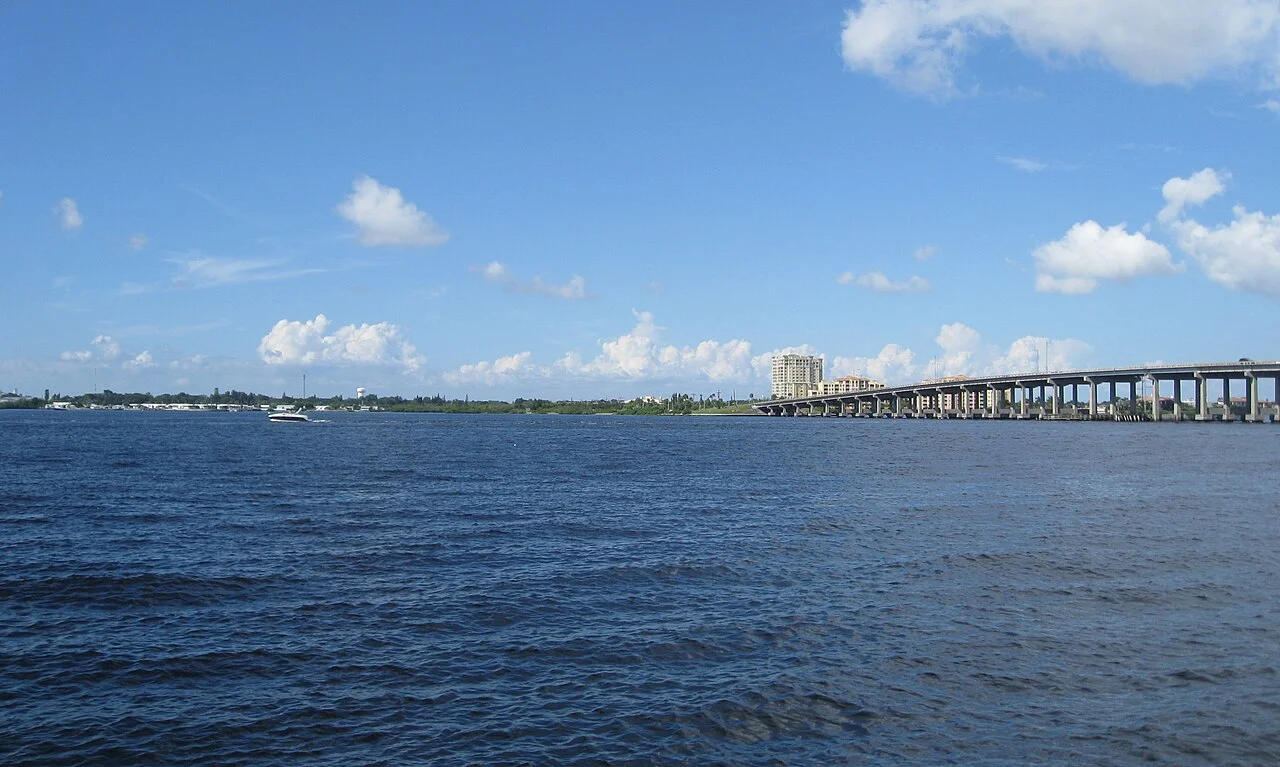
Quick answer: Searching for the Manatee County short-term rental ordinance is a wasted afternoon, because there is not one. Regulation on Anna Maria Island belongs to three small municipal governments sharing seven miles of sand, and the rules change when you cross a street. Identify the city before you do anything else.
Most Florida counties give an investor one rulebook and a handful of municipal exceptions. Manatee inverts that. The county sets no transient rental ordinance of its own, so the entire regulatory weight sits with the cities, and the three that matter are packed onto one barrier island.
An owner who buys on the strength of “Manatee County allows short-term rentals” has learned nothing useful. The county is not the authority. A city clerk is.
Three governments, seven miles, one island
Anna Maria Island runs roughly seven miles north to south and contains three incorporated cities. Each writes its own transient rental rules, issues its own paperwork and enforces on its own schedule.
| City | What it issues | Notable feature |
|---|---|---|
| City of Anna Maria | Vacation rental registration package | Annual inspection, arranged by email request |
| Holmes Beach | Vacation rental certificate | Valid two years; minimum stay set by zoning |
| Bradenton Beach | Owner registration under Ordinance 3093 | Its own occupancy limits |
The distances involved make this counterintuitive. Two houses can be a short walk apart, share a beach, appear in the same search results, and sit under different governments with different minimum stays. Buyers routinely reason from a friend’s property or a management company’s boilerplate, both of which may describe a different city.
There is no shortcut here and no unifying county layer to fall back on. The registration you need is the one issued by the city whose limits your parcel sits inside.
Where the minimum stay is decided
Holmes Beach illustrates the mechanism most clearly. The minimum rental period is not a single city-wide number, it is attached to the zoning of the individual parcel. Parts of the city require a 30-day minimum. Other parts permit weekly stays.
That distinction sets the entire revenue model. A weekly-eligible parcel supports a holiday letting business with high turnover, cleaning cycles and peak-season pricing. A 30-day parcel supports a seasonal rental to snowbirds, with different tenants, different marketing, different management cost and a materially different annual gross.
| Model | Typical tenant | Turnover |
|---|---|---|
| Weekly minimum permitted | Holiday visitor | High, weekly changeovers |
| 30-day minimum required | Seasonal or relocating tenant | Low, monthly or longer |
Two properties on the same street can therefore be different asset classes. Comparable sales that ignore the zoning designation are comparing a business to a house.
Ask the city for the minimum stay applicable to the specific parcel, in writing, and keep the answer. A listing agent’s recollection is not a permission.
What 13% is made of, and who collects each half
Manatee splits its transient tax between two separate authorities, which means two registrations and two filing habits.
| Component | Rate | Remitted to |
|---|---|---|
| Manatee County Tourist Development Tax | 6% | Manatee County Tax Collector |
| Florida sales and use tax | 7% | Florida Department of Revenue |
| Combined on gross rent | about 13% |
The county share is the owner’s responsibility, whatever the platform does. Airbnb and similar sites commonly handle collection on bookings placed through them, but the obligation to hold an account and file returns stays with the property owner, and direct bookings are entirely the owner’s problem.
Note the 6% county rate. Manatee sits a full point above several panhandle counties, which matters when you are comparing gross-to-net across markets rather than within one.
What the missing county ordinance means on the mainland
The absence that frustrates island buyers works in the opposite direction once you cross the bridge. Because the county imposes no transient rental ordinance of its own, an unincorporated mainland parcel has no county registration to obtain and no county inspection to schedule.
That does not make it unregulated. Three constraints still bind, and they are the ones worth checking:
| Constraint | Who enforces it | Where it appears |
|---|---|---|
| State transient lodging licence | Florida DBPR | Required under 30 days |
| Tourist development tax account | Manatee County Tax Collector | Stays of six months or less |
| Private covenants and rental minimums | The association | Recorded in the chain of title |
The third is the one that decides most mainland deals. Where government has not written a rule, the developer’s covenants usually have, and a recorded restriction is enforceable by neighbours who have every incentive to enforce it. Master-planned communities inland from Bradenton commonly carry minimum lease terms of six or twelve months, which removes nightly letting entirely regardless of what the county does or does not say.
Incorporated mainland municipalities are a separate matter again. A parcel inside the City of Bradenton, Palmetto or Longboat Key follows that city’s rules, not the county’s silence.
The practical order of work on the mainland is therefore reversed from the island. On Anna Maria Island you start with the city. Inland you start with the title commitment, because the binding document is private rather than public, and it will not turn up in a call to a planning department.
Pros and cons of a fragmented regulatory map
Advantages. Small city governments are reachable. A clerk will answer a specific question about a specific parcel, which is not true of every large county planning department. Registration is a defined package rather than a discretionary approval, so a compliant property gets certainty. And the fragmentation itself limits large-scale institutional buying, which keeps the field to individual owners.
Disadvantages. Three regimes mean three sets of deadlines, inspections and renewals if you buy more than one property. Diligence cost per deal is high relative to purchase price. Rules can change in one city without warning from the others, so a portfolio here has three separate political risks rather than one.
Red flags before you offer on an island property
- A listing that names the county rather than the city when describing rental permissions.
- A weekly rental history on a parcel whose zoning requires 30 days. Past income does not establish present legality.
- A Holmes Beach certificate approaching the end of its two-year term with no renewal in progress.
- Occupancy advertised above the city’s limit, which is a fine waiting to be issued and a booking model that cannot survive enforcement.
- Registration documents in a previous owner’s name presented as if they transfer automatically.
- A closing date set inside the final weeks of a certificate term. A buyer who inherits a renewal deadline they did not diary can lose the letting season while the paperwork is reissued, and forward bookings taken against a lapsed registration are the seller’s promises and the buyer’s exposure.
- Tourist development tax filed by a management company with no copy of the returns in the seller’s own file. If the account was opened in the manager’s name, the account does not come with the house.
Our insider tip: before the inspection period closes, telephone the city clerk with the parcel address and ask two questions. What is the minimum rental period here, and is there an open code case on this property. Both answers are free, both are authoritative, and neither appears in the listing.
Who this island suits, and who should look inland
Suits. An owner-operator buying one or two properties, comfortable with a hands-on relationship with a small city administration, and pricing the asset on beach location rather than on yield alone.
Does not suit. A buyer assembling a multi-property portfolio for operational efficiency. Three regimes on one island defeat the point of scale.
Look elsewhere. If your model needs a single rulebook across many parcels, a county with genuine county-level regulation is the better fit. Compare with our Sarasota County STR rules immediately south, and our Pinellas County STR rules across the bay. For a market where scarcity rather than fragmentation is the constraint, see our Monroe County STR rules.
State licensing applies regardless of city, and the steps are in our DBPR vacation rental licence guide. County rates are compared in tourist development tax by county, and the underwriting method is in our Florida rental yield guide.
Frequently Asked Questions
No. Manatee has no county-level ordinance governing short-term rentals. Regulation happens at municipal level, which is why Anna Maria Island properties answer to a city rather than to the county.
The City of Anna Maria, Holmes Beach and Bradenton Beach. Each has its own registration package, its own inspection regime and its own occupancy limits.
Two years. Holmes Beach also sets minimum rental periods by zoning: some areas require a 30-day minimum while others permit stays of one week.
About 13% of gross rent: the 6% Manatee County Tourist Development Tax remitted to the county tax collector, plus 7% Florida sales and use tax remitted to the Department of Revenue.
Yes. After the registration package is accepted, the city schedules an annual inspection covering code compliance, safety and required postings. Inspections are arranged by email request.
No. Mainland Bradenton and the island cities are separate jurisdictions. A management playbook written for one address can be non-compliant at another two miles away.
Sources: City of Anna Maria vacation rental registration requirements; City of Holmes Beach vacation rental certificate programme; City of Bradenton Beach Ordinance 3093; Manatee County Tax Collector, tourist development tax. Verified 27 August 2026.
Confirm which city governs your island parcel
Send an address on or near Anna Maria Island. We identify the governing city, its minimum rental period for that zoning, and the registration package it requires.