Quick answer: Nassau County’s tourist development tax is unusual in Florida because it is bounded by a postcode. The Department of Revenue’s schedule records the 5% as applying only to Amelia Island, ZIP code 32034. So the county tax question here is answered by the parcel’s location before it is answered by anything else, while the state taxes, the licensing and the city rules all continue regardless.
A county tax with a map
Most Florida counties levy their tourist development tax across the whole county. A few carve it geographically, and Nassau is one of the clearest examples: the Department of Revenue’s rate schedule carries a footnote restricting the county’s 5% to Amelia Island, ZIP code 32034.
Nassau is not alone in this. The same schedule limits Bay County’s rate to a defined list of postcodes and splits Walton County’s between beach and inland areas. What makes Nassau notable is how cleanly the line falls: the island is the tourism market, and the county drew the levy around it.
For an owner the practical sequence is:
| Step | What it settles |
|---|---|
| Confirm the parcel’s postcode from the folio | whether the county’s 5% applies at all |
| Confirm city or unincorporated status | which registrations and inspections apply |
| Confirm the state obligations | these apply regardless of postcode |
Do not take the postcode from a listing. Take it from the property appraiser’s record for the folio, and confirm the current position with the county, because a county can extend or change its levy and any published schedule is a snapshot of a date.
What does not change at the boundary
The county tax carries the geographic limit. Nothing else does.
State sales tax on transient rentals applies to lodging of six months or less anywhere in Florida, along with any applicable discretionary sales surtax. A property in Yulee is as transient as a property on Fletcher Avenue for that purpose.
The DBPR licensing test is a state test about how the dwelling is used, not about where it sits. A house rented more than three times a year for periods under thirty days, or advertised as regularly available for such stays, meets it in Hilliard as readily as on the island.
City requirements apply where the property is inside a municipality, and Fernandina Beach is the one that matters most here.
So the boundary changes one line of the tax stack and none of the compliance work. An owner outside 32034 still registers with the state, still licenses where required, and still files.
The 5% is the owner’s to remit
| Tax | Rate | Who remits it in Nassau County |
|---|---|---|
| Florida state sales tax | state rate, plus any discretionary surtax | commonly handled by the platform |
| Nassau County tourist development tax | 5%, in ZIP 32034 | the property owner, directly to the county |
Nassau appears on the Department of Revenue’s schedule as county-collected, and it is not among the counties for which Airbnb collects the county tax on a host’s behalf.
That split produces the quiet liability that catches owners who also operate in counties where the platform handles both components. The payout summary shows tax collected. The state portion was collected. The county portion was not, and nothing about the payout says so.
Counties reconcile third-party booking data against their own registration and filing records, so the discovery event is a letter rather than a realisation, it covers the whole operating history, and it carries interest and penalties on a figure calculated from gross rent already spent. The guest would have paid the tax as a visible line on the booking without a word.
Amelia Island is a two-market island
Amelia Island runs about thirteen miles and carries two distinct rental markets, which matters because the tax and licensing position is identical across both while the economics are not.
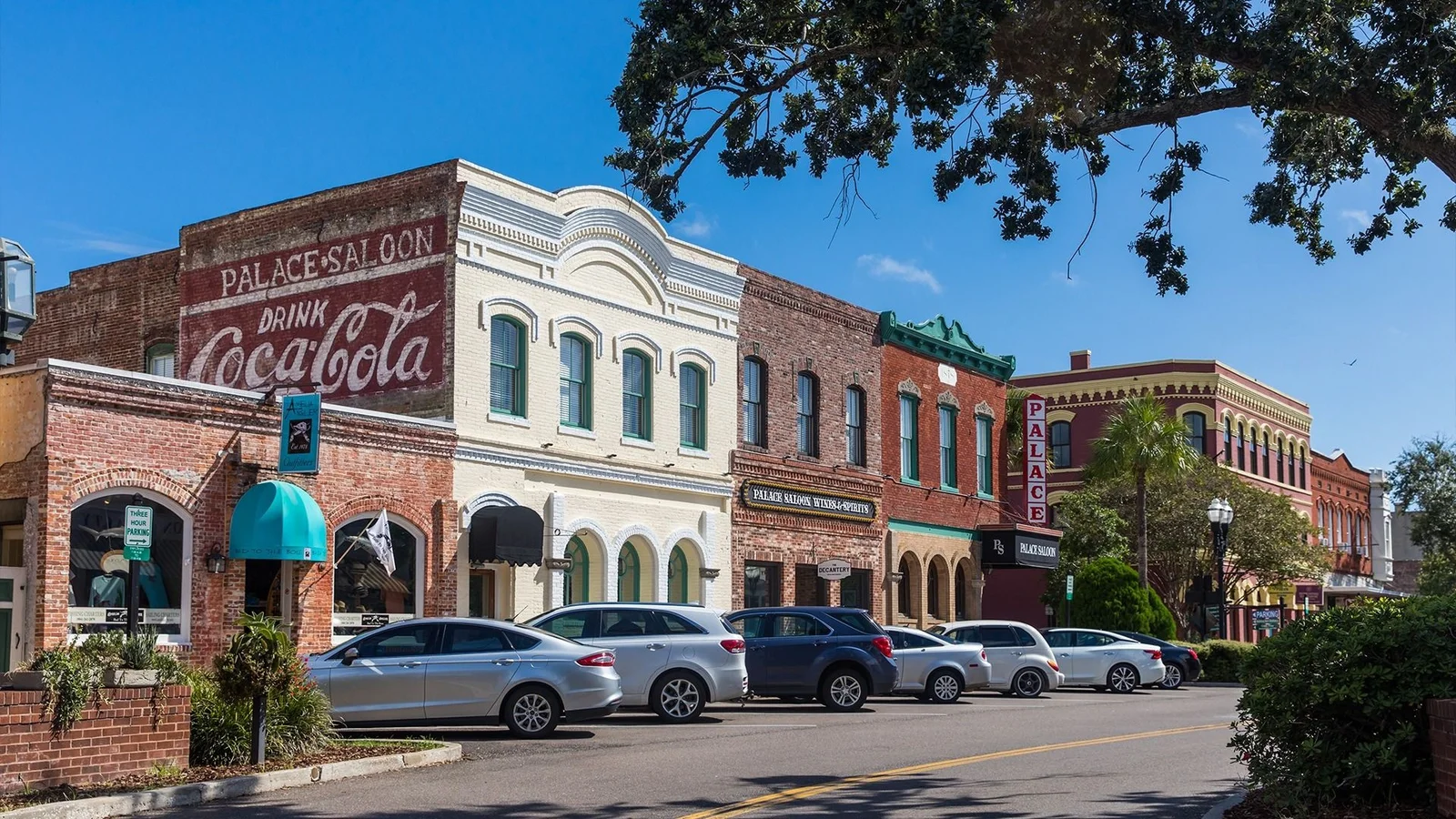
Fernandina Beach, at the north end, is a historic town with a walkable centre, a working port and a year-round resident population. Demand there is weighted toward couples, short city breaks and event weekends, and much of the housing stock is older with the maintenance profile that implies.
The south end, toward the resort corridor, is dominated by planned communities, golf and larger purpose-built rental stock, with demand weighted toward families and longer summer stays.
An owner should underwrite against the correct half. Occupancy, average rate, seasonality and turnover cost differ enough between the two that a comparable drawn from the wrong end of the island produces a materially wrong model.
The simplest way to avoid that is to ask for achieved figures rather than area averages: twelve months of actual occupancy and average nightly rate from properties within a short walk of the one you are buying, not from the island as a whole. On a thirteen-mile island with two demand engines, the island average describes neither end of it.
Fernandina Beach sits on top
Establish first whether the property is inside Fernandina Beach city limits or in unincorporated Nassau County. The answer decides which registrations, inspections and enforcement processes apply, and it is not always obvious from an address.
Where the property is in the city, work through the city’s requirements as a separate layer from the county’s tax registration and the state’s licence. Where it is unincorporated, the county’s own requirements apply instead.
Under Florida Statute 509.032(7)(b) a local government may not prohibit vacation rentals or regulate the duration or frequency of stays by an ordinance adopted after 1 June 2011, but pre-2011 rules survive and may be amended only to become less restrictive. Preemption also leaves generally applicable rules untouched: noise, parking, waste, occupancy limits and life-safety requirements that apply to all dwellings, plus registration and inspection programmes.
Where the six-month line falls
Both the county tax and the state transient sales tax attach to lodging of six months or less. A single written lease running longer than six months sits outside the transient regime entirely: no tourist tax, no transient sales tax, and no vacation rental licence.
On Amelia Island that is a real alternative rather than a technicality. The island carries genuine long-stay demand from seasonal residents, and a seven-month tenancy at a lower monthly rate can outperform a nightly season once 5% county tax, state transient tax, platform commission, cleaning, turnover vacancy and licensing come out of the nightly column.
The term of the letting governs, evidenced by a bona fide written lease. Advertising, intention and the owner’s description do not. Two consecutive five-month lettings are two transient lettings, not one long one.
Insurance and the coastal cost line
Wind and flood cover are usually written separately from the dwelling policy on the Atlantic coast, and a letting operation needs liability cover written for that use rather than an owner-occupier policy assumed to stretch.
Price it from actual quotes on the specific address and elevation rather than from a percentage of value, ask the seller for three years of real premiums, and establish whether the property is insured privately or through the state-backed insurer of last resort. See the Citizens insurance guide and the 1 million dollar liability requirement.
Add the condominium or association documents to the same review. Private restrictions routinely bite harder than any ordinance, and no state preemption reaches them. See the HOA and association restrictions checklist.
Financing a letting purchase here
Lenders treat a property that will be let short-term differently from a second home, and the difference is priced. Say plainly at application what the property is for. A loan taken as a second home and then operated as a nightly rental is a misrepresentation, and the occupancy affidavit signed at closing is the document that makes it one.
Three routes are usual:
| Route | How it is underwritten |
|---|---|
| Conventional investment loan | your income and credit, with a larger deposit than a second home |
| DSCR loan | the property’s own rental income, with the deposit set accordingly |
| Cash | the fastest route in a market with limited inventory |
Overseas purchasers work through foreign national mortgage programmes, which sit outside conventional agency rules but still assess the property and, on a condominium, the project.
Where the purchase is a condominium rather than a house, add the project questionnaire to the timeline. Reserve funding and the proportion of let residences are both project-level tests, and a building that fails them removes conventional lending for every owner in it rather than for one applicant. Ask for a written project eligibility determination before the contract, because on the island the buildings that suit letting best are frequently the ones a lender scrutinises hardest.
Before you buy in Nassau County
- Confirm the parcel’s postcode from the property appraiser’s record, not from a listing.
- Confirm with the county whether the 5% applies to that parcel today.
- Establish whether the property is inside Fernandina Beach or unincorporated Nassau.
- Register for the county tourist tax before the first booking where it applies.
- Confirm the filing frequency and whether zero returns are required.
- Register for state sales tax on transient rentals regardless of postcode.
- Establish whether a DBPR vacation rental licence is required and obtain it.
- Underwrite against the correct half of the island, north end or south end.
- Get real insurance quotes for the address, and read the association documents.
Where this leaves an investor
Amelia Island is a small, established, well-run tourism market with an unusually clean tax boundary, and the compliance work is ordinary once the postcode question is answered. The mistakes available here are administrative rather than strategic: assuming the county tax applies where it does not, assuming the platform pays it where it does, and modelling a north-end property on south-end comparables.
For the neighbouring Atlantic coast markets see Duval County and St. Johns County, and for county-by-county rates see tourist development tax by county.
Frequently Asked Questions
5% on lodging of six months or less, and the Florida Department of Revenue's schedule records that it applies only to Amelia Island, ZIP code 32034. Nassau is a county-collected jurisdiction, so the tax is remitted directly to the county, and Nassau is not among the counties for which Airbnb collects the county tax.
The Department of Revenue's schedule limits Nassau's local option transient rental tax to ZIP code 32034. A property in Yulee, Callahan or Hilliard therefore falls outside that footnote. Confirm the position for the specific parcel with the county before assuming either answer, because a county can change its levy and the schedule is a snapshot.
Yes. State sales tax on transient rentals and any discretionary sales surtax apply county-wide on lodging of six months or less, regardless of the postcode. Only the local option county tax carries the geographic limit.
No. Nassau is not among the Florida counties for which Airbnb collects and remits county tourist development tax. Platforms commonly handle the state component only, which means the county obligation on an Amelia Island property belongs to the owner.
Fernandina Beach is a city inside the county with its own requirements sitting on top of county and state ones. Establish whether the property is inside city limits or in unincorporated Nassau, because the answer changes which registrations and inspections apply.
Yes, where the property meets the transient public lodging test, broadly a dwelling rented more than three times a year for periods under thirty days or advertised as regularly available for such stays. The state licence is separate from county tax registration and from any city requirement.
Confirm the postcode boundary and registrations before you offer
Tell us the property you are considering. We will come back with the folio's postcode and whether the county's 5% applies, city or unincorporated status, the registrations and licence required, filing frequency, and comparables drawn from the correct end of the island.