Quick answer: Argentine buyers can legally purchase Florida real estate by using legal offshore capital channels like Dollar Cable, and they should structure the purchase through a Florida LLC to secure asset privacy and capital shielding.
Disclaimer: Florida Estate publishes independent research for educational purposes only. This article does not constitute legal, tax, financial, or investment advice. US and Argentine tax regulations, currency exchange rules, and mortgage underwriting policies are subject to change. Always consult a qualified US CPA and a licensed international corporate attorney before remitting investment capital or signing a Florida real estate contract.
For Argentine citizens, purchasing real estate in Florida is not merely a lifestyle choice; it is a critical strategy for capital shielding and long-term wealth preservation. Argentina’s modern economic history has been defined by recurrent devaluations of the Argentine Peso (ARS), massive domestic inflation, and aggressive regulatory interventions such as bank freezes and exchange controls (known locally as the “cepo cambiario”). In this context, holding hard-currency assets in the United States is the primary method Argentine families use to protect their generational savings.
Florida real estate, particularly in coastal areas of Miami and vacation rental sectors in Orlando, has served as a preferred destination for Argentine capital for decades. According to data from Florida Realtors, buyers from Argentina are consistently among the top international investors in South Florida, frequently focusing on beach condominiums, multi-family units, and pre-construction developments. This guide outlines the exact legal, financial, and corporate frameworks required to execute a secure real estate transaction in Florida from Argentina.
Why target Florida: capital shielding and wealth preservation
The primary driver for Argentine buyers in Florida is the desire to convert unstable ARS-denominated cash into a secure, appreciating asset denominated in US dollars. Under current Argentine central bank (BCRA) regulations, the official retail purchase of foreign currency is restricted to just $200 per month per individual. To bypass these constraints legally, Argentine investors utilize sophisticated capital market transactions to remit funds abroad.
The most common and legal method to move capital for a real estate purchase is the “Contado con Liquidacion” (Contado con Liqui or CCL) mechanism, often referred to as “Dollar Cable.” This transaction involves purchasing Argentine sovereign bonds or blue-chip stocks in ARS on the local Buenos Aires exchange (BYMA) and subsequently selling those same securities on the New York exchange in US dollars. The dollar proceeds are then deposited directly into the investor’s offshore bank account in Miami or New York. From there, the funds can be wired to a licensed Florida title company or real estate attorney’s escrow account to complete the transaction.
By converting local capital into Florida real estate, Argentine investors establish a robust shield against domestic economic volatility. To choose the right investment path, buyers must carefully compare the two dominant real estate markets in Florida.
| Market Characteristic | Miami Metropolitan Area | Greater Orlando Area |
|---|---|---|
| Typical Property Type | Oceanfront or city condominiums | Vacation townhomes and villas |
| Primary Investment Goal | Long-term capital shielding and lifestyle | Active cash flow from tourism rentals |
| Average Entry Price | $500,000 to $1,200,000 | $300,000 to $550,000 |
| Average Gross Rental Yield | 4 to 5 percent annually | 6 to 8 percent annually |
| Financing LTV Availability | 60 to 65 percent for foreigners | 65 to 70 percent for foreigners |
| Key Neighborhoods | Brickell, Sunny Isles, Key Biscayne | Kissimmee, Davenport, Lake Nona |
LLC setups and corporate vehicles for Argentine cepo evasion
To ensure maximum asset defense and transaction privacy, Argentine buyers should never purchase Florida property in their personal names. Instead, they should establish a corporate vehicle to hold the real estate asset. Buying in a personal name exposes the transaction to public property databases, which can be easily searched by anyone, including foreign regulatory bodies. It also exposes the individual to personal liability if a tenant or visitor is injured on the property.
The standard corporate structure begins with a Florida Limited Liability Company (LLC). The LLC acts as a legal shield, separating the property asset from the individual’s personal estate. To take this protection a step further and address the severe US estate tax, wealthy Argentine families typically utilize a two-tier corporate structure.
While US citizens receive an estate tax exemption of over $13 million, non-resident foreign nationals are exempt on only the first $60,000 of US-situs assets. Any property valued above $60,000 held in a personal name (or through a standard single-owner LLC) at the time of the owner’s death is subject to a federal estate tax of up to 40 percent. To eliminate this exposure, the Florida LLC is owned by an offshore holding company registered in a tax-neutral jurisdiction like the British Virgin Islands (BVI) or the Cayman Islands. Because the foreign investor owns shares in a foreign corporation (the offshore holding company), and that foreign corporation owns the Florida LLC, no US-situs assets transfer ownership upon the individual’s death. This structure legally eliminates both US probate court proceedings and the 40 percent estate tax.
| Structural Aspect | Personal Name Ownership | Florida LLC Owned by Offshore Holding |
|---|---|---|
| Transaction Privacy | 0 percent (Name is public record on deed) | 100 percent (Only LLC name appears on deed) |
| Personal Liability Shield | None (Personal assets are exposed) | Full (Liability is limited to LLC assets) |
| US Estate Tax Exposure | Up to 40 percent on value over $60,000 | 0 percent (Exempt from US estate tax) |
| US Probate Requirement | Mandatory upon owner’s death | 0 percent (Corporate shares transfer offshore) |
| FIRPTA Withholding on Sale | 15 percent of gross purchase price | 15 percent of gross purchase price (refundable) |
| Tax Filing Obligation | Personal Form 1040-NR annually | Corporate Form 1120 or partnership filing |
Beach condo selections: Miami and fort lauderdale premier property markets
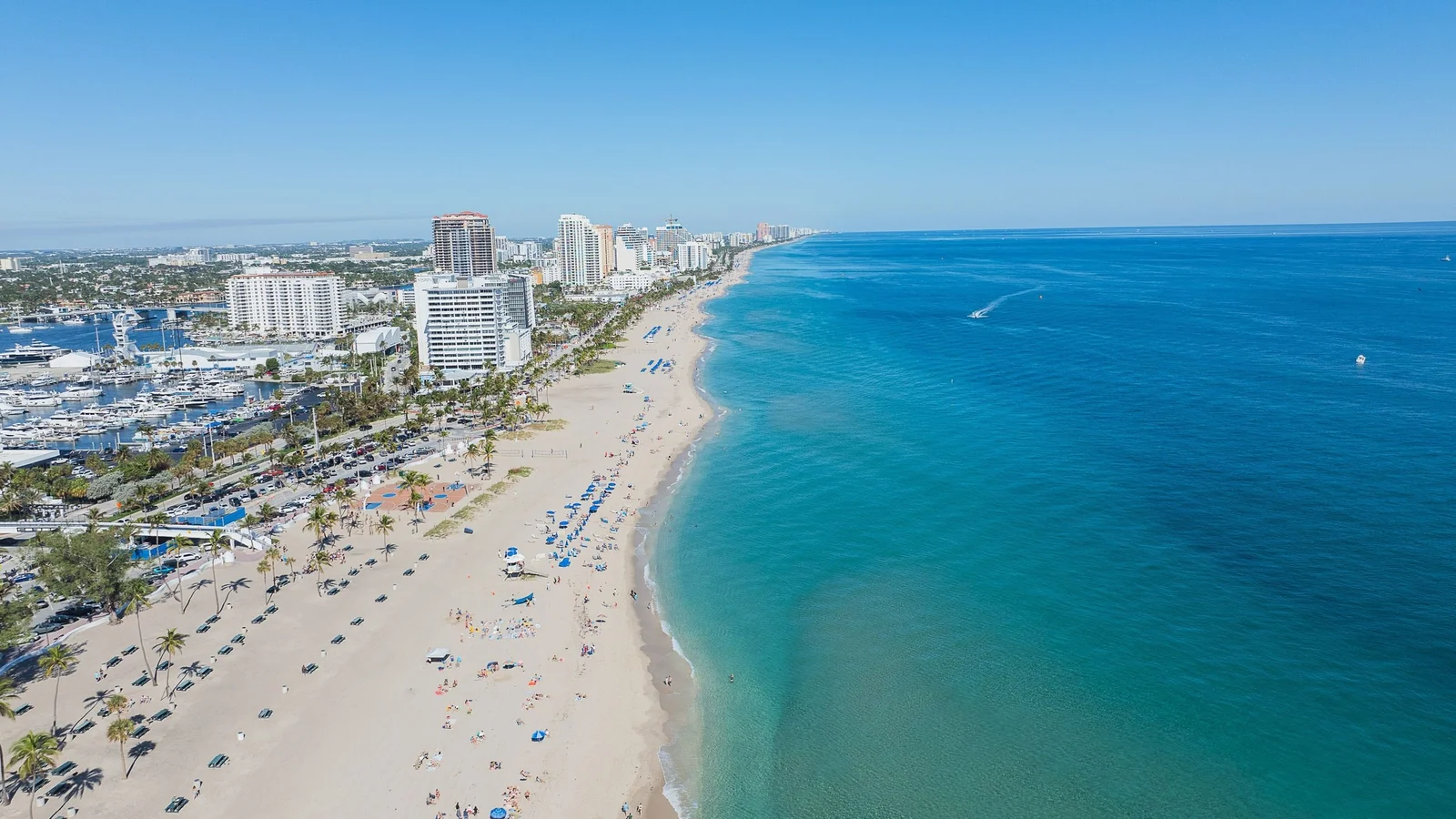
For Argentine buyers who prioritize long-term capital preservation, beach condominiums in Miami and Fort Lauderdale represent the ultimate safe haven. These properties are highly liquid, easy to manage remotely, and consistently attract affluent local and international tenants.
In Miami, areas like Brickell (the financial district), Sunny Isles Beach (known for luxury high-rises), and Edgewater are highly favored. In Fort Lauderdale, buyers find slightly lower entry prices and excellent marina-style luxury properties. When selecting a beach condo, Argentine buyers must pay close attention to building financials and local regulations.
Recent Florida legislation, particularly Senate Bill 4D, has introduced strict safety inspection standards and mandatory reserve funding requirements for residential buildings that are three stories or higher. Many older buildings are now issuing special assessments to fund structural repairs, which can significantly affect condo owners. Buyers must review the condominium association’s financial health, reserve studies, and meeting minutes as part of their standard due diligence.
To assist with transaction planning, the following table outlines the estimated acquisition costs for an Argentine foreign national buyer purchasing a $400,000 condominium in Florida using a cash structure.
| Acquisition Cost Category | Typical Percentage or Flat Fee | Estimated Cost on a $400,000 Purchase |
|---|---|---|
| Title Insurance and Closing Fees | 0.5 to 0.7 percent of purchase price | $2,400 |
| Documentary Stamps on the Deed | 0.7 percent of purchase price | $2,800 |
| Recording Fees and Local Taxes | Flat fee | $450 |
| Florida LLC Setup and Registration | Flat fee | $1,200 |
| Professional Legal Consultation | Flat fee | $1,500 |
| Property Inspection and Appraisal | Flat fee | $650 |
Pros and cons of Florida property acquisition
Before committing capital to the Florida market, Argentine investors must carefully weigh the advantages and disadvantages of this investment path.
Advantages of Florida Real Estate
- Absolute Capital Shielding: Your capital is fully converted into US dollars, protecting your family’s purchasing power from peso devaluations and high domestic inflation.
- Transaction Privacy: Using a corporate structure hides your identity from public property rolls, securing your financial affairs from regulatory overreach.
- Stable Cash Flow: Well-located condos in Miami and vacation homes in Orlando provide consistent rental income paid in hard currency.
- Liquidity and Stability: The Florida real estate market is one of the most transparent, liquid, and stable property markets in the world, with clear title laws and strict consumer protections.
- Mortgage Access: Argentine buyers can secure financing through US foreign national loan programs with a down payment of 30 to 35 percent, allowing them to leverage their capital.
Disadvantages of Florida Real Estate
- High Annual Carrying Costs: Florida property taxes are reassessed annually and generally run between 1.5 percent and 2.0 percent of the property’s value.
- Condo Special Assessments: Older high-rise buildings in South Florida are facing strict structural safety mandates, which can lead to high monthly maintenance fees or sudden special assessments.
- Lack of double tax treaty: Argentina and the United States do not share a double taxation treaty, requiring sophisticated tax structuring to avoid double exposure on rental yields.
- Transaction Costs: Setting up a double-tier corporate structure (LLC + Offshore Holding) involves higher upfront setup and annual maintenance fees compared to purchasing in a personal name.
Risks and red flags in Florida real estate investments for Florida Real Estate
Argentine buyers must navigate several unique risks in the Florida real estate market to avoid costly mistakes.
The first major risk is the strictness of local Homeowners Association (HOA) rules. Many condos in coastal Florida have strict restrictions on leasing. Some buildings do not allow renting during the first two years of ownership, while others limit leasing to once per year. If your goal is to generate regular rental income, purchasing in a highly restrictive building will severely affect your yields.
The second red flag is the Foreign Investment in Real Property Tax Act (FIRPTA). When a non-resident foreign alien sells US real estate, the closing agent is legally required to withhold 15 percent of the gross sales price and send it to the IRS. This withholding is not the final tax owed, but rather a security deposit to ensure the seller files a US tax return and pays any capital gains tax. For an Argentine seller, having 15 percent of their capital frozen by the IRS can create a significant liquidity squeeze. To recover this money, you must obtain an ITIN (Individual Taxpayer Identification Number) and file a US non-resident tax return.
To minimize these risks, you must strictly follow established guidelines for purchasing and conducting due diligence in the local market. For more information, read our comprehensive guides on Florida Property Investment Guide, Florida Property for Foreign Buyers, and Due Diligence Florida Real Estate to establish a safe investment path.
Buyer Scenarios and Decision Frameworks for Argentine families
To select the optimal property and corporate structure, Argentine buyers should evaluate their personal goals, investment capital, and risk tolerance.
Scenario A: The Wealth Shield (Miami High-Rise Condo)
This investor is a business owner from Buenos Aires whose primary goal is protecting their family savings from local currency depreciation and regulatory changes. They want to purchase a modern, low-maintenance 2-bedroom condominium in a high-demand Miami neighborhood like Edgewater or Brickell.
- Primary Goal: Capital shielding and asset protection.
- Recommended Structure: Florida LLC owned by an offshore holding company.
- Financing Structure: Cash purchase to secure transaction privacy and avoid mortgage underwriting delays.
- Location Focus: Miami financial district or waterfront corridors. For detailed rental statistics, see our Florida Rental Yield Guide.
Scenario B: The Yield Optimizer (Orlando Vacation Villa)
This investor is an agricultural producer from Rosario looking to generate active cash flow in US dollars. They want to purchase a 6-bedroom single-family home with a private pool in a gated resort community near Orlando’s major theme parks.
- Primary Goal: Active monthly cash flow and family vacation use.
- Recommended Structure: Florida LLC with a local property manager.
- Financing Structure: 35 percent cash down payment, 65 percent US foreign national mortgage.
- Location Focus: Orlando resort corridors (Kissimmee, Davenport).
Scenario C: The Land and Development Investor (Tampa or Cape Coral)
This investor is an experienced real estate developer from Cordoba looking for higher yields and capital appreciation in growing suburban markets. They want to purchase single-family homes or vacant land in rapid-growth corridors like Cape Coral, Tampa, or Port St. Lucie to build rental properties.
- Primary Goal: High capital appreciation and long-term equity growth.
- Recommended Structure: Florida LLC with local builder agreements.
- Financing Structure: Cash or private equity partnership.
- Location Focus: Emerging suburban markets. Check out our guide on Best Areas to Invest in Florida 2026 to identify these high-growth corridors.
Florida Estate provides independent research for educational purposes only. This article does not constitute tax, legal, or investment advice. IRS regulations, ITIN processing times, and local county property tax assessments change. Work with a US CPA and Florida-licensed attorney before making any capital transfers or real estate commitments.
Florida Estate’s insider tip
Insider tip: Decide the ownership structure before you sign. A personal name puts the buyer on the public deed record and exposes value above $60,000 to federal estate tax of up to 40 percent, while a $400,000 cash purchase budgets about $2,800 in deed stamps and $1,200 for the Florida LLC setup.
Frequently Asked Questions
Yes, Argentine citizens can legally buy Florida real estate. While Argentina's central bank restricts official dollar purchases to $200 per month, buyers use legal alternative channels like Contado con Liquidacion (CCL) or Dollar Cable to move investment capital offshore.
A Florida LLC provides strong capital shielding by separating the property asset from the individual's personal name. This structure offers transaction privacy, shields the buyer from personal liability, and protects against local regulatory overreach.
Argentine buyers can access US foreign national mortgages. These loans typically require a 30 to 35 percent down payment, proof of stable income (via an Argentine accountant letter), bank references, and 12 months of reserves.
For non-resident aliens, the US estate tax exemption is limited to $60,000, with tax rates up to 40 percent. Argentine buyers can eliminate this exposure by holding their Florida LLC through an offshore company in a tax-neutral jurisdiction.
Yes, US-source rental income is subject to US federal income tax, filed annually on Form 1040-NR. Because Argentina and the US do not have a double tax treaty, owners must consult a CPA to declare income and utilize local tax credits.
Connect with a Florida foreign-buyer specialist
Whether you are remitting capital from Argentina or planning your Florida LLC corporate structure, our team can help. Contact us today for a free consultation.