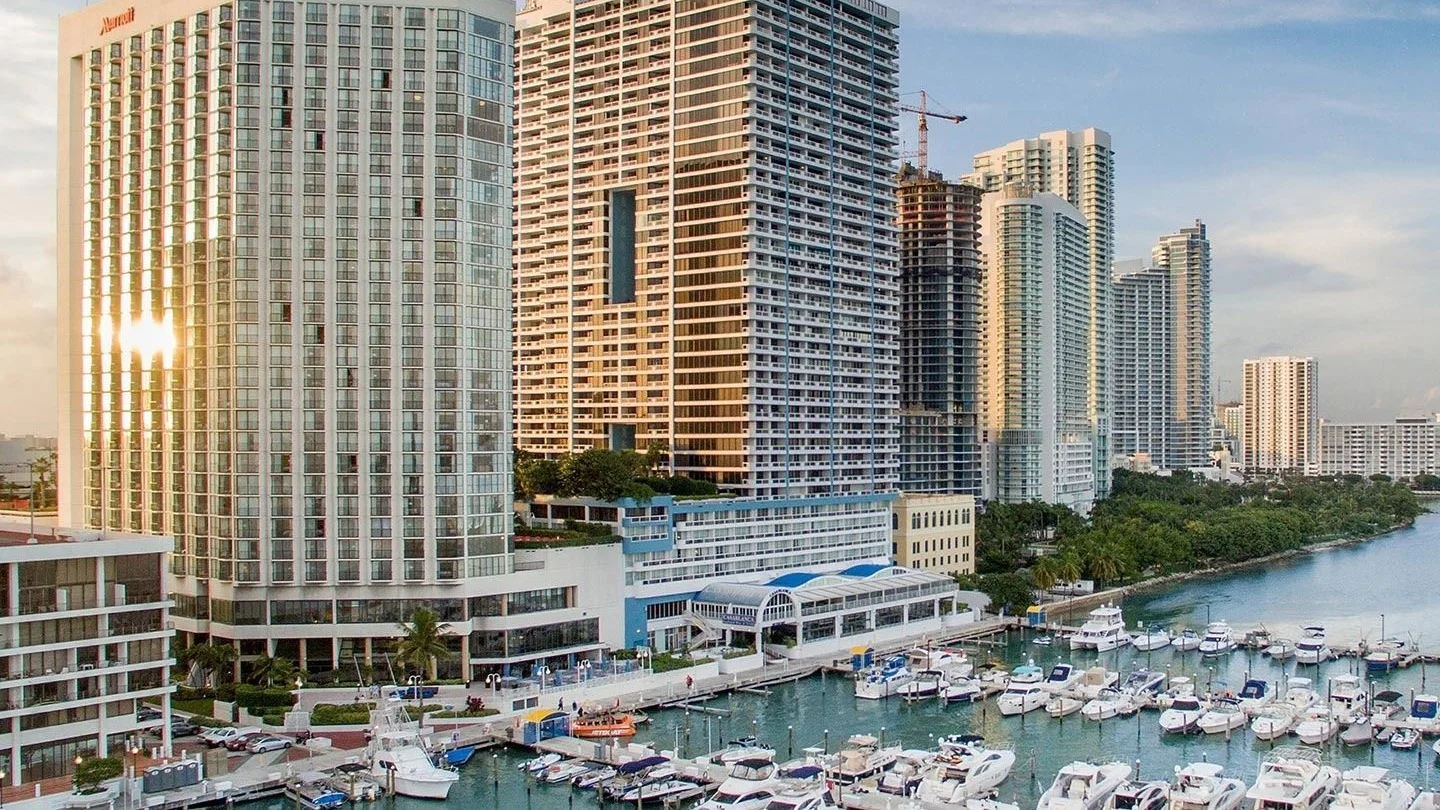
Quick answer: Two things in a Miami pre-construction purchase come from Florida law and everything else comes from the developer’s contract. The law gives you an escrow requirement on the first 10% under Statute 718.202 and a 15-day cancellation right under 718.503. The contract gives you the deposit schedule, the completion date, the extension rights, the assignment rules and the remedies. Read the second document as carefully as most buyers read the first two sentences.
What the law gives you
| Provision | What it does |
|---|---|
| Florida Statute 718.202 | requires escrow of payments up to 10% of the sale price; where the initial 10% is released it must be secured by a surety bond or irrevocable letter of credit of equivalent amount, and properly terminated contracts return funds with interest earned |
| Florida Statute 718.503 | gives a residential buyer 15 days to cancel from execution and receipt of the developer’s required documents, a further 15 days on a materially adverse amendment, and keeps the contract voidable until those documents are furnished |
Read the second one carefully, because the clock has two hands. The 15 days run from execution and receipt of all required documents, so a buyer who signs before receiving the full document set has not started the period. Until the developer furnishes them, the contract remains voidable.
That makes the document set itself part of the diligence rather than a formality. Note the date you actually received each item, in writing, and diarise the deadline from that date rather than from signature.
What the contract gives you, which is everything else
The deposit schedule is not set by statute. Florida developer contracts are typically staged across construction, with an amount at reservation or contract, further instalments at defined milestones, and the balance at closing. The number of stages, the size of each and the trigger for each are commercial terms.
Read these articles before signing, in this order:
| Article | The question it answers |
|---|---|
| Payment schedule | how much, when, and triggered by what |
| Escrow | which funds are held, by whom, and on what terms they are released |
| Completion and outside date | when the developer must deliver, and what happens if it does not |
| Extensions and force majeure | how much delay the developer may take without breach |
| Assignment | whether you may sell before closing, and at what cost |
| Changes and substitutions | what the developer may alter in the unit, finishes and common elements |
| Buyer default | what happens to your deposits if you cannot close |
| Association turnover | when control passes from developer to owners |
The last two decide the worst cases. A buyer default article usually permits the developer to retain deposits, and by the closing date those deposits may be a substantial share of the price. That is the real exposure in the model, and it is why the financing question below matters so much.
The financing gap is the central risk
No lender commits to a mortgage two or three years ahead of a delivery date. A pre-construction buyer therefore signs and pays deposits without a mortgage commitment, and finances at closing on whatever terms exist then.
Three things can change in the interval:
Rates and lending conditions, which are outside anyone’s control.
Your own position, since income, employment and credit are re-underwritten at closing rather than at contract.
The building’s project eligibility, which is assessed on the completed condominium. Reserve funding, owner-occupancy, hotel-type operation and non-residential share are all project-level tests, and a project that fails them removes conventional lending for every owner in it, not for one applicant.
That third risk is specific to new buildings and it is not hypothetical. A building designed and marketed for short stays reads very differently to a lender than one with a strict letting rule. Compare Domus Brickell Park, operated for short stays, with Mr. C Residences, a branded building with no hotel component.
Plan for the possibility that conventional financing is unavailable at closing. The alternatives are cash, portfolio lending or a DSCR loan underwritten on rent; overseas buyers work through foreign national mortgage programmes.
Delivery slips, so read the clause rather than the brochure
Construction delay is the normal condition of the industry rather than an exception, and a marketing delivery date is a projection.
What matters is the outside completion date in the contract, the extensions the developer may take, the reasons that trigger them, and what remedy the buyer has when the outside date passes. Some contracts give a right to terminate and recover deposits; some give very little.
Ask the developer’s representative to point to the specific clause rather than to describe the position, and read it yourself. Ask also what the developer’s completed projects actually delivered against their original announced dates. That record exists and it is the most useful predictor available.
What you are buying is a building that does not exist yet
Two consequences follow, and both are answerable in advance.
The condominium documents are the developer’s. The declaration, budget, letting rules and association structure are drafted before any owner exists. Read the letting article now, because it is what will govern the property for its life. Across the buildings covered on this site, recorded rules run from two lettings a year at a six-month minimum to twelve a year at sixty days.
The first budget is an estimate. The developer’s projected association budget is a forecast, and the first real budget after turnover frequently differs. Ask what the projected dues per square foot are, what they include, and what the developer’s own recent completed projects actually charged in their first two years after turnover.
The inspection clock starts at completion
A building delivered in 2026 reaches its first milestone inspection around 2051 on the 25-year coastal trigger, repeating every 10 years. That takes the inspection question off the table for any normal hold, and it is one of the genuine advantages of buying new.
What replaces it at this vintage is the structural integrity reserve study, which applies regardless of age and sets the reserve line inside the dues, together with the developer turnover schedule and any construction-defect position that emerges in the first years.
Ask for the reserve study, the turnover schedule, and whether the developer’s recent completed projects have had defect claims. That last question is uncomfortable to ask and it is the most informative one on this page.
Where the market is
Miami’s pre-construction activity concentrates in a handful of corridors, and the corridor sets the product as much as the developer does.
| Corridor | Character | Covered on this site |
|---|---|---|
| Brickell | dense, high-rise, deep resale market | Brickell |
| Edgewater | bayfront towers, campus developments | Edgewater |
| Downtown and Worldcenter | large-scale mixed use | Miami |
| Sunny Isles and the beaches | oceanfront, low density, high price | Sunny Isles |
| Coconut Grove | low-rise, bayfront-adjacent | Mr. C Residences |
Underwrite the corridor’s completed stock rather than the renderings. A tower delivering into Brickell joins several hundred comparable residences and will price against them; a low-rise Grove building of under 100 residences will not. The buildings section carries entry prices, dues and letting rules for the completed comparables in each.
Before you sign a pre-construction contract
- Note in writing the date you received each document the developer must deliver.
- Diarise the 15-day cancellation deadline from that date, not from signature.
- Read the escrow article alongside the payment schedule.
- Read the outside completion date, the extension rights and the buyer’s remedy.
- Read the assignment article before assuming you can sell before closing.
- Read the buyer default article and size your exposure at each deposit stage.
- Read the letting article in the draft declaration; it governs the building for life.
- Ask what the developer’s completed projects delivered against original dates.
- Ask what those projects’ dues actually were in the first two years after turnover.
- Plan the closing finance on the assumption that conventional lending may not be available.
Where this leaves a buyer
Pre-construction in Miami is a contract purchase with a property attached. The statutory protections are real but narrow: escrow on the first 10% and a 15-day window. Everything that determines the outcome, the schedule, the delivery date, the remedies and the letting rule, is drafted by the seller.
That is not a reason to avoid it. It is a reason to spend the diligence on the purchase agreement and the draft declaration rather than on the finishes, and to arrive at closing with a financing plan that does not depend on conditions nobody can forecast. For the completed market see Miami and the Florida condos hub.
Frequently Asked Questions
The schedule is set by the developer's purchase agreement rather than by law, and it is normally staged: an amount at reservation or contract, further amounts at defined construction milestones, and the balance at closing. Florida law governs how those deposits are held rather than how large they are, so read the escrow article of the contract alongside the payment schedule.
Partly, and by statute. Under Florida Statute 718.202 the developer must pay into an escrow account payments up to 10% of the sale price. Where that initial 10% is released, it must be secured by a surety bond or an irrevocable letter of credit of equivalent amount. If a buyer properly terminates under the contract or the chapter, the funds are returned with interest earned.
Florida Statute 718.503 gives a residential buyer 15 days to cancel, running from execution of the agreement and receipt of all documents the developer must deliver. A further 15-day right arises on receipt of an amendment that materially alters the offering adversely to the buyer, and the contract remains voidable until the developer has furnished the required documents.
That depends entirely on the contract. Look for the outside completion date, what extensions the developer may take and for what reasons, and what remedy the buyer has if the date passes. Delay is the normal condition of construction, so the question is not whether it slips but what the contract says when it does.
Usually not without the developer's consent. Most Florida developer contracts restrict or prohibit assignment before closing, and some charge a fee where it is permitted. Anyone buying with the intention of assigning should confirm the assignment article before signing rather than after.
No lender commits years ahead of a delivery date, so a pre-construction purchase is normally made without a mortgage commitment and financed at closing on the terms available then. That is the central financial risk in the model, and it sits alongside the project questionnaire the lender will run on the completed building.
Send us the contract and we will read the articles that matter
Tell us which pre-construction project you are considering. We will come back with the deposit schedule and escrow terms, the outside completion date and extension rights, the assignment and default articles, the draft declaration's letting rule, and how the developer's completed projects performed on delivery and first-year dues.