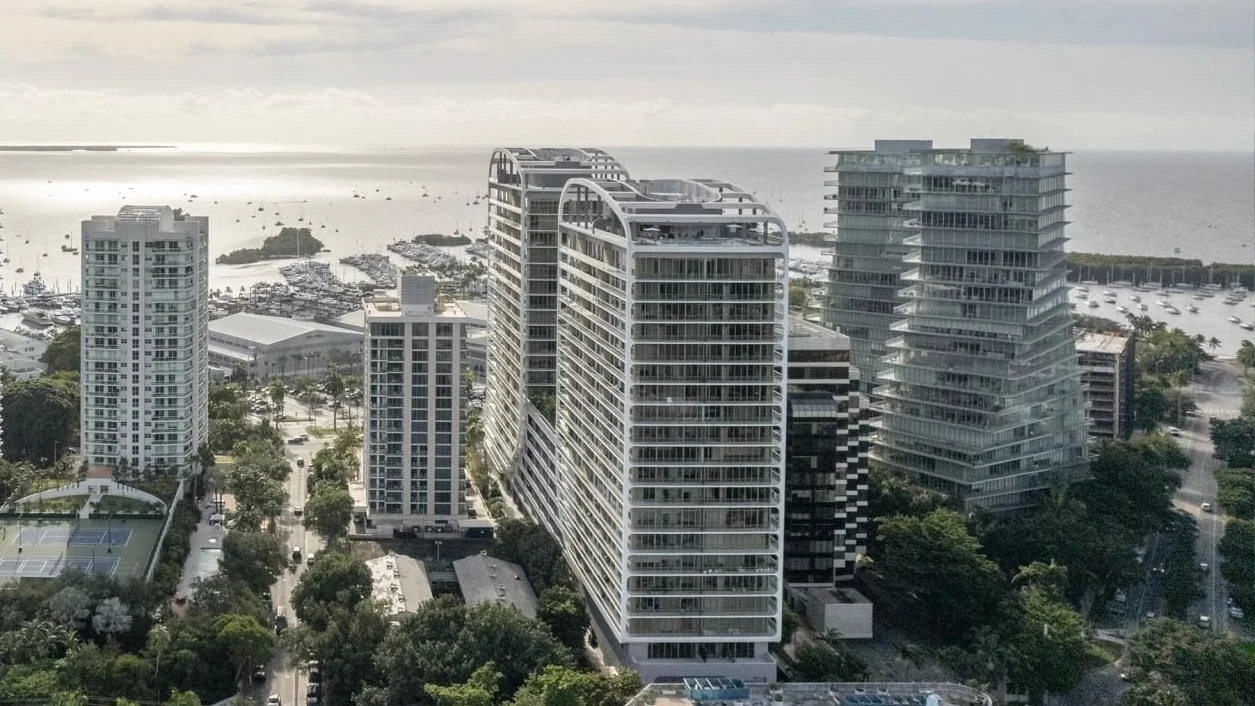
Quick answer: This is a hospitality brand attached to a building with no hotel in it, and that sentence is worth more to a buyer than any amenity list. Branded service plus a hotel operation is what turns a project non-warrantable and removes the conventional thirty-year loan for every owner in the building. Mr. C has the Cipriani name, hotel-style service, no hotel component and a two-lettings-a-year, six-month-minimum rule. Verify each of those from the recorded documents and the financing question answers itself.
The branded residence question, answered properly
A branded residence is a building that licenses a hospitality name and, usually, buys services from that operator. Buyers ask whether the brand is worth the premium. Lenders ask a different and more consequential question: is this a residential condominium or a hotel?
The tests that matter come from project eligibility rules, and they are structural rather than aesthetic:
| What a lender tests | Why it matters |
|---|---|
| Is there a hotel operating in the building | a hotel component points to condo-hotel classification |
| Are there hotel-type services combined with rental pooling | pooled rental income is treated as a business operation |
| What share of the building is non-residential | a large commercial share fails the residential test |
| Does the declaration permit short stays | short-stay permission supports a hotel reading |
Fail those and the project is non-warrantable, which is not a personal credit problem. It removes the conventional thirty-year loan for every owner in the building, permanently, until the structure changes. That reprices resale for everyone, because the pool of buyers who can complete shrinks to cash and portfolio lending.
Mr. C is on the other side of that line as built: branded, serviced, and residential throughout with no hotel operation, no short-stay permission and a strict letting rule. That is the combination that keeps a branded building conventional. The point of this section is not reassurance; it is the checklist. Ask for the declaration, the letting article, the schedule of non-residential space and a written lender determination, and confirm all four rather than accepting the summary.
Compare with the other branded stock in this series: Cipriani Residences Miami, Six Senses Residences Brickell and Kempinski Residences in the Design District. The brand tells you nothing about warrantability on its own. The structure does.
One hundred and eighteen became ninety-six
The tower was marketed with 118 residences and delivered with about 96, because buyers combined units before completion.
That is common at this price level and it has three consequences worth understanding.
The declaration and the building disagree. A condominium declaration records a fixed schedule of units, each with a percentage share of common expenses and voting rights. Combining two units requires a recorded amendment that merges them and reallocates those shares. Ask to see the amendments, and confirm your residence’s current percentage share from the recorded document rather than from a floor plan.
Your dues share is set by that percentage, not by your floor area. Where combinations were done, the merged unit normally carries the sum of the original shares. Check that the arithmetic on your specific residence is what you expect.
The comparable set is very thin. Ninety-six residences in a building completed in 2024 means few trades, and in a building where many residences are one-off combinations, few of those trades are like-for-like. Treat any single sold record as one observation, not as a market. Ask for every trade in the building since delivery rather than for the closest three.
Twenty-one storeys in Coconut Grove
Low-rise by Miami standards, and that is the product. Coconut Grove is a low-density, tree-covered bayfront neighbourhood south of Brickell, and the height limits there produce buildings of this scale rather than the 50-floor towers north of it.
The trade is straightforward. Fewer residences means a higher per-owner share of every fixed cost in the budget, and the branded service model raises those fixed costs further, because service is staff and staff is the largest line in a condominium budget after insurance. Expect dues per square foot toward the upper end of the Miami range, and ask for the figure and its three-year history rather than estimating it.
Two lettings a year, six-month floor
Owners may let twice per year with no lease shorter than six months, the same strict tier as most of the branded and oceanfront stock in this series.
This is not incidental. It is one of the structural facts that keeps the building out of condo-hotel territory, and it is also what the building is: a residence with an option to let, not an income asset. At 96 residences the rental market inside the building is tiny, so tenant demand and achieved rents are difficult to establish from within the building alone. Underwrite against comparable Coconut Grove and Brickell stock, and confirm the clause in the recorded declaration with amendments.
A 2024 building, and the questions that go with it
A 2024 completion places the first milestone inspection near 2049, which takes it off the table for any normal hold. Two other questions replace it at this vintage:
| Question | Why it is live at a 2024 building |
|---|---|
| Structural integrity reserve study | required regardless of age, and it sets the reserve line in your dues |
| Developer turnover and defect position | control passes from developer to owners in the first years, and any construction-defect claim would be live now |
| Branded service agreement terms | the licence and services agreement has a term, a fee and an exit; ask what happens at renewal |
That last one deserves attention on any branded building. Ask how long the agreement runs, what the association pays, whether the fee escalates, and what the building looks like if the brand departs at the end of the term. A branded building whose brand leaves is a different asset.
Insurance and the annual carry
Master policy premiums on Miami coastal condominium towers have repriced every year since 2022 and sit inside the dues. On a 96-residence building each dollar of premium increase divides across a small group, so the effect on individual dues is larger than at a big tower.
Ask the manager to split three years of dues increases into reserve contribution, master insurance premium and service costs. Then add Miami-Dade property tax and an owner’s HO-6 policy to build the real annual figure. For the framework see the Florida property insurance guide.
Financing
Get a written project eligibility determination before offering, addressing hotel operation, non-residential share, reserve funding and owner-occupancy. Where a project is non-warrantable the conventional thirty-year loan is unavailable building-wide, leaving cash, portfolio lending or a DSCR loan underwritten on rent at a larger deposit. Overseas buyers work through foreign national mortgage programmes. For the wider market see the Miami area page.
Verification checklist before you wire
- Get the recorded declaration and read the letting article and the schedule of non-residential space.
- Confirm in writing that there is no hotel operation and no rental pooling programme.
- Get the recorded amendments covering unit combinations and your residence’s current percentage share.
- Ask for every trade in the building since delivery, not the closest three.
- Get the structural integrity reserve study and the current reserve funding percentage.
- Ask whether developer turnover has occurred and whether any construction-defect claim is live.
- Ask for the branded service agreement term, fee, escalation and expiry.
- Obtain a written lender project eligibility determination.
Which buyer this building suits
It suits an owner-occupier or second-home buyer who wants a low-rise, serviced, bayfront-adjacent residence in Coconut Grove, values the hospitality operation as a lifestyle rather than as an income engine, and has priced the service model into the dues. On those terms the building is coherent and the diligence is short.
It suits an income buyer poorly, for the usual reason at this end of the market: two lettings a year at a six-month floor, against dues that carry a branded service operation across only 96 residences. Buy it to live in, verify the four documents above, and the branded-residence question stops being a question.
Frequently Asked Questions
No. It carries the Cipriani family's Mr. C hospitality brand and offers hotel-style services, but the tower has no hotel component and is residential throughout. That distinction is the one a lender tests, because a hotel operation, hotel-type services with rental pooling or a large non-residential share can make a project non-warrantable building-wide. Confirm it from the declaration rather than from marketing.
The tower was marketed with 118 residences and delivered with about 96, because buyers combined units before completion. The physical count and the count in the original recorded declaration therefore differ, and combinations require a recorded amendment reallocating the percentage share of common expenses. Ask to see those amendments.
Owners may let a maximum of two times per year with no lease shorter than six months. That is the strict tier, and it is one of the reasons the building reads as a residential condominium rather than a hotel operation despite the branded services.
Terra, the Miami developer founded by David Martin, with architecture by Arquitectonica, interiors by Meyer Davis and landscape by ArqGEO. It was completed in 2024 at 2655 South Bayshore Drive in Coconut Grove.
A 2024 completion places the first milestone inspection near 2049, far outside a normal hold. The live document at this building is the structural integrity reserve study, which applies regardless of age, together with the developer turnover and construction-defect position on a building this new.
Twenty-one storeys, low by Miami standards, with about 96 residences in one- to five-bedroom layouts. The small residence count means a thin comparable set, so expect few trades and treat any single sold record with care.
Get the declaration and warrantability position at Mr. C Residences
Tell us which residence you are considering. We will come back with the recorded declaration and letting article, the amendments covering unit combinations and your percentage share, every trade in the building since delivery, the reserve study, the branded service agreement terms and a written lender project eligibility determination.