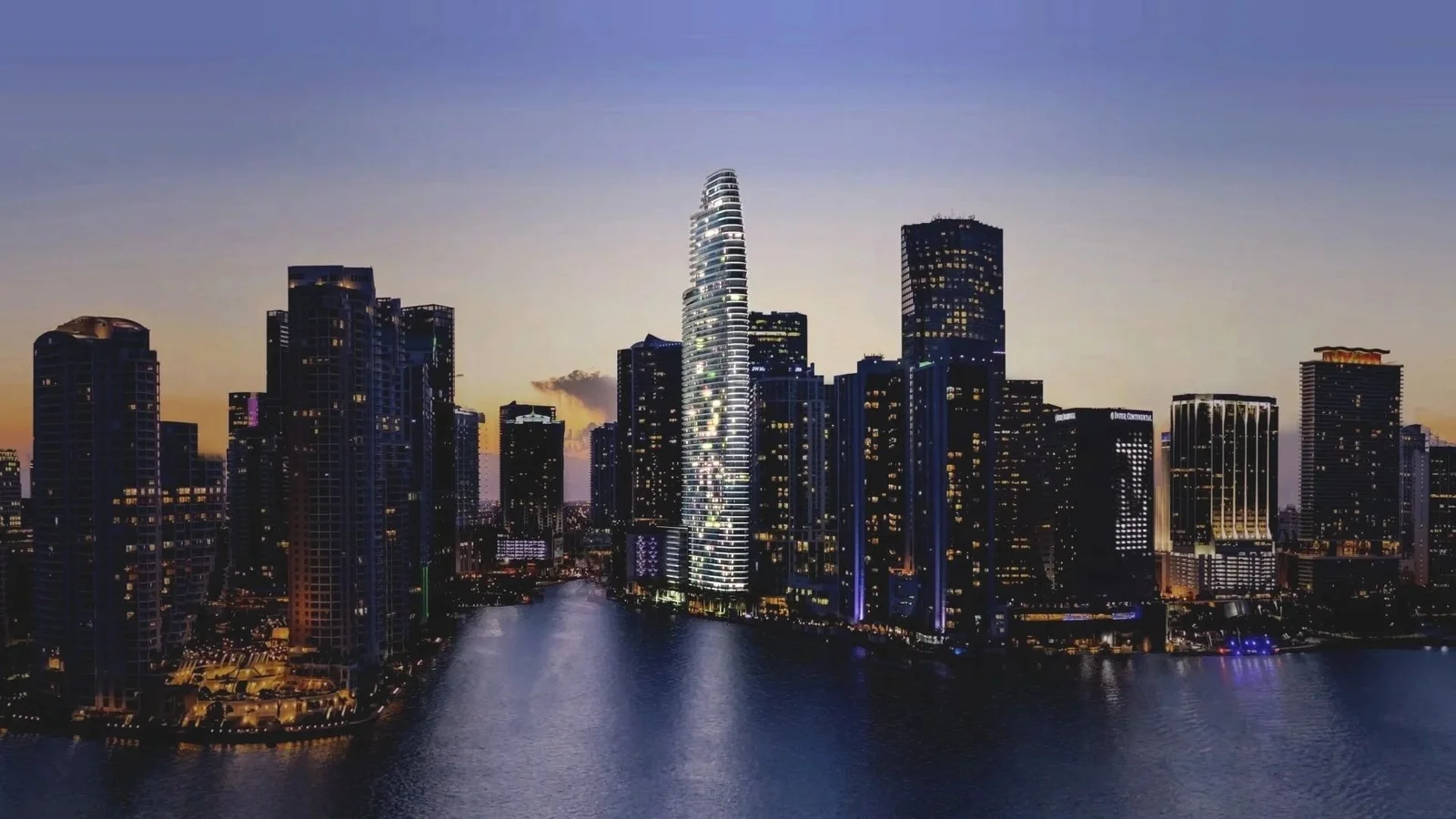
Quick answer: The brand is the least useful thing to analyse here. The useful number is that a 391-residence tower which presold almost completely has carried around 51 listings at once, roughly one door in eight. That is the resale queue, and until it clears it sets the ceiling on what any individual unit can achieve. Everything else about this building is excellent and largely priced in.
The resale queue is the story
A building that sells out before delivery looks like a success, and commercially it was one. For a buyer arriving afterwards it creates a specific and measurable condition.
Around 51 of 391 residences have been listed for sale at the same time. That is close to 13% of the building. In a tower where nearly every unit was presold years earlier, listings at that density are not ordinary turnover. They are presale purchasers reaching closing and deciding to take the gain, or deciding they cannot complete, or both.
The consequence is arithmetic rather than sentiment. When one door in eight is available, no seller sets the price. The building sets it, and it sets it at whatever the most motivated of those fifty-one owners will accept. A buyer negotiating here has leverage that will not exist in five years, and a buyer planning to resell inside three years is joining a queue rather than entering a market.
Track the number before you offer. If listings are falling quarter on quarter, the queue is clearing and pricing firms. If they are flat or rising, the ceiling holds. This one figure will tell you more about your exit than any appreciation forecast for Downtown Miami.
What $1.25 a foot buys, and what it costs
Dues run near $1.25 per square foot per month. That sits below the $1.63 charged at SLS LUX Brickell but well above the Brickell district average near $0.72, and the amenity list explains why.
| Line | Figure |
|---|---|
| Dues per square foot, monthly | $1.25 |
| Monthly dues, 1,500 sq ft residence | $1,875 |
| Annual dues, same residence | $22,500 |
| Residences sharing the operating base | 391 |
The base includes a full-service spa, a fitness centre, two temperature-controlled infinity pools, a virtual golf room, a screening room, an art gallery-grade lobby, a yacht marina and a rooftop helipad.
The marina and the helipad deserve a moment. Both are genuine differentiators and both are expensive to maintain, insure and staff, and they are funded by 391 doors rather than by the thousand-plus doors that carry the amenity load in a large Brickell tower. Fixed costs divided by a smaller number produce a higher number per owner. That is not a criticism of the building, it is the shape of a low-density luxury project, and it is permanent.
The financing question in a branded tower
Fannie Mae’s selling guide treats a project as ineligible when it is operated as a hotel, when it offers hotel-type services, or when owners are required to join a rental pool. Branded residences with concierge service menus, a marina operation and hospitality-grade staffing sit close to those tests, and some fall over them.
When a project is non-warrantable the effect is not confined to one unit. The conventional thirty-year fixed loan becomes unavailable across the whole building. What remains is cash, a portfolio loan from a lender keeping the paper, or a DSCR loan underwritten on rent rather than income, typically at 25% to 30% down and above conforming pricing. Overseas purchasers add another layer through foreign national mortgage programmes.
At the $850,000 end of this building that matters a great deal. At the $75 million end it does not, because those transactions are cash. The eligibility answer therefore changes the composition of your future buyer pool: if only cash and portfolio borrowers can transact, the pool is smaller, and a smaller pool takes longer to sell into. Put the question to a lender in writing before the offer, not during diligence.
2024 delivery, and what that removes
A 2024 certificate of occupancy places the 25-year coastal milestone near 2049. There is no structural inspection inside any normal hold period, no reserve study catching up on deferred concrete work, and no special assessment history to read.
That is a real advantage and it is worth stating plainly, because the SB 4-D milestone and reserve framework is the dominant risk in Miami’s older stock and it is simply absent here. Compare that with a 2008 tower where the trigger arrives near 2033, inside the ownership window of anyone buying today.
The exchange is that a new building has no operating history either. There are no three years of dues to plot, no completed reserve cycle, and no evidence of how the association behaves when a large bill arrives. The first budget is a forecast. Ask for the developer’s projected budget alongside the association’s first actual budget and compare them line by line: the gap between those two documents is the most honest early indicator of where dues are heading.
Insurance is the line to watch hardest. Coastal condominium premiums have repriced every year since 2022 and the master policy sits inside the dues. We set out how those lines move across the state in the Florida property insurance guide.
The brand is a contract, and contracts have terms
A branded residence is not a building with a badge on it. It is a building operating under a licence agreement between the developer or the association and the brand owner, and that agreement has a length, a fee, renewal conditions and termination provisions.
This matters at resale rather than at purchase. A buyer paying a premium for the name is paying for something the association has to keep paying to retain. If the licence fee sits inside the dues, it is part of the $1.25 per foot and it recurs. If the agreement has a fixed term, there is a date beyond which the name is not guaranteed, and a building that loses its brand does not usually keep the pricing that came with it.
None of this is a red flag and none of it is unusual: every branded project in Miami works this way. It is simply a document to read rather than assume. Ask for the licence agreement or the summary of its material terms, and specifically for the term length, the annual fee, who pays it, and what happens on expiry. A seller who cannot produce that answer has not read it either.
Verification checklist before you wire
- Count the active listings in the building today and compare with three and six months ago. The trend is your exit signal.
- Ask how many of those listings are original presale purchasers reselling before occupancy. That distinguishes a clearing queue from ordinary turnover.
- Get the lender’s written project eligibility determination before the offer.
- Request the developer’s projected operating budget and the association’s first adopted budget, and compare them.
- Ask for the reserve study and its funding percentage, even though the milestone is decades away. Marina and helipad equipment carry replacement schedules of their own.
- Confirm the rental rules in the recorded declaration rather than in a listing summary.
- Ask what share of the marina berths belong to residences and what share are separately owned or leased.
Which buyer this building suits
It suits a cash buyer who wants a delivered, brand-new, low-density trophy address with no structural question for twenty-five years and who is buying primarily to occupy. For that buyer the resale queue is an advantage: it is the best negotiating position this building will offer for years.
It suits a leveraged investor less well. Dues are high and fixed, financing eligibility is an open question that changes the deposit and the buyer pool, and the resale queue means competing with fifty-odd other sellers on the way out. None of that makes the building weak. It makes it a purchase to hold rather than a position to trade, and the difference matters most to whoever needs the money back on a schedule.
Frequently Asked Questions
Construction completed in 2024 and the building opened officially on 30 April 2024. The tower runs 66 storeys at 300 Biscayne Boulevard Way, Miami FL 33131, with 391 residences from one to five bedrooms. G&G Business Developments developed it, Rodolfo Miani of Bodas Miani Anger designed it. It is Aston Martin's first real estate project anywhere.
Listed prices span roughly $850,000 to $75 million, a range wide enough that the average per foot tells you almost nothing. The projected sellout exceeded $1 billion and nearly all units were presold before delivery, so most of what trades now is resale rather than developer inventory.
Around $1.25 per square foot per month. On a 1,500 square foot residence that is about $1,875 a month, or $22,500 a year. The figure funds a spa, two temperature-controlled infinity pools, a virtual golf room, a screening room, a yacht marina and a rooftop helipad, which is a large operating base for 391 doors to carry.
Because roughly 51 of 391 residences have been on the market at once, which is about one door in eight. In a building that presold almost completely, that pattern usually means presale buyers arriving at closing and choosing to sell. It caps resale pricing for as long as it lasts, and it is the single most useful number a buyer can track here.
Ask the lender in writing before offering. Branded towers with hotel-style service menus and a marina operation frequently fail Fannie Mae's project eligibility tests, and when a project is non-warrantable the conventional thirty-year loan disappears for every unit in it. Cash, portfolio lending and DSCR at a larger down payment are the alternatives.
A 2024 completion places the 25-year coastal trigger near 2049. There is no near-term structural question here at all. What replaces it is a high fixed operating cost from year one and an unusually early resale market, which is where the risk actually sits in a building this new.
Get the current listing count and eligibility answer for Aston Martin Residences
Tell us the residence size you are considering. We will come back with active listings today versus three months ago, the association's adopted budget, the dues history so far, and a written lender view on project eligibility.