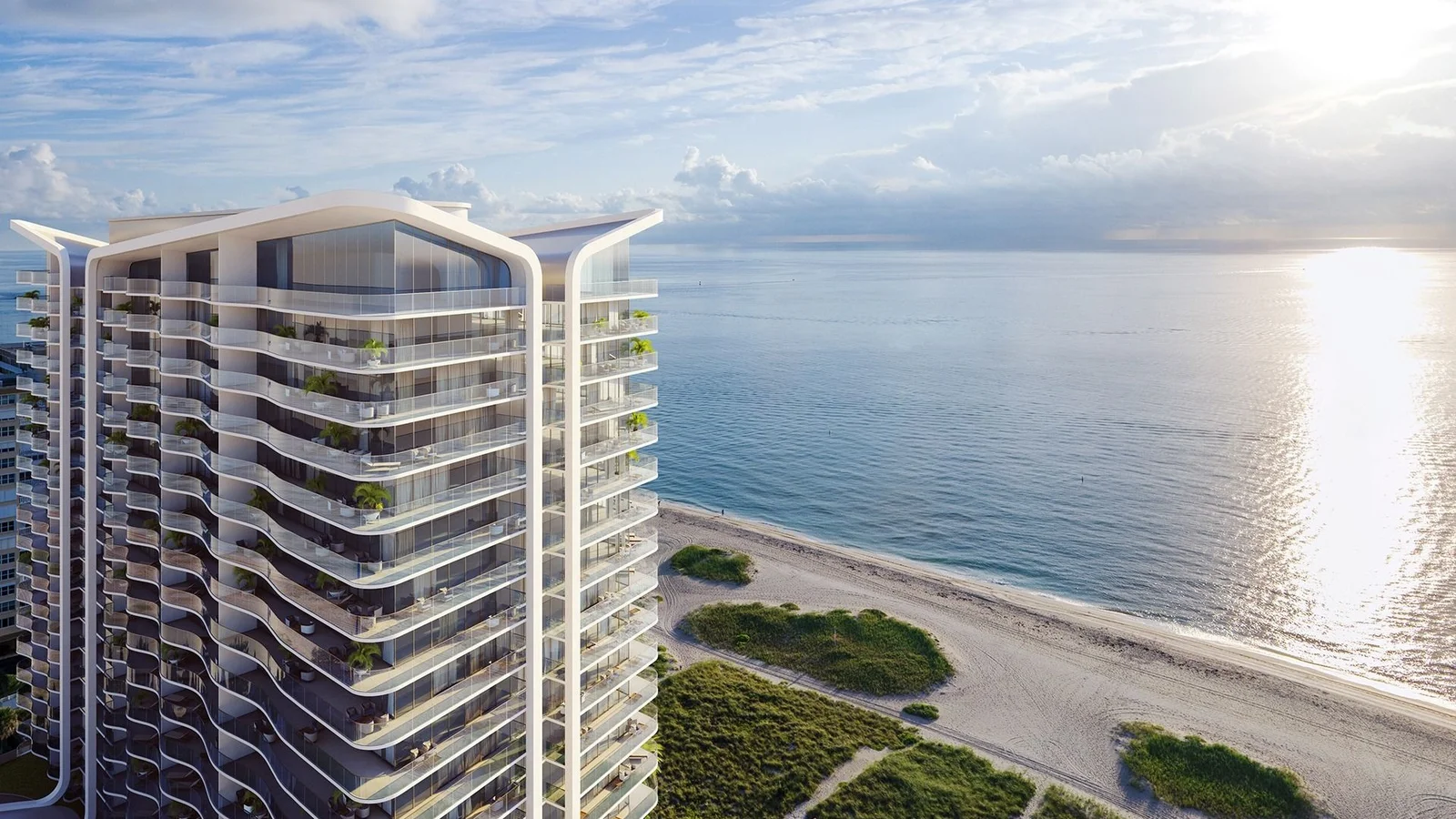
Quick answer: The rental clause here is the most precisely drafted in this series. Three lettings a year, minimum 120 days each, comes to exactly 360 days. Unlike most caps, which are set so high they bind nothing, this one fits the year exactly: three four-month tenancies and no room for a fourth. That is a deliberate design, and it tells you precisely what kind of owner the association wants.
A cap that actually binds
Most rental clauses in Florida condominiums set a number of lettings and a minimum lease length that do not interact. Read them together and the cap usually turns out to be decorative.
| Building | Lettings per year | Minimum lease | Days if used in full | Cap binds? |
|---|---|---|---|---|
| Casamar | 3 | 120 days | 360 | yes, exactly |
| Paraiso Bayviews | 12 | 60 days | 720, impossible | no |
| Paraiso Bay | 3 | 30 days | 90 | no |
| SLS LUX Brickell | 3 | 31 days | 93 | no |
| Quantum on the Bay | 2 | 6 months | 360 | yes, exactly |
Three tenancies of 120 days fills 360 of 365 days. There is no slack, no fourth letting, and no shorter stay to fill a gap. An owner running the rule to its limit has a fully occupied year with three tenants and five spare days.
The intent is legible from the arithmetic. This is a rule written to allow a genuine seasonal pattern, a winter tenant, a spring tenant, a summer tenant, while making anything resembling short-stay or high-turnover letting impossible. For an owner who wants a furnished seasonal model in Broward, it is one of the more workable clauses on the coast. For anyone wanting flexibility below four months, it is a wall.
Confirm the clause in the recorded declaration with amendments, and ask whether the 120-day floor is measured per lease or per occupancy.
120 days is the longest floor in this series
| Minimum lease | Buildings |
|---|---|
| 120 days | Casamar |
| 6 months, about 180 days | Murano Grande, Five Park, Muse, Jade Ocean, Echo Brickell, Quantum, Rise, Las Olas |
| 60 days | Paraiso Bayviews |
| 30 to 31 days | Paraiso Bay, One Paraiso, SLS LUX, Dua Miami, Brickell Flatiron furnished |
| short stays | 72 Park |
Placed on that scale, 120 days sits between the two clusters and is closer in practice to the six-month group than to the 30-day one. Four months excludes the corporate relocation tenant on a three-month assignment, excludes the snowbird taking January to March, and excludes anyone between homes.
What it includes is a substantial winter tenant, roughly December through March, which in Broward is the highest-paying segment of the year. An owner who lets once, well, over the season and keeps the residence the rest of the year is operating exactly as the rule contemplates.
That is a coherent proposition for a second-home owner who wants the property to cover part of its own cost. It is a poor one for anyone underwriting twelve months of continuous income.
A wide oceanfront site, not a tall one
The building runs to 21 storeys with 119 residences at six per floor, on 3.2 acres with 283 linear feet of ocean frontage.
Those numbers describe a different product from most of the Miami stock in this series. Sunny Isles and Miami Beach towers go up because their sites are narrow; this one spreads out. The consequences are practical:
- Every residence is oceanfront. With six units per floor on a wide site, the building does not need to sell interior or side-facing layouts.
- Lower density per acre. 119 residences across 3.2 acres is generous by South Florida standards, and it is not repeatable because sites of that width rarely come available.
- A larger share of cost is site and amenity rather than vertical structure. Deck, landscape and beach frontage maintenance carry the budget more than lift banks do.
The third-floor lanai residences with extended terraces and the three penthouses near 4,000 square feet at the top are the two ends of the range. Both are scarce products in Broward and both should be compared against Miami equivalents on price per foot rather than on headline price, because the numbers diverge.
Confirm the address before anything else
Published sources give this project at both 1116 North Ocean Boulevard and 900 North Ocean Boulevard, and 1116 is also cited for a separate Pompano Beach oceanfront project.
That is not an academic problem. Two comparable new oceanfront towers on the same stretch of A1A, both marketed to the same buyer, with confusable addresses, is exactly the situation in which a buyer compares the wrong comparables or, worse, tours one building and reads documents for another.
Take the folio number and legal description from the purchase contract, then pull the recorded declaration, the county property record and the sold comparables against that folio rather than against any street address or project name. It costs one query and it removes the entire class of error. The same discipline applies at Dua Miami, where a rebrand split the comparable set in two.
Broward is not Miami-Dade
The state milestone framework applies statewide. Local rules do not.
Short-term rental registration, tourist development tax rates, permitting and city ordinances sit with Broward County and the City of Pompano Beach, and they differ from Miami-Dade practice. A buyer arriving from a Miami purchase should verify each locally rather than assume.
A 2025 completion places the SB 4-D milestone trigger near 2050, so the structural question is absent for any realistic hold. What matters instead in a first-year building is the budget. Request the developer’s projected budget and the association’s first adopted budget and compare them line by line, with particular attention to insurance: oceanfront master policies in Broward have repriced every year since 2022 and developer projections routinely understate them. See the Florida property insurance guide and the Fort Lauderdale area page for the wider Broward picture.
Financing at $3.1 million and up
At this entry most transactions are cash or jumbo, so the conventional conforming question is less central than it is at $500,000.
It is still worth obtaining a written project eligibility determination before offering, because it describes the pool of buyers who can purchase from you later. A first-year association with no operating history and a resort-grade amenity base can raise questions on a lender’s project questionnaire even where nothing is wrong. Where a project is non-warrantable the conventional loan is unavailable building-wide, leaving cash, portfolio lending or a DSCR loan underwritten on rent. Overseas buyers work through foreign national mortgage programmes.
A DSCR lender assessing this building will want to know the rental rule, and 120 days with three lettings is a cleaner income story than a nightly model would be, because it produces documented leases rather than platform statements.
Verification checklist before you wire
- Confirm the folio and legal description from the contract, then verify address, declaration and comparables against it.
- Get the rental clause from the recorded declaration and ask whether 120 days is measured per lease or per occupancy.
- Request the developer’s projected budget and the first adopted budget, and compare insurance line by line.
- Get the reserve study and funding percentage even though the milestone is decades away.
- Ask what share of the site maintenance budget covers beach frontage, deck and landscape rather than the tower.
- Verify Broward County and City of Pompano Beach rental and tax rules separately from the association’s.
- Obtain a written lender project eligibility determination.
Which buyer this building suits
It suits a second-home owner who wants a wide oceanfront site in Broward at a price below the Miami Beach equivalent, and who will let the residence for one long winter season to offset part of the cost. The rental rule is drafted for exactly that owner, and every residence facing the ocean is a product Miami’s narrow sites largely cannot offer.
It suits a continuous-income investor poorly. Three tenancies at four months each is a seasonal business, not a rental one, and the entry above $3.1 million means the absolute numbers are large in both directions. Confirm the folio first, read the first adopted budget second, and model one winter tenant rather than twelve months of occupancy.
Frequently Asked Questions
Leases must run a minimum of 120 days and a residence may be let a maximum of three times per year. Those two numbers multiply to exactly 360 days, so unlike most rental clauses this cap actually binds. The rule was drafted to permit three four-month tenancies and nothing else.
Construction completed and closings commenced in July 2025. The tower rises 21 storeys with 119 oceanfront residences at six per floor, on a 3.2-acre site with 283 linear feet of ocean frontage in Pompano Beach. The Related Group is the developer.
Pricing starts at about $3.1 million for two, three and four-bedroom residences, all with direct oceanfront views. The third floor holds lanai residences with extended terraces and the twenty-first floor holds three penthouses of close to 4,000 square feet each.
Published sources give both 1116 North Ocean Boulevard and 900 North Ocean Boulevard, and 1116 is also cited for a different Pompano Beach project. Confirm the folio and legal description from the contract rather than relying on any listing address, because two comparable oceanfront projects on the same stretch are easy to confuse.
A 2025 completion places the 25-year coastal trigger near 2050. There is no structural question inside any realistic hold. The near-term questions are the first adopted budget, the reserve funding on a new oceanfront amenity base, and how insurance is trending.
It is Broward County, with its own short-term rental rules, tourist development tax and permitting, so Miami practice does not carry across. The oceanfront site is larger and lower-rise than most Miami equivalents, which is the product difference, and the market historically prices below Miami Beach at comparable quality.
Confirm the folio and first-year budget at Casamar
Tell us the residence type you are considering. We will come back with the folio and legal description, the recorded rental clause, the developer's projected budget against the first adopted one, the insurance line, and how the price per foot compares with Miami Beach oceanfront.