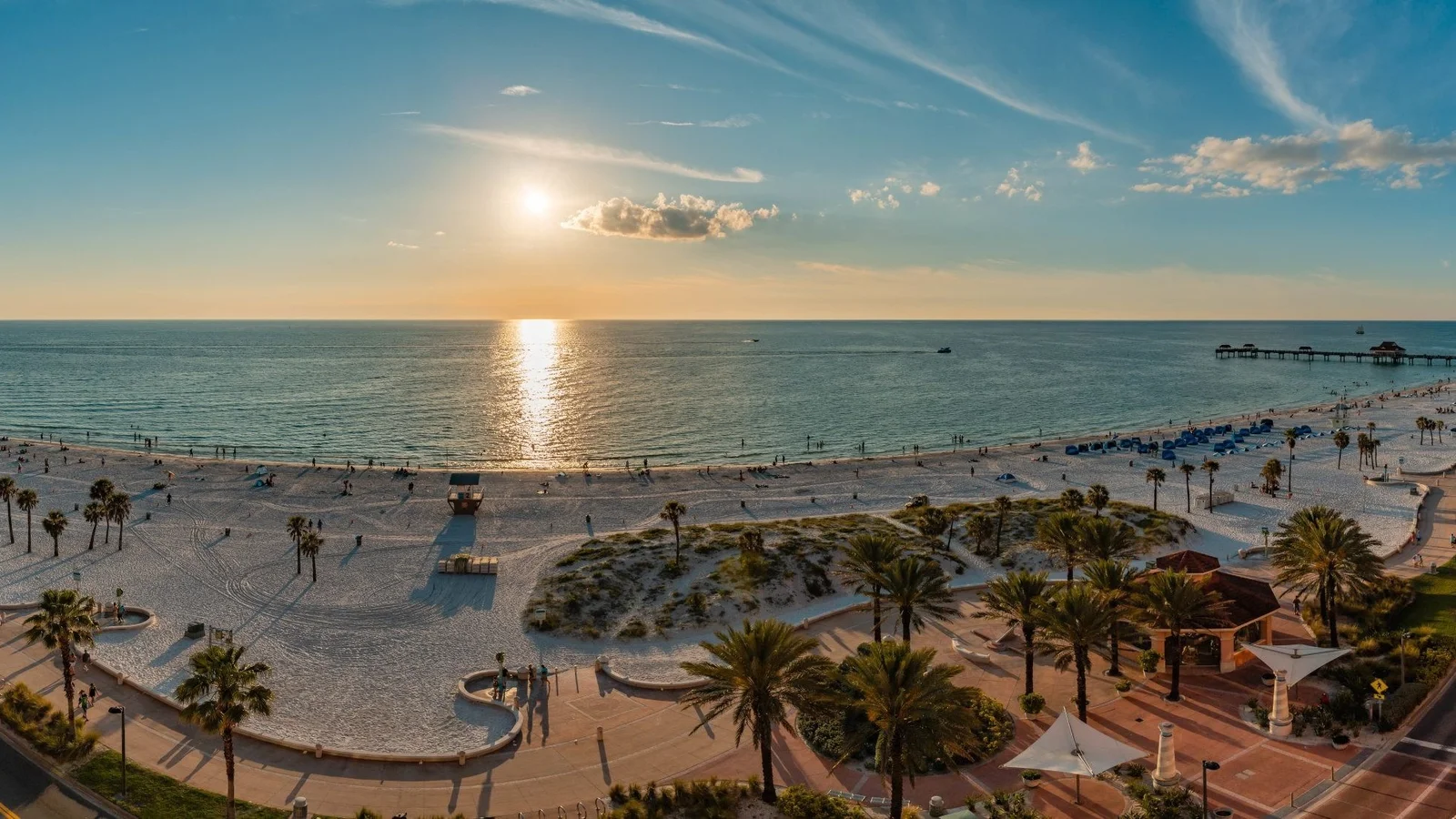
Quick answer: On Clearwater Beach the first question is not how to comply. It is whether the property is permitted to be let short-term at all. The City of Clearwater does not allow rentals of 30 days or less in its residential districts, so for a large share of the beach’s housing stock the answer is no. The lawful short-stay market sits in non-residential and tourist zoning, and the zoning of the specific parcel decides everything that follows.
Check the zoning before anything else
Most short-term rental research starts with taxes and licences. Here it starts with a map, because the wrong answer at this step makes every later step irrelevant.
| Zoning | Rentals of 30 days or less |
|---|---|
| Residential districts | not permitted |
| Non-residential and tourist districts | this is where lawful short-stay stock sits |
A property listed on a booking platform is not evidence that the letting is lawful. Platforms do not verify municipal zoning, and a listing can run for years before enforcement reaches it. The consequence of getting this wrong is not a fine and a correction; it is a purchase whose entire business model was never available.
Establish the zoning designation for the specific parcel with the city, in writing, before the offer. Ask the question precisely: may this parcel be let for periods of 30 days or less, and under which zoning designation. A general answer about the beach is not an answer about your property.
Why the city can do this
Florida Statute 509.032(7)(b) prevents a local government from prohibiting vacation rentals or regulating the duration or frequency of stays. That preemption has a date attached: it does not apply to any local law or ordinance adopted on or before 1 June 2011.
Jurisdictions that had restrictive rules in place before that date keep them. They may amend them, but only to become less restrictive, and many have chosen not to. That is why a handful of Florida cities, including several on the Gulf beaches, maintain restrictions that a city could not lawfully adopt today.
An owner arriving from a permissive county sometimes assumes state law has swept these rules away. It has not, and the grandfather clause is the single most important thing to understand about local rules on this coast.
What the numbers are, where letting is permitted
| Component | Rate | Who remits it |
|---|---|---|
| Florida state sales tax on transient rentals | 6% | commonly the platform, on its own bookings |
| Pinellas discretionary sales surtax | county surtax, where levied | with the state component |
| Pinellas County tourist development tax | 6% | Airbnb on its bookings; the owner on everything else |
Pinellas is county-collected and is one of the counties for which Airbnb collects the county tax. That covers Airbnb bookings. Direct bookings, other channels and any repeat-guest arrangements remain the owner’s to collect and remit, which requires a county account and returns whatever the platform is doing.
Open the county account before the first booking and track two figures: rent where a platform collected the county tax, and rent where nobody did. See Pinellas County for the county-level picture and tourist development tax by county for rates elsewhere.
The two thresholds people confuse
Three different numbers govern three different things, and mixing them up is the most common error in this market.
| Threshold | What it governs |
|---|---|
| 30 days | the city’s short-stay restriction, and the DBPR licensing test |
| 3 lettings a year under 30 days | the DBPR licensing test’s frequency limb |
| 6 months | the transient taxes: county tourist tax and state sales tax |
So a 45-day letting in a residential district is outside the city’s short-stay restriction but still inside the transient taxes, because it is under 6 months. And a 7-month letting on a written lease is outside all of them.
That middle band, letting for more than 30 days but less than 6 months, is the model that works in Clearwater’s residential districts, and it is worth pricing properly rather than dismissing. It suits seasonal visitors, relocating households and work placements, it carries no city zoning problem, and it carries far lower turnover costs than nightly letting.
Licensing and city requirements
A DBPR vacation rental licence is required where the property meets the transient public lodging test: broadly, rented more than 3 times in a calendar year for periods under 30 days, or advertised as regularly available for such stays.
A City of Clearwater business tax receipt is the usual local requirement for operating a rental business in the city. Confirm the current requirements with the city for the specific address and zoning, because municipal requirements change more often than state ones and a general summary ages quickly.
Local government also retains generally applicable rules on noise, parking, waste, occupancy limits and life safety, and on a dense barrier island those are enforced actively.
The building can be stricter than the city
Where a parcel sits in a district that permits short stays, the condominium declaration still governs, and beach buildings vary enormously.
Common positions in Gulf beach condominiums include a 30-day minimum, a 3-month minimum, a 6-month minimum, or a cap on the number of lettings per year. Some buildings permit weekly letting; some prohibit letting entirely for an initial ownership period.
None of that is overridden by favourable zoning. An association can restrict further than the city; it cannot permit what the city forbids. Read the recorded declaration with amendments before offering, and treat a seller’s description of the rules as a starting point. See the HOA and association restrictions checklist.
Insurance and the coastal cost line
Wind and flood are normally written separately from the dwelling policy on this coast, and a letting operation needs liability cover written for that use rather than an owner-occupier policy assumed to stretch.
Get real quotes for the specific address and elevation before offering, ask the seller for 3 years of actual premiums, and on a condominium establish what the master policy covers and what it leaves to the owner. See the Citizens insurance guide and the 1 million dollar liability requirement.
Financing
Lenders price a letting purchase differently from a second home, so state the intended use at application. Conventional investment lending, a DSCR loan underwritten on the property’s own income, or cash are the usual routes, and overseas buyers work through foreign national mortgage programmes.
On a condominium, add the project questionnaire to the timeline. Reserve funding and owner-occupancy are project-level tests, and a building that fails them removes conventional lending for every owner in it rather than for one applicant.
Before you buy on Clearwater Beach
- Get the zoning designation for the specific parcel in writing from the city.
- Ask directly whether lettings of 30 days or less are permitted on that parcel.
- Where they are not, price the 31-day to 6-month model instead of abandoning the purchase.
- Open the Pinellas County tourist tax account before the first booking.
- Track platform rent and non-platform rent as separate figures.
- Establish whether a DBPR vacation rental licence is required and obtain it.
- Confirm the city business tax receipt requirement for the address.
- Read the recorded condominium declaration for its own minimum stay rule.
- Get real insurance quotes and, on a condominium, the master policy terms.
Where this leaves an investor
Clearwater Beach is a strong visitor market with a restrictive residential zoning position, and the two facts have to be held together. The stock that can lawfully be let nightly is limited and priced accordingly; the stock that cannot is priced as housing.
The mistake to avoid is paying a short-stay price for a property that cannot lawfully be let short-stay. One written zoning answer, obtained before the offer, prevents it entirely. For the wider county position see Pinellas County.
Frequently Asked Questions
Not in a residential district. The City of Clearwater does not permit rentals of 30 days or less in its residential zoning districts, so a house or condominium in one of those districts cannot lawfully be let nightly or weekly regardless of what a platform allows. Property in non-residential and tourist zoning is where the lawful short-stay stock sits.
Florida Statute 509.032(7)(b) bars a local government from prohibiting vacation rentals or regulating stay duration or frequency by an ordinance adopted after 1 June 2011. Rules already in place on that date survive and may be amended only to become less restrictive. Local zoning that predates the cut-off therefore continues to apply.
6% on lodging of 6 months or less. Pinellas is a county-collected jurisdiction and it is one of the counties for which Airbnb collects and remits the county tax on its own bookings. Rent taken through other channels or directly remains the owner's to collect and remit.
A City of Clearwater business tax receipt is the usual local requirement for operating a rental business in the city, alongside county tourist tax registration and, where the transient test is met, a state DBPR vacation rental licence. Confirm the current requirements with the city for the specific address and zoning.
A letting of more than 30 days sits outside the short-stay restriction, and a written lease of more than 6 months sits outside the transient taxes and the vacation rental licensing test as well. Those two thresholds are different numbers and they should not be confused.
An association cannot make a prohibited letting lawful, and it can restrict letting further than the city does. Where the city permits short stays in a tourist district, the building's own declaration still governs, and many beach buildings impose minimums of 30 days, 3 months or 6 months of their own.
Get the zoning answer in writing before you offer on Clearwater Beach
Tell us the property you are considering. We will come back with the parcel's zoning designation and whether lettings of 30 days or less are permitted on it, the condominium declaration's own minimum stay rule, the county and state registrations required, and a comparison of the nightly and 31-day models on the same property.