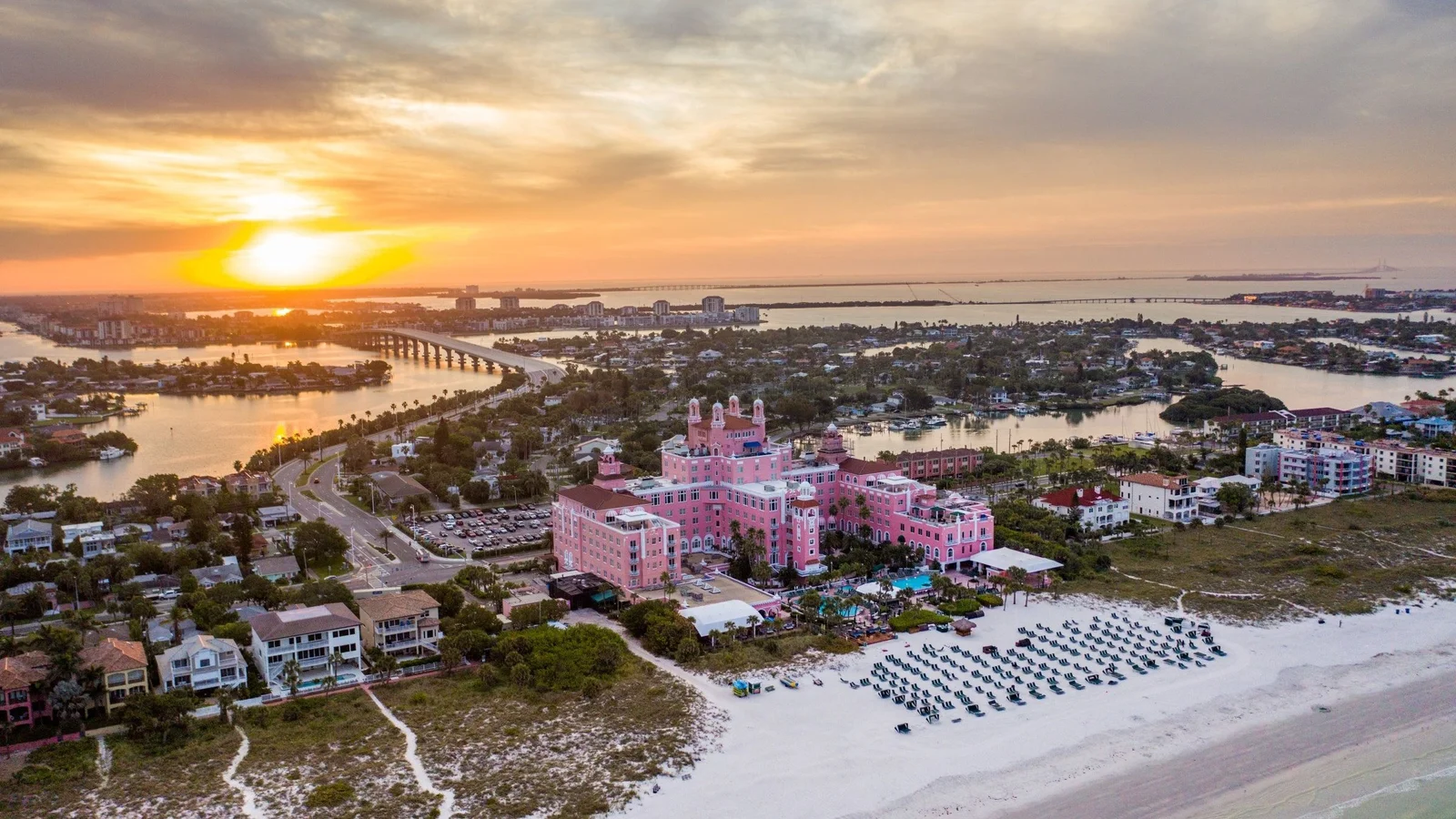
Quick answer: St. Pete Beach answers the short-stay question with a number rather than a ban. In the Residential Medium district and the Pass-a-Grille overlay, lettings of less than 30 days are permitted 3 times a year. Lettings of 30 days or more carry no such cap anywhere in the city. So the model here is not nightly letting; it is a small number of premium short stays sitting on top of monthly lettings, and the arithmetic decides which mix is worth running.
Three numbers, three different rules
The most common error in this city is treating one threshold as if it governed everything. It does not, and the three rules interact in a way worth setting out plainly.
| Threshold | Rule it belongs to | Consequence |
|---|---|---|
| 3 lettings a year under 30 days | city zoning allowance in RM and Pass-a-Grille | more than that is not permitted there |
| more than 3 lettings a year under 30 days | state DBPR licensing test | a licence becomes required |
| 6 months | state and county transient taxes | anything shorter is taxable |
Read together they produce an unusual position. An owner letting exactly 3 times a year for short stays in a permitted district is within the city’s allowance and has not crossed the licensing test’s frequency limb.
That is not the end of the analysis, because the licensing test has a second limb: a property advertised as regularly available for stays under 30 days meets it regardless of how many bookings result. A property listed publicly on a booking platform through the year is advertised as available, whatever the eventual count.
So the practical answer for most owners is that a public listing brings the licence with it, and the 3-stay allowance governs how many of those bookings may lawfully be accepted. Confirm both positions rather than assuming they align.
The model the rules actually favour
Because 30-day-plus lettings carry no numeric cap in any district, the rules push toward a monthly model with a small short-stay allocation on top.
| Model | City position | Turnovers a year | Tax position |
|---|---|---|---|
| Nightly, year round | not permitted in RM or Pass-a-Grille | many | transient |
| Monthly lettings | permitted, no cap | few | transient, under 6 months |
| 3 premium short stays plus monthly | permitted | few | transient |
| One lease over 6 months | permitted | one | outside transient taxes |
The third row is the one the rules are shaped for. Use the 3 short-stay allowances on the highest-value weeks of the year, and fill the rest with monthly lettings that carry no cap, few turnovers and low cleaning cost.
Run that arithmetic before assuming the cap makes the property unattractive. Three peak weeks at a beach rate plus 8 or 9 months of monthly letting frequently beats a nightly operation elsewhere on this coast, once turnover cost and vacancy are taken out.
Establish the district first
Everything above depends on the parcel’s zoning designation. Ask the city, in writing, two questions about the specific parcel: which district it sits in, and what that district permits for lettings under 30 days.
A neighbour’s arrangement is not evidence, a platform listing is not evidence, and a marketing description referring to Pass-a-Grille is not a zoning determination. The overlay has boundaries and they are administrative rather than scenic.
What the taxes are
| Component | Rate | Who remits it |
|---|---|---|
| Florida state sales tax on transient rentals | 6% | commonly the platform, on its own bookings |
| Pinellas discretionary sales surtax | county surtax, where levied | with the state component |
| Pinellas County tourist development tax | 6% | Airbnb on its bookings; the owner on everything else |
Pinellas is county-collected and Airbnb collects for its own bookings. Everything else, including direct bookings and monthly lettings arranged privately, remains the owner’s.
That matters more than usual here, because the model the rules favour is monthly letting, and monthly lettings are frequently arranged directly. Open the county account before the first letting and track two figures: rent where a platform collected the county tax, and rent where nobody did. See Pinellas County.
Note the threshold difference once more: a 30-day or 90-day letting is outside the city’s short-stay rule and fully inside the transient taxes, because the tax line is 6 months.
Why the city may do this
Florida Statute 509.032(7)(b) prevents a local government from prohibiting vacation rentals or regulating stay duration or frequency, but not where the local law was adopted on or before 1 June 2011. Pre-2011 rules survive and may be amended only to become less restrictive.
Several Pinellas beach communities maintain rules of that vintage, which is why the position varies sharply from one municipality to the next along a single barrier island. An owner comparing St. Pete Beach with Clearwater Beach is comparing two different regimes, not two versions of one.
Preemption also leaves untouched registration and inspection programmes, and generally applicable rules on noise, parking, waste, occupancy limits and life safety.
The building may be stricter
A favourable zoning answer does not settle the question. Condominium declarations on this coast commonly impose minimums of 30 days, 3 months or 6 months, caps on lettings per year, tenant approval procedures and waiting periods after purchase before a unit may be let at all.
An association can restrict further than the city; it cannot permit what the city forbids. Read the recorded declaration with amendments before offering, and ask specifically about any waiting period, because a rule barring letting for the first year changes the purchase entirely. See the HOA and association restrictions checklist.
Insurance and the coastal cost line
Wind and flood are normally separate policies from the dwelling cover here, and a letting operation needs liability cover written for that use. On a condominium, establish what the master policy carries and what an owner’s policy must bridge.
Get real quotes for the specific unit and floor, and ask the seller for 3 years of actual premiums. See the Citizens insurance guide and the 1 million dollar liability requirement.
Financing
Lenders price a letting purchase differently from a second home, so state the intended use at application. Conventional investment lending, a DSCR loan underwritten on the property’s own income, or cash are the usual routes, and overseas buyers work through foreign national mortgage programmes.
A monthly-letting model has an underwriting advantage: signed leases are stronger evidence for a DSCR loan than projected nightly occupancy. Where the plan is 3 short stays plus monthly lettings, bring the leases and treat the short stays as upside.
Before you buy in St. Pete Beach
- Get the parcel’s zoning district and what it permits under 30 days, in writing from the city.
- Model the 3 short stays plus monthly lettings mix before assuming the cap is a problem.
- Establish whether the DBPR licensing test is met, including the advertising limb.
- Open the Pinellas County tourist tax account before the first letting.
- Track platform rent and non-platform rent as separate figures.
- Read the recorded declaration for minimum stays, letting caps and waiting periods.
- Get real insurance quotes and, on a condominium, the master policy terms.
- Ask about assessments levied, pending or discussed in the last 24 months.
Where this leaves an investor
St. Pete Beach is one of the more workable restricted markets on the Gulf coast, because its rule is a cap rather than a prohibition and because the uncapped monthly model is genuinely viable alongside it.
Buy it for that combination, not for a nightly operation it does not permit. The owners who do well here are the ones who spend their 3 allowances on the right 3 weeks and treat the rest of the year as a low-turnover letting business. For the county-level position see Pinellas County.
Frequently Asked Questions
In the Residential Medium district and the Pass-a-Grille overlay, lettings of less than 30 days are permitted 3 times per year. Lettings of 30 days or more are permitted without that numeric cap, in any district. Confirm the position for the specific parcel and district with the city before relying on either.
The 3-times allowance attaches to the districts that permit short stays at all. Other districts have their own positions, and the practical rule is to establish the parcel's zoning designation first and ask the city what that designation permits, rather than reasoning from a neighbour's arrangement.
The state test is met where a dwelling is rented more than 3 times in a calendar year for periods under 30 days, or where it is advertised as regularly available for such stays. Exactly 3 lettings does not cross the frequency limb, but a property listed publicly for short stays is caught by the advertising limb regardless of how many bookings result.
6% on lodging of 6 months or less. Pinellas is a county-collected jurisdiction and it is one of the counties for which Airbnb collects and remits the county tax on its own bookings. Rent from other channels and direct bookings remains the owner's to collect and remit.
Yes. The transient taxes attach to lodging of 6 months or less, so a 30-day or 90-day letting is fully taxable even though it sits outside the city's short-stay restriction. The city threshold is 30 days and the tax threshold is 6 months, and they are different numbers.
Yes, and many are. An association can impose minimum stays, letting caps, approval procedures and waiting periods after purchase, and state preemption of local ordinances does not reach private covenants. Read the recorded declaration for the specific building before offering.
Get the district answer and model the mix before you offer
Tell us the property you are considering. We will come back with the parcel's zoning district and what it permits under 30 days, the declaration's own minimum stay and waiting period, the county registration steps, and a modelled comparison of 3 short stays plus monthly lettings against a single long lease.