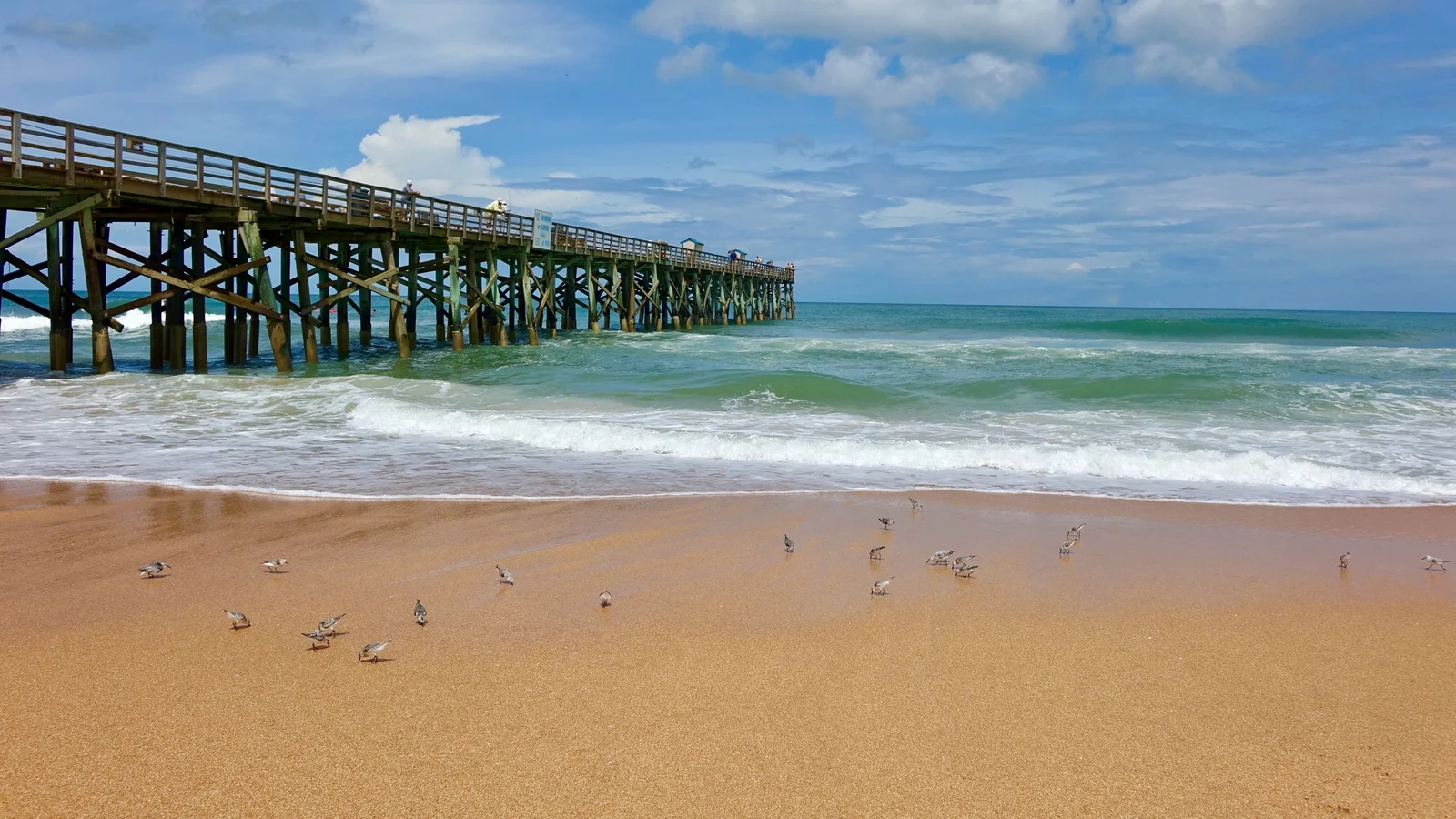
Quick answer: Flagler is a small county with three separate local jurisdictions inside it, and the first question on any purchase is which one the parcel sits in: Palm Coast, Flagler Beach, or unincorporated Flagler. The county’s 5% tourist development tax applies across all three, it is collected by the county, and no platform remits it for you. The short-stay market is essentially the barrier island.
Three jurisdictions, one small county
Flagler is unusual in Florida because a single city, Palm Coast, contains most of the county’s population while the rental economy that visitors recognise sits somewhere else entirely.
| Jurisdiction | What it is | Rental character |
|---|---|---|
| City of Palm Coast | large planned residential city | 12-month tenancies, heavy covenant coverage |
| City of Flagler Beach | small coastal city on A1A | the visible short-stay market |
| Unincorporated Flagler | inland and fringe areas | mixed, mostly residential |
The practical consequence is that two properties a few miles apart can be under different city codes, different registration requirements and different enforcement, while sharing one county tax collector.
Confirm the jurisdiction from the property appraiser’s record for the folio. Postal addresses in this county are not a reliable guide, and a marketing description referring to a beach lifestyle tells you nothing about which code applies.
The 5% is the owner’s obligation
| Tax | Rate | Who remits it in Flagler |
|---|---|---|
| Florida state sales tax on transient rentals | 6% | commonly handled by the platform |
| Flagler discretionary sales surtax | county surtax, where levied | with the state component |
| Flagler County tourist development tax | 5% | the property owner, directly to the county |
Flagler is county-collected, and it does not appear among the counties for which Airbnb collects and remits the county tax. It is also not one of the counties whose tax the Department of Revenue administers, so neither route to automatic collection applies.
That leaves the familiar quiet gap. Bookings arrive, payouts land showing tax collected, and the state component was indeed collected. The county component was not, and nothing on the statement says so. Counties reconcile platform booking data against their own registration records, so the discovery event is a letter covering the full operating history with interest and penalties on top.
Open a county account before the first booking. Confirm the filing frequency and whether a zero return is required in months without bookings. See Florida sales tax on rentals and tourist development tax by county.
The market is the barrier island
Short-stay demand here is coastal, and it is concentrated along the A1A corridor and the barrier island through and around Flagler Beach. That stock is older, lower-rise and smaller in scale than the resort markets to the north and south, which is much of its appeal.
Three things shape the numbers:
Seasonality is real but less extreme than the Gulf coast. The Atlantic side of north Florida carries a summer family season alongside a milder-weather draw, so the year is less lopsided than a single-peak market.
Supply is genuinely limited. A small coastal city with a limited stock of lettable property is a different competitive position from a market with a thousand near-identical condominium units.
The neighbouring markets set the price ceiling. Guests choosing this coast compare it with St. Johns County to the north and Volusia County to the south. Underwrite against what those markets achieve, not against a national average.
Ask for 12 months of actual occupancy and achieved nightly rate from properties in the same corridor, not county-wide figures. In a county where the transient market is a narrow strip, a county average describes mostly properties that are not competing with yours.
Palm Coast is a covenant market
Palm Coast is a planned city, and a large share of its housing sits under recorded covenants. Those covenants, not the city code and not the state statute, are what most often determine whether a property can be let short-term at all.
Under Florida Statute 509.032(7)(b), a local government may not prohibit vacation rentals or regulate the duration or frequency of stays by an ordinance adopted after 1 June 2011, and pre-2011 rules survive and may be amended only to become less restrictive. None of that reaches a private covenant.
Expect to find, in the recorded documents:
- Minimum lease terms, often 6 or 12 months.
- Annual limits on the number of lettings.
- Tenant approval procedures with a processing window before occupancy.
- Restrictions on advertising the property for short stays.
Read the declaration and rules for the specific property before offering, and treat a seller’s summary as a starting point rather than an answer. See the HOA and association restrictions checklist.
Licensing and what local government keeps
A DBPR vacation rental licence is required where the property meets the transient public lodging test: broadly, rented more than 3 times in a calendar year for periods under 30 days, or advertised as regularly available for such stays.
Preemption leaves local government with registration and inspection programmes, and with generally applicable rules on noise, parking, waste, occupancy limits and life safety that apply to all dwellings rather than to vacation rentals specifically. In a small coastal city those rules, particularly parking and occupancy, are enforced actively because the properties sit close together and complaints travel quickly.
Where the 6-month line falls
The county tourist tax and the state transient sales tax both attach to lodging of 6 months or less. A single written lease running longer sits outside the transient regime: no county tax, no transient sales tax, no vacation rental licence and no filing calendar.
In Palm Coast that is the default model and usually the right one. On the barrier island it is a genuine alternative worth pricing, because a 7-month seasonal tenancy at a lower monthly figure competes with a nightly operation once 5% county tax, 6% state tax, platform commission, cleaning, turnover vacancy and licensing come out of the nightly column.
The term of the letting governs, evidenced by a bona fide written lease. Two consecutive 5-month lettings are two transient lettings, not one long one.
Insurance and the coastal cost line
On the barrier island, wind and flood are normally written separately from the dwelling policy, and a letting operation needs liability cover written for that use.
Price from real quotes for the specific address and elevation, ask the seller for 3 years of actual premiums, and establish whether cover sits with a private carrier or the state-backed insurer of last resort. Coastal erosion and dune position matter here in a way they do not inland, so ask about the property’s flood zone and elevation certificate specifically. See the Citizens insurance guide and the 1 million dollar liability requirement.
Financing
Lenders price a letting purchase differently from a second home, so state the intended use at application. Conventional investment lending, a DSCR loan underwritten on the property’s own income, or cash are the usual routes, and overseas buyers work through foreign national mortgage programmes.
Before you buy in Flagler County
- Confirm from the property appraiser’s record which of the three jurisdictions the parcel is in.
- Open the county tourist tax account before the first booking.
- Confirm the filing frequency and whether zero returns are required.
- Register with the state for sales tax on transient rentals separately.
- Establish whether a DBPR vacation rental licence is required and obtain it.
- Read the recorded covenants for minimum lease terms and approval procedures.
- Get 12 months of actual occupancy and rate from the same coastal corridor.
- Get the flood zone, elevation certificate and 3 years of real insurance premiums.
- Check local parking and occupancy rules before assuming a group booking model works.
Where this leaves an investor
Flagler is a small, uncrowded coastal market with limited lettable supply and an ordinary tax rate, sitting next to two better-known counties that set its price ceiling. That combination suits an owner who wants a genuine short-stay asset without competing against a thousand identical units.
The two failures available here are jurisdictional and administrative: buying in Palm Coast under covenants that forbid the model, and running a season without a county account. Both are answered by two documents obtained before the offer.
Frequently Asked Questions
5% on lodging of 6 months or less. Flagler is a county-collected jurisdiction, so the tax is reported and remitted directly to the county, and Flagler is not among the counties for which Airbnb collects the county tax on a host's behalf.
It depends which of three jurisdictions the parcel sits in: the City of Palm Coast, the City of Flagler Beach, or unincorporated Flagler County. Each sets its own local requirements, and the county tourist tax applies across all three. Confirm the jurisdiction from the property appraiser's record, not from a postal address.
No. Flagler does not appear on Airbnb's list of Florida counties where it collects and remits county tourist development tax, and it is not administered by the Department of Revenue. Platforms commonly handle the state component only, leaving the 5% to the owner.
Principally the barrier island and the A1A corridor through Flagler Beach, where the coastal stock sits. Palm Coast is a large residential city whose rental depth is in 12-month tenancies, and much of its newer stock sits under association covenants that restrict letting.
Only within the limits Florida Statute 509.032(7)(b) allows. A local government may not prohibit vacation rentals or regulate stay duration or frequency by an ordinance adopted after 1 June 2011, though pre-2011 rules survive. Registration and inspection programmes remain available, as do generally applicable rules on noise, parking and occupancy.
Yes, where the property meets the transient public lodging test: broadly a dwelling rented more than 3 times in a calendar year for periods under 30 days, or advertised as regularly available for such stays. The state licence is separate from county tax registration and from any city requirement.
Confirm the jurisdiction and the covenants before you offer in Flagler
Tell us the property you are considering. We will come back with which jurisdiction the folio sits in, the recorded covenants and minimum lease terms, the county tourist tax registration steps and filing frequency, the flood zone and elevation position, and 12 months of comparable occupancy and rate from the same corridor.